1. Sauce Flow Behavior and Particulate Geometry
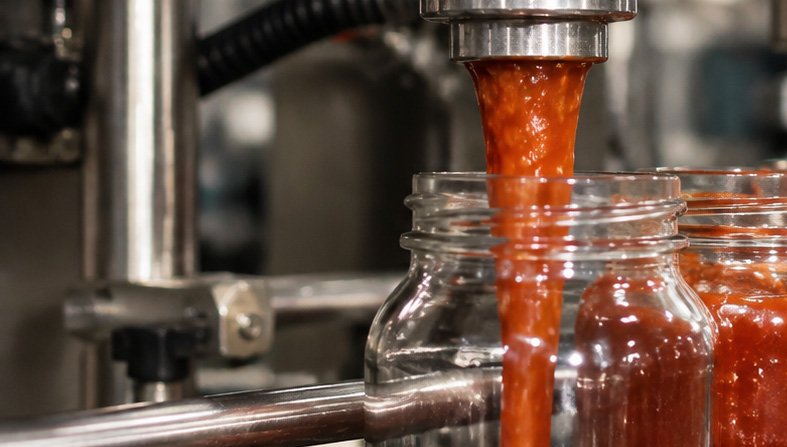
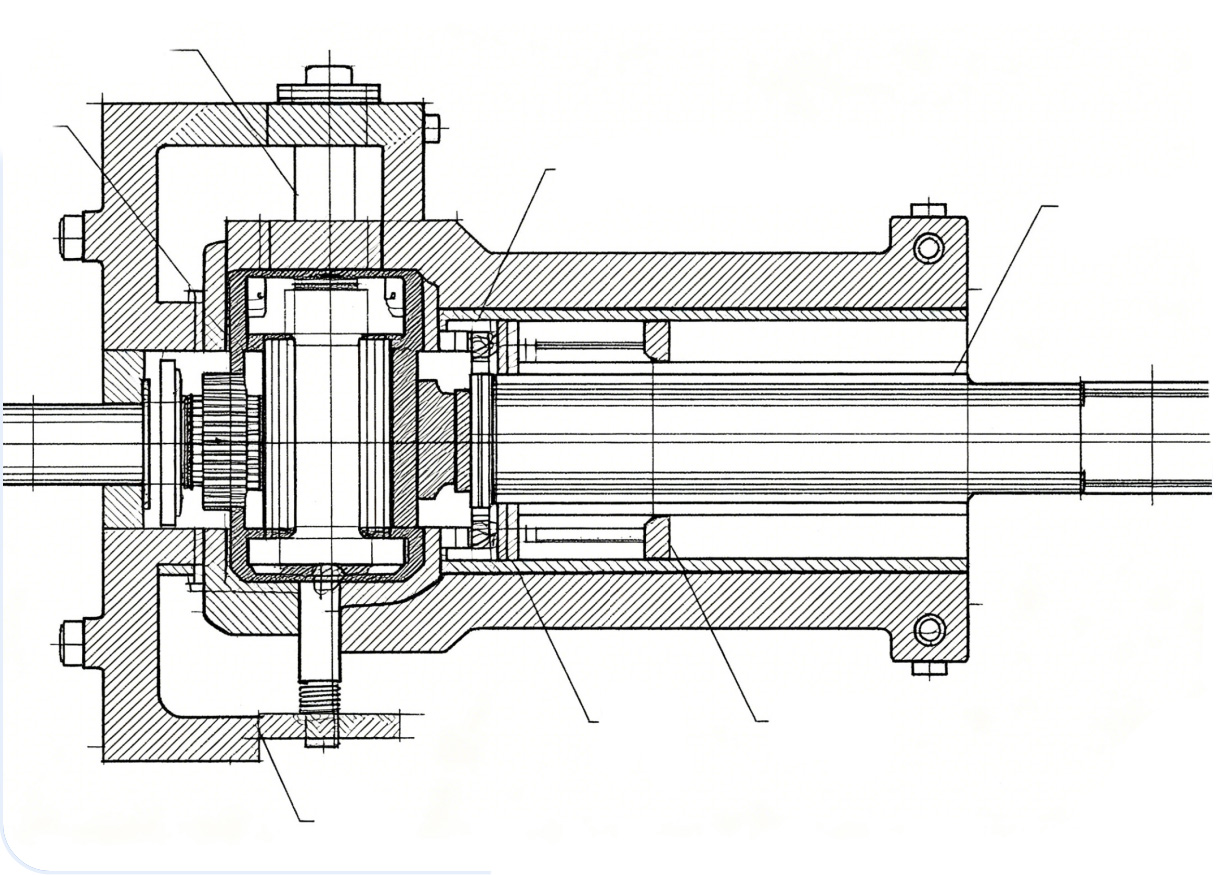
If the sauce is non-free-flowing or carries pieces that need a wide, unobstructed passage, choose a suitably configured piston filler because the piston can draw and discharge a controlled volume under positive pressure.
“Contains particulates” is not a complete specification. Record the largest particle dimensions, particle concentration, shape, softness, and whether solids settle or float. The minimum internal diameter of the valve, manifold, hose, and nozzle must be assessed as one product path. Particle damage is also affected by valve geometry, pump shear, and fill speed—not merely by the dosing label.
If the sauce is smooth and continuously pumpable, a compatible flow meter can reduce the need for dose-specific cylinders. If irregular pieces can bridge the sensor tube or if the product separates during recirculation, a generic flow-meter recommendation is not enough; test the proposed meter bore and feed pump with the real recipe.
For broader product-state screening before comparing dosing systems, use the filling machine guide based on product and fill volume.
2. Declared Quantity, Density, and Temperature
If the label and process controls are based on volume, choose piston or compatible volumetric flow-meter dosing because both directly control a volumetric target. If the target is net mass, choose Coriolis mass-flow or net-weight control because either can measure mass without relying on a fixed density conversion.
Density can change between formulations and with temperature. That matters when a volumetric fill is converted into a weight claim. A piston stroke may remain mechanically consistent while the mass inside that volume changes. Conversely, a net-weight system is not automatically immune to unstable flow: poor cut-off, vibration, product stringing, or sauce settling on the jar rim can still affect the final result.
Do not compare “accuracy” percentages until each supplier states the measurement basis, target dose, product temperature, number of test cycles, calculation method, and whether the data came from the production sauce or a water test.
Put accuracy claims beside a legal-content benchmark
For prepacked products assessed under OIML R 87 (the same tolerable-deficiency schedule is used by the EU Directive 76/211/EEC), Table 2 sets the tolerable deficiency by declared quantity: 100–200 g/mL = 4.5% of Qn; 200–300 g/mL = 9 g/mL; 300–500 g/mL = 3%; 500–1,000 g/mL = 15 g/mL; and 1,000–10,000 g/mL = 1.5%. The inspection-lot average must be at least the declared quantity, and an individual pack must not exceed twice its applicable tolerable deficiency. These are legal metrology limits—not a filler’s repeatability specification.
That makes the comparison concrete. A 240 mL jar is in the 200–300 mL band, where the tolerable deficiency is 9 mL and the twice-T individual limit is 18 mL. Separately, a machine claim of ±0.5% at 240 mL equals ±1.2 mL, while ±1% equals ±2.4 mL. Ask the supplier to show mean, spread, and worst observed error from the same sauce, jar, temperature, and test method; never substitute a legal limit for a Factory Acceptance Test criterion.
For a flow-meter reference point, the Endress+Hauser Promass F 300 technical information lists liquid mass/volume-flow base accuracy of ±0.10% of reading, or ±0.05% with its PremiumCal option. That is a sensor-level figure measured on ISO 17025-traceable calibration rigs—not a complete sauce-filler result. Pump pulsation, entrained air, temperature, valve cut-off, and installation can produce a larger final dose error.
3. Hot-Fill Thermal Control
If viscosity rises quickly as the product cools, select the dosing principle only after specifying the complete heated path because a suitable meter or piston cannot compensate for cold spots in the hopper, pipework, valve, or nozzle.
Hot filling changes more than seal material. Temperature influences viscosity, density, stringing, pump load, and valve response. The design review should cover heating or recirculation, hopper agitation, insulation, stop-and-restart behavior, container heat resistance, closure timing, and controlled cooling. The hot filling machine buying guide explains how these choices connect across the complete line.
Food-safety classification adds another hard boundary. The U.S. 21 CFR Part 114 definition uses an equilibrium pH of 4.6 or below for an acidified food, while 21 CFR Part 113 covers low-acid canned foods above pH 4.6 when water activity is above 0.85. Those thresholds determine the process-control category; they do not prescribe one universal fill temperature. A process authority still has to set the scheduled thermal process for the recipe, container, closure, and heat-up/cool-down profile.
4. Container, Fill Range, and Tare Variation
If one line must cover many fill volumes, favor electronically adjustable flow-meter or net-weight targets when the product permits because the dose can be changed in the control recipe; however, bottle guides, nozzles, and fill height may still need adjustment. If the range is narrow and the sauce is difficult to move, a correctly sized piston cylinder may be the simpler choice.
For glass jars, ask how the proposed net-weight machine handles tare. Some systems weigh each empty container before filling; others rely on a configured tare or a separate weighing sequence. If empty-jar weight varies and the system controls gross weight only, that variation can carry into the calculated net content.
5. Output, Changeover, and Sanitation
If the line runs a stable, smooth recipe at sustained output, a compatible flow-meter architecture can be attractive because electronic dose settings support repeatable recipes. If recipes change between smooth and chunky sauces, choose the principle and product path around the hardest product because the easiest product rarely determines the real limitation.
Output must be calculated at the actual fill volume and product temperature. Thick sauce intake time, fine-fill or cut-off time, load-cell settling time, nozzle count, container indexing, and upstream supply pressure all affect cycle time. For the relationship between dosing architecture and automation level, see these fully automatic filling machine options.
Use comparable speed and giveaway numbers
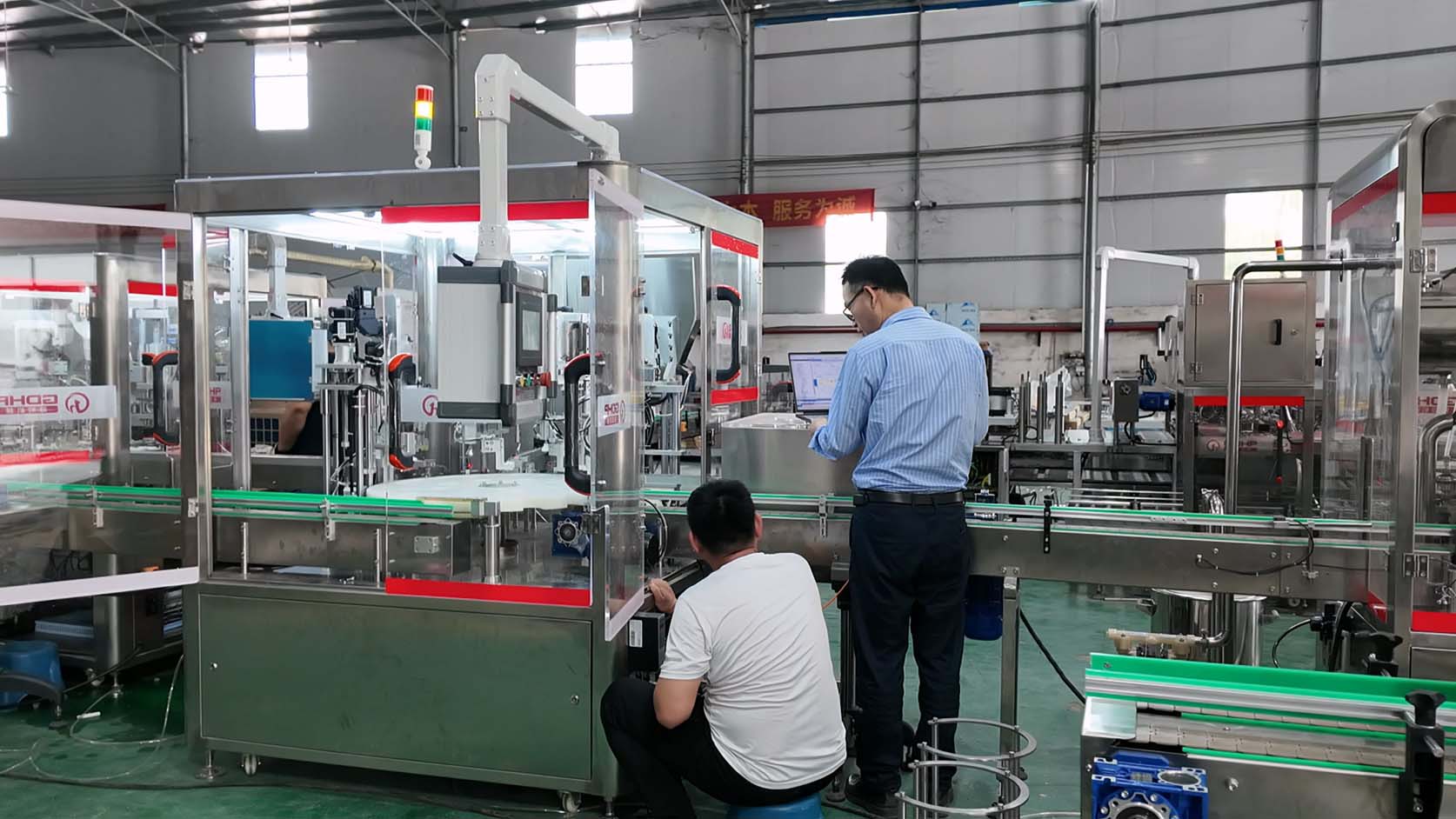
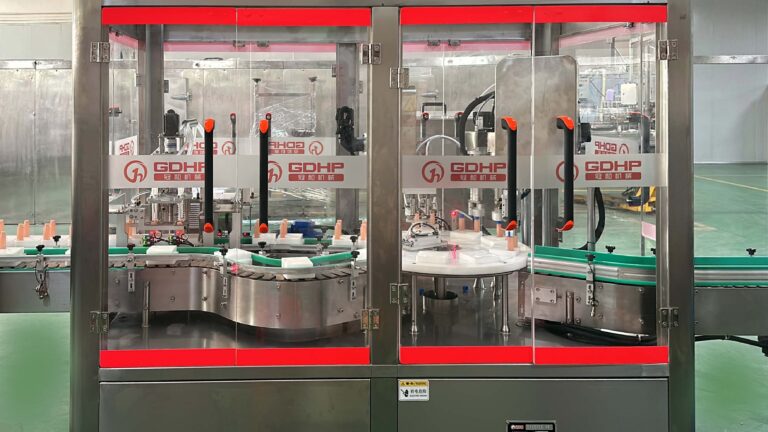
The published GDHP automatic-filler guide places medium/high-speed versatile lines at 2,000–8,000 bottles per hour and continuous rotary lines at up to 24,000+ bottles per hour; sauces and condiments are listed in the medium/high-viscosity application group. These are category ranges, not a promise for a particular sauce. A separate published GDHP project page reports a cleaning-paste line designed around ±1% accuracy and 2,800 bottles per hour at 240 mL; that nameplate equals 672 L/h before stops, changeovers, and cooling constraints. Treat it as a project-specific reference and request the same basis for your product.
For a transparent cost check, calculate giveaway in product units before comparing machine prices. If 100,000 jars are filled to an average 1% overfill at 240 mL, the arithmetic giveaway is 240 L; at 0.5% it is 120 L. This is an illustrative planning calculation, not a measured result. Multiply the volume by your sauce cost and add labor, utilities, cleaning, rejects, and downtime to compare total cost of ownership.
Sanitary review should identify drainability, dead legs, seal access, valve disassembly, cleaning chemistry, rinse verification, and allergen-change procedures. “CIP-capable” is not the same as a validated CIP process. Piston seals and valves need inspection access; meter systems still need a cleanable pump, piping, and cut-off valve; load-cell platforms need protection from product accumulation and washdown effects.