
Fully Automatic Filling Machine
Engineered for the beverage, dairy, daily chemical, condiment, and pharmaceutical industries. Seamlessly transition from automated bottle feeding and precise volumetric filling to inline capping, compatible with diverse bottle types and fluid viscosities to maximize your production yield.
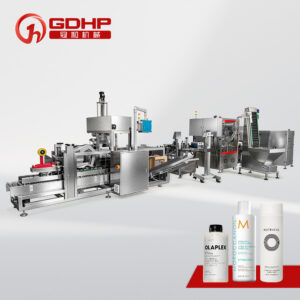
 Automatic 100ml hair conditioner filling and packaging line with 4-head servo filling, capping, labeling, cartoning and case sealing; output 40–50 bottles/min.
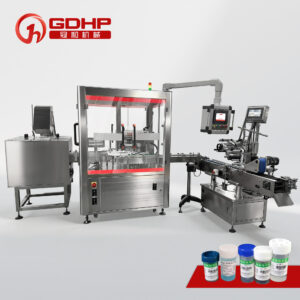
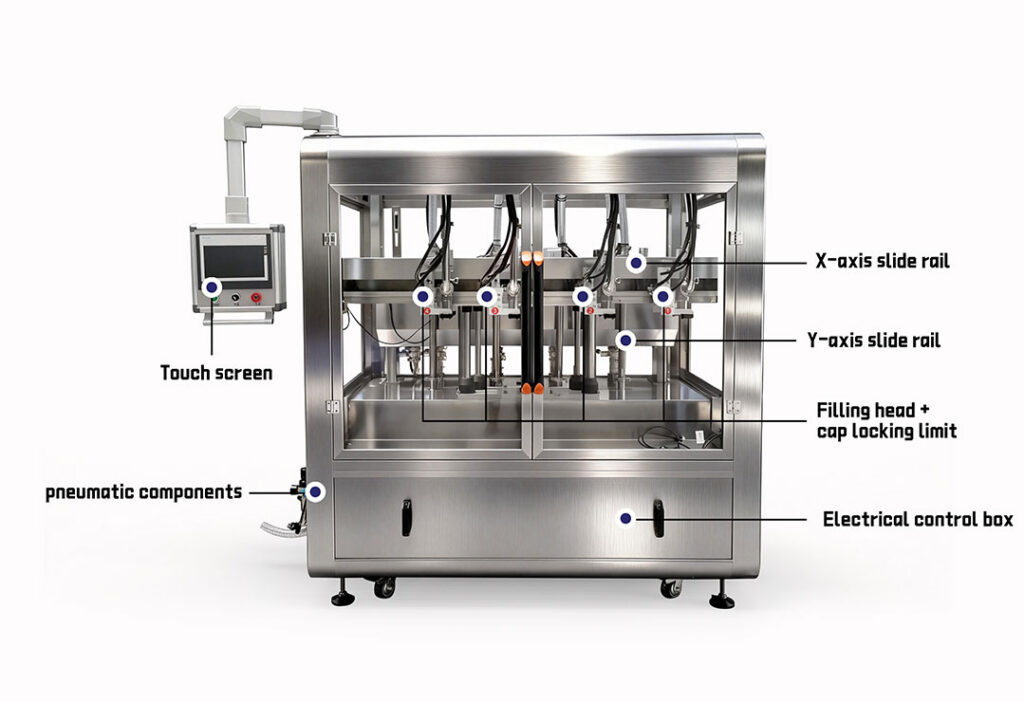
- The machine body is constructed from SUS304 stainless steel and equipped with a PLC, touchscreen, servo control system, and high-quality pneumatic and photoelectric components. Functions include no-bottle-no-filling protection, missing-cap alarms, automatic shutdown, production counting, and variable-frequency speed control. The dual-head servo capping mechanism features adjustable torque and achieves a capping pass rate of over 99.6%,…
- The GHALF-1-1 Fully Automatic Filling and Capping Machine is designed for 5–30 ml small-volume liquids, integrating filling, stopper insertion, cap placement and sealing in one compact system. Its precision peristaltic pump, automatic detection and flexible bottle molds ensure accurate filling, reliable capping and quick product changeover for cosmetic, pharmaceutical, food and chemical applications.
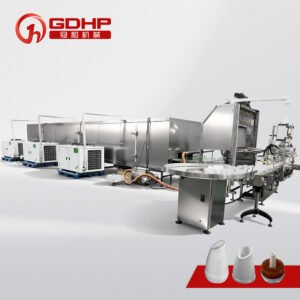
- The process for this machine begins with manual placement of bottles onto the infeed conveyor, followed by automatic infeed and hot filling. The bottles are then cooled and set in a cooling tunnel (two 12-meter sections, 45P) before automatic discharge. Subsequent steps include manual capping, manual labeling, steam heat shrinking, and drying; the bottles are…
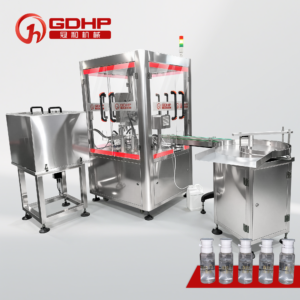
- This fully automatic six-head peristaltic pump filling machine is specifically designed for high-standard production in the pharmaceutical, food, and daily chemical industries. Featuring a six-head synchronized design, the machine significantly boosts production efficiency. Whether for disinfectants, oral liquids, or skincare serums, this equipment delivers a stable, precise, and intelligent automated filling solution.
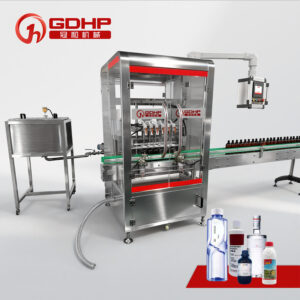
High-Performance Automated Filling Models by Industry Application
From boutique medium-capacity systems to ultra-high-speed mass production, explore our core automated filler categories built for scalable factory floors.
Rotary Flow-Meter Filling Machine
Beverage and Dairy Focus
- Best For: High-speed lines processing bottled water, carbonated drinks, juices, teas, and dairy beverages
- Bottle compatibility: PET and glass
- Core Characteristic: Continuous rotary configuration using electronic flow meters for high-speed, repeatable output of standardized products
Inline Servo Piston Filling Machine
Daily Chemical and Condiment Focus
- Best For: Medium-to-high viscosity fluids like shampoo, lotion, hand sanitizer, dish soaps, soy sauce, and thick dressings
- Core Characteristic: Volumetric servo-piston mechanics designed for anti-dripping clean cut-offs across varied bottle widths and dense fluid densities
Ultra-Precision Small-Vial Filling Machine
Pharma and Nutraceutical Focus
- Best For: Oral liquids, micro-dose tinctures, essential oils, reagents, and cleanroom health supplements
- Core Characteristic: Compact footprint optimized for sterile isolators, supporting nitrogen purging, peristaltic or ceramic pumps, and inline weight verification
Target Industries of Auto Filling Machine
Comprehensive Application Coverage
- Beverages and spirits: High-speed filling for mineral waters, carbonated sodas, clear juices, brewed teas, functional sports drinks, and craft spirits.
- Dairy products: Sanitary handling of fresh milk, drinkable yogurts, flavored milk alternatives, and thick creams.
- Daily chemicals & cosmetics: Precision dosing for hair care, body washes, liquid soaps, gel detergents, disinfectants, and skincare lotions.
- Condiments and sauces: High-accuracy filling for vinegars, soy sauces, chili oils, blended syrups, viscous salad dressings, and edible oils.
- Pharmaceuticals & biotech: Ultra-precise, sterile dosing for liquid vitamins, eye drops, cough syrups, oral solutions, and diagnostic reagents.
- Industrial & fine chemicals: Heavy-duty configurations for automotive fluids, household cleaners, surface coatings, and chemical additives.
Fluid Property Adaptations
- Low viscosity: Free-flowing liquids handled seamlessly via gravity or low-pressure feeding systems to maintain constant flow rates.
- Medium to high viscosity: Thicker pastes, gels, and creams controlled precisely via positive displacement or servo-assisted pistons.
- Foaming and carbonated: Managed via programmable bottom-up filling profiles and pressurized counter-pressure nozzles to completely mitigate outgassing.
- Particulate and fibrous: Specialized non-clogging rotary valves engineered for liquids containing heavy pulp, fruit pieces, or suspended chili flakes.
Container and Cap Versatility
Engineered with full mechanical adjustment rails to process PET, glass, HDPE, aluminum, flasks, square bottles, and wide-mouth jars smoothly, ensuring zero scratching on neck threads and uncompromising seal integrity.
Step-by-Step Mechanical Workflow of Our Automated Filling Systems
Discover how GDHP’s precision-engineered operational cycle minimizes human error, prevents product waste, and maintains a secure production rhythm through every stage.
Step 1
Automated Infeed & Indexing
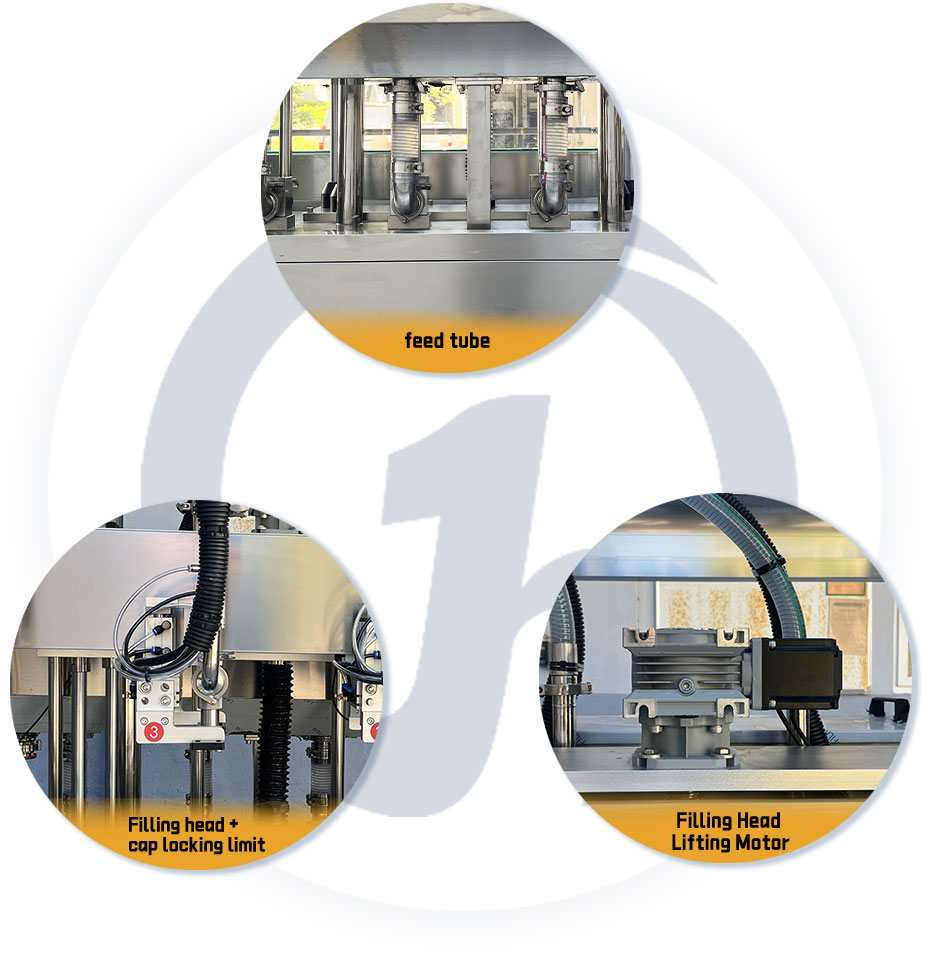
Empty containers move from the conveyor line into starwheels or pneumatic gates to center each bottle perfectly under a filling nozzle.
Step 2
Container Detection & Alignment
Optical sensors verify bottle presence. If a gap is identified, the “No Bottle, No Fill” system skips that nozzle to avoid spills and fluid loss.
Step 3
Controlled Dosing Stage
Filling heads descend into container necks. Advanced servo-driven pistons or flow meters trigger based on preset parameters, regulating fluid velocity to eliminate turbulence.
Step 4
Clean Cut-off & Nozzle Retraction
Upon reaching target volume, the fill valve snaps shut. Integrated anti-drip and pneumatic blow-back mechanisms pull back residual droplets as nozzles retract smoothly.
Step 5
Inline Weight Verification
Filled containers pass over integrated dynamic load cells or checkweighers to log precise dosing weights, flag volumetric anomalies, and reject outliers automatically.
Step 6
Automated Outfeed Integration
Finished containers transfer down the line to capping, sealing, coding, and case packing sections under synchronized master PLC control.
Comprehensive Safety Interlocks & Machine Protection
GDHP’s automated filling platforms are built with robust, integrated safety measures to safeguard operators, maintain product integrity, and eliminate mechanical downtime. Our systems incorporate:
- Back-up Sensors: Instantly detect downstream container accumulations to prevent jams and automatically pause filling operations.
- Fluid Level Monitoring: Continuously trace liquid levels within the supply tank to prevent overfills, starvation, or system pressure drops.
- Block Detection: Monitor path integrity throughout the system, ensuring seamless bottle transfer and immediate fault signaling.
- Torque Limiters: Protect expensive mechanical assemblies and drive units by instantly slipping or stopping if a mechanical overload occurs.
Centralized PLC logic ensures real-time diagnostic reporting and immediate, controlled shutdowns during unexpected operation anomalies.
How to Choose the Right Automated Filling Machine
| Benchmarking Metric | Rotary Flow-Meter Systems | Inline Servo Piston Systems | Precision Small-Vial Systems |
|---|---|---|---|
| Primary Industry Focus | High-volume beverage, dairy, and bottled water plants | Daily chemical, personal care, sauces, and condiments | Pharmaceutical solutions, reagents, and laboratory vials |
| Optimal Cadence Tier | Ultra-high speed mass production (Up to 24,000+ BPH) | Medium to high-speed versatile lines (2,000 – 8,000 BPH) | Low to medium-speed micro-dosing (1,000 – 4,000 BPH) |
| Viscosity Application | Best for low-viscosity, water-thin, or carbonated fluids | Exceptional for thick pastes, gels, and oils with particulates | Ideal for high-accuracy micro-dose liquid serums and drops |
| Footprint Required | Medium to large integrated rotary Monoblock footprint | Compact, expandable linear configuration | Micro-footprint optimized for modular cleanroom enclosures |
| Changeover Complexity | Requires dedicated starwheels; moderate changeover time | Highly flexible; digital touchscreen HMI recipe recall | Toolless, rapid mechanical adjustments for diverse vials |
| Capital Investment Level | Mainstream dedicated high-output production line tier | Flexible, high-ROI multi-product all-rounder tier | High-precision, strict compliance specialty equipment tier |
- Prioritize production scale first: If your plant relies on continuous processing of a single drink profile exceeding 10,000 BPH, choose a continuous rotary automated filling machine to optimize line efficiency.
- Factor in fluid thickness and temperature: Dense liquids, heavy sauces, or products prone to seasonal viscosity shifts require a servo-driven piston filler to maintain stable dosing pressure and eliminate dripping.
- Evaluate product variety and changeover frequency: High-mix facilities switching container shapes and volumes multiple times per day should prioritize toolless mechanical guide rails and recipe-driven PLC controls.
- Confirm sanitary and compliance mandates: Strict food-contact safety and sterile pharmaceutical processing require enclosed cleanroom layouts featuring fully integrated CIP/SIP automated cleaning systems.
Why Choose Our Fully Automatic Filling Technology?
To satisfy strict processing standards, complex bottle profiles, and varied fluid behaviors, GDHP automated filling machines use specialized dosing principles that optimize cycle times, maintain extreme accuracy, and eliminate hygiene risks.
High-Precision Volumetric Dosing
Smart Viscosity Adjustability
Tailored fluid paths handle everything from water-thin beverages and foaming agents to high-viscosity pastes and particle-heavy condiments without dripping or splashing.
Hygienic and CIP-Compliant Engineering
All fluid-contact parts are premium stainless steel with polished internals, fully supporting CIP and SIP automated cycles to prevent cross-contamination in food and pharma lines.
Toolless Rapid Changeover
Digital recipe management with quick-change guides and calibrated scale readouts lets operators switch bottle sizes and fill volumes within minutes.
Intelligent Diagnostics and PLC Interface
User-friendly interfaces deliver real-time metrics, support remote data collection via MES or SCADA, and enable predictive error tracking.
Synchronized Line Interlocking
Smart interfaces link unscramblers and cappers to prevent bottlenecks, bottle jams, and dry-running, ensuring smooth line operation.
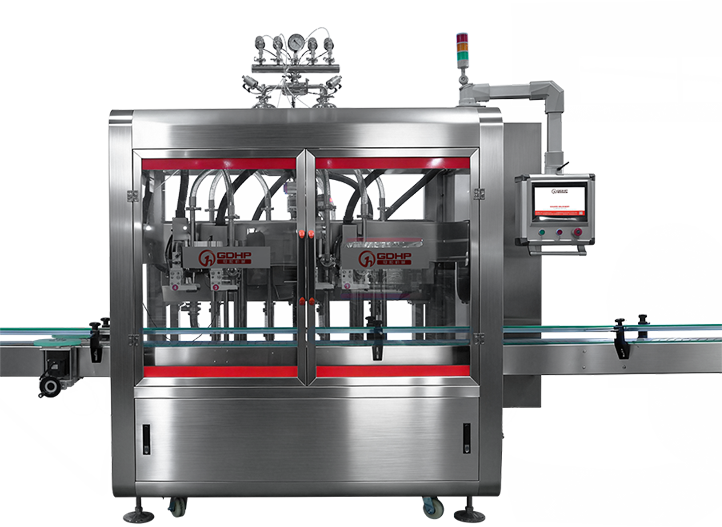
Engineered for Global Sanitary Compliance and Plant Safety
Every GDHP servo piston filler and automatic filling machine is engineered to surpass strict international mechanical and electrical safety guidelines. We deliver complete regulatory validation packages, ensuring seamless deployment in high-compliance food processing, dairy, cosmetic, and pharmaceutical manufacturing facilities worldwide.
All fluid-contact pathways are precision-machined from premium SUS316L stainless steel, featuring ultra-smooth internal polishing to eliminate micro-crevices and prevent bacterial accumulation. Heavy-duty Teflon and silicone seals comply with strict food-grade standards, ensuring long-term chemical resistance against aggressive clean-in-place (CIP) and sterilization-in-place (SIP) cycles.
FAQ
How do I calculate the ideal nozzle count and speed for my line?
Your ideal configuration depends on your target volume, liquid viscosity, and required bottles per minute. We typically recommend engineering a system with a 10% to 15% speed buffer relative to your line’s nominal capacity to ensure long-term equipment stability. Share your production targets with our team, and we will calculate the exact configuration for your floor layout.
Can a single automated filling machine handle widely different viscosities, like juices and thick gels?
Fluids within similar viscosity ranges can easily share a single servo piston filler by adjusting recipe settings on the HMI. However, running water-thin liquids and heavy gels on the same machine typically requires a hybrid dosing pump or interchangeable quick-change nozzle kits. We can evaluate your exact product range to design the most cost-effective solution.
What features manage highly foaming fluids or carbonated liquids?
We utilize programmable bottom-up filling sequences where the servo nozzles descend to the bottom of the container and lift gradually during dosing to minimize product agitation. For carbonated liquids, we deploy sealed counter-pressure valves that balance internal pressure to prevent outgassing and overflow.
How complex is the routine maintenance protocol for these systems?
Routine maintenance is straightforward and focuses on automated CIP flush cycles, inspecting wearable seals, lubricating mechanical drives, and keeping optical sensors clean. Every machine includes a step-by-step preventative maintenance schedule and integrated HMI tracking alerts to prevent unscheduled downtime.
Is it possible to integrate your filling machine with my existing downstream machinery?
Yes. GDHP filling machines use industry-standard PLCs and flexible communication protocols to synchronize seamlessly with your existing rinsers, cappers, and labelers. We customize the input/output signals and conveyor extensions to match your current floor layout and maintain line rhythm.
Can I send product samples for testing prior to making a final purchase?
Absolutely. We highly encourage prospective clients to send sample liquids and containers to our testing laboratory. We will run trial batches on our equipment and provide high-definition operational video, accuracy logs, and a comprehensive technical evaluation report before you finalize your order.
How long does a complete bottle profile changeover take during production?
Depending on the specific model, standard profile changeovers take between 5 and 15 minutes. Adjusting for different bottle heights and fill volumes is handled directly via pre-saved touchscreen recipes, while guide rail and gripper modifications use tool-free clamp levers.