How to Choose the Right Hot Filling Machine for Production
Choose a hot filling machine by matching the product’s validated process temperature, viscosity, particulate size and acidity with the container,…
August 12, 2026


Hello, I am a Senior Engineer and Founder at GDHP. With 23 years of technical expertise in the filling and packaging industry, we provide more than just equipment—we are dedicated to delivering high-stability, high-efficiency, and fully customized turnkey solutions for your business.
At its most basic level, The construction of blood collection tubes usually involves either Borosilicate glass or specialized plastics like PET (Polyethylene terephthalate), SiO2 Medical Products, Inc. developed hybrid blood collection tubes (BCTs) that combine the breakage resistance of plastic and a shelf life approaching that of glass. with a colored rubber stopper creating a vacuum seal inside. This vacuum is the “engine” of the tube; it facilitates the drawing of a predetermined volume of liquid. And they are manufactured to be sterile to ensure the sample isn’t contaminated.
The tube must be chemically inert so it doesn’t contaminate the blood, and it must be physically robust enough to survive a centrifuge spinning at thousands of rotations per minute.
Inside these tubes, you’ll often find additives—clot activators or anticoagulants.In the medical and IVD (In Vitro Diagnostics) industry, the precision of the filling volume and the quality of the additives inside these tubes are critical for ensuring accurate diagnostic results.

When you look at a laboratory tray, you’ll see a rainbow of cap colors. Each color signifies a different additive and a different diagnostic purpose.Understanding the different types of blood collection tubes is essential for ensuring accurate laboratory results. These tubes are color-coded based on the additives they contain, which either preserve the blood in a liquid state (anticoagulants) or encourage it to clot (clot activators).
Here is a breakdown of the most common tubes used in clinical settings today.
| Cap Color | Additive | Primary Uses / Tests |
|---|---|---|
| Light Blue | Sodium Citrate | Coagulation studies: PT, PTT, INR, D-dimer. (Requires a full draw for accurate ratios). |
| Red | None (Glass) or Clot Activator (Plastic) | Serum testing: Chemistry, immunology, serology, and blood bank cross-matching. |
| Gold / Tiger | Clot Activator & Gel (SST) | Serum Separation: Routine chemistry panels (BMP, CMP), lipids, thyroid (TSH), and electrolytes. |
| Light Green | Lithium Heparin & Gel (PST) | Plasma Separation: STAT chemistry, electrolytes, and cardiac markers (Troponin). |
| Dark Green | Sodium or Lithium Heparin | Plasma testing: Ammonia levels, chromosome screening, and specialized chemistry. |
| Lavender | EDTA | Hematology: Complete Blood Count (CBC), HbA1c, ESR, and blood film morphology. |
| Pink | EDTA (Spray-coated) | Blood Bank: Specifically designed for blood typing, screening, and cross-matching. |
| Gray | Sodium Fluoride / Potassium Oxalate | Glucose testing: Fasting blood sugar, GTT, and lactate (prevents glycolysis). |
| Royal Blue | EDTA or None (Trace-element free) | Toxicology: Trace metal analysis (Lead, Zinc, Copper, Mercury) and nutritional analysis. |
However, from a packaging machinery perspective, we generally categorize them into two major mechanical groups based on how they collect the sample. Understanding these types of blood collection tubes is essential because a machine designed for one might struggle with the other.
The vacuum blood collection tube is the gold standard in clinical settings. The “magic” here is the negative pressure. During the manufacturing process, a specialized vacuum-capping machine exhausts the air from the tube before the rubber stopper is inserted.
From my perspective as an engineer, the vacuum blood collection tube presents a unique challenge: the seal. If the capping head doesn’t apply the exact amount of torque and downward pressure, the vacuum will leak over time. This is what we call “vacuum loss,” and it’s the primary reason for “short draws” in the clinic.
When we set up a production line, we use high-speed vacuum sensors to verify that the pressure inside the vacuum blood collection tube is within 0.01% of the target. This level of precision is why investing in high-quality automated capping machinery is non-negotiable for medical manufacturers.
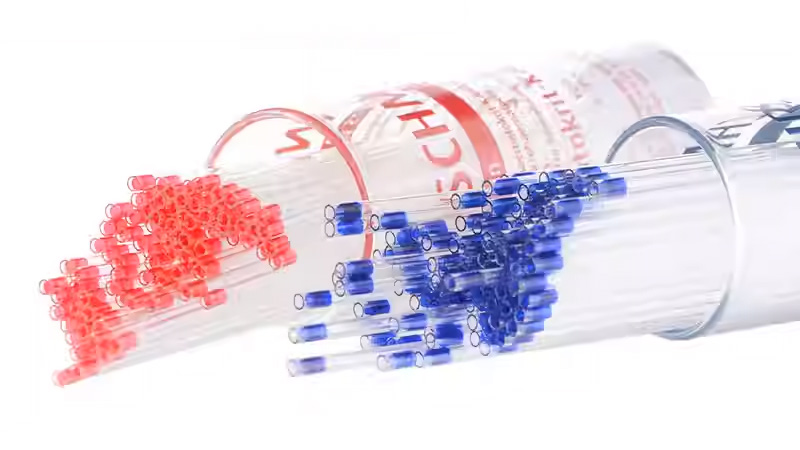
Not every patient can provide a full vial of blood. For neonates, the elderly, or those with difficult veins, we turn to capillary blood collection tubes. These are much smaller and rely on “capillary action”—the ability of a liquid to flow in narrow spaces without the assistance of external forces.
Mechanically, capillary blood collection tubes are a different beast. They are smaller, thinner, and often have a “funnel” or “scoop” integrated into the top. On a packaging line, these require “micro-handling.”
You can’t use the same heavy-duty grippers used for a standard vacuum blood collection tube. If you do, you’ll crush the delicate walls of the capillary tube. We often use soft-touch silicone grippers and vibration-free feeding systems (like centrifugal bowls) to move these tiny tubes through the filling and labeling process.
To help visualize the differences between these two primary types of blood collection tubes, I’ve put together a quick comparison table from an operational viewpoint:
| Feature | Vacuum Blood Collection Tube | Capillary Blood Collection Tubes |
|---|---|---|
| Common Volume | 2ml - 10ml | 0.1ml - 0.5ml |
| Handling Difficulty | Low (Standard dimensions) | High (Requires micro-precision) |
| Primary Use Case | Venous blood (standard lab work) | Finger-prick / Heel-stick (pediatrics) |
| Capping Logic | Airtight vacuum seal required | Snap-on or screw-cap |
As an engineer, my goal is to help you bridge the gap between “we need to produce these” and “we are producing these efficiently.” Whether you are dealing with a standard vacuum blood collection tube or specialized capillary blood collection tubes, the machinery must be as precise as the medical tests themselves.
If you’re currently facing issues with tube breakage, inconsistent vacuum levels, or labeling misalignments on your current line, it might be time to look at a more tailored solution. Are you ready to upgrade your production capabilities? Contact our engineering team today for a custom consultation on our latest blood collection tube packaging systems.
The evolution from simple glass vials to modern blood collection tubes has been driven by two factors: clinical accuracy and healthcare worker safety. When we look at the various types of blood collection tubes, we see a consistent focus on reducing human error.
One of the primary advantages is the standardized color-coding system. This isn’t just for aesthetics; it’s a visual fail-safe.
Whether it’s a vacuum blood collection tube with a lavender top (EDTA) or a green top (Heparin), the packaging line must ensure the cap color matches the additive inside with 100% accuracy. From an engineering standpoint, this requires high-end color sensors at the capping station. If the wrong cap is applied, the chemical reaction in the blood will be wrong, leading to a misdiagnosis.
Another massive advantage is the move toward “safety-engineered” closures. You may have noticed that modern tubes often have a plastic shield over the rubber stopper. This design prevents “aerosolization”—the tiny spray of blood that can occur when a stopper is popped off. For a manufacturer, this means the packaging machine needs a more complex capping head that can handle these dual-component caps without scratching the plastic or deforming the rubber seal.
Safety also extends to the material of the tube itself. While glass was once the standard, most modern vacuum blood collection tube units are made from high-grade PET. This material is shatter-resistant, which is a major safety advantage in a high-speed centrifuge.
From a production perspective, PET is also more “forgiving” than glass. It has a slight elasticity, which allows our machinery to use mechanical “grippers” to move the tubes through the line at speeds of up to 300 tubes per minute without the risk of catastrophic breakage that occurs with glass.
Beyond physical safety, the “vacuum” itself is a major advantage for accuracy. By using a pre-defined vacuum level, the vacuum blood collection tube ensures that the ratio of blood to additive is always perfect. If you have too much blood for the amount of anticoagulant in the tube, the sample will clot; if you have too little, the sample is diluted. The advantage of a high-quality tube is this built-in precision, which removes the guesswork for the nurse or phlebotomist.
When a client asks me what makes a machine “compliant” for medical use, I always point to the environment and the control systems. You cannot package blood collection tubes on a machine designed for soda bottles or cosmetic creams. The standards are significantly more rigorous.
A compliant machine must be designed for “Cleanroom” operations (typically ISO 7 or ISO 8) and compliant with GMP standards. This means the machine should be constructed primarily of 304 or 316L stainless steel, with minimal “dead zones” where dust or bacteria can accumulate. Every belt, motor, and sensor must be easy to sanitize. Furthermore, the air used in pneumatic components must be filtered to prevent oil or particulate contamination from entering the blood collection tubes before they are capped.
One of the most critical parts of the machine is the dosing system. Since many types of blood collection tubes require chemical additives, the machine must be able to dispense volumes as small as 10 microliters with extreme precision. We often use ultrasonic atomizing nozzles for this. Instead of a “drop” of liquid, the machine creates a fine mist that coats the inner walls of the tube. This ensures the additive mixes instantly with the blood when the sample is drawn.
Sterility is the baseline, but “traceability” is the goal. This is where the labeling system comes into play. In medical manufacturing, a label is more than just a brand; it’s a legal document. The labeling module on a blood collection tube line must perform several high-stakes tasks simultaneously:
I’ve seen many production lines fail because they treated labeling as an afterthought. If a label on a capillary blood collection tubes is even 1mm out of alignment, it might cover the graduation marks, making the tube useless for the clinician. We use servo-driven labeling heads that synchronize perfectly with the conveyor speed to achieve sub-millimeter accuracy.
| Technical Component | Requirement for Blood Collection Tubes | Engineering Impact |
|---|---|---|
| Material Handling | Non-marring, soft-touch grippers | Prevents scratches on PET and breakage of glass |
| Dosing Accuracy | ±1% for chemical additives | Ensures correct blood-to-additive ratio |
| Vacuum Control | Precise pressure-monitored capping | Guarantees shelf life and draw volume |
| Vision System | 360-degree inspection cameras | Rejects tubes with wrong cap colors or missing labels |
From a mechanical engineer’s perspective, the “reliability” of the machine is measured by its “reject rate.” A top-tier line should have a reject rate of less than 0.1%. Every time a vacuum blood collection tube is rejected, it’s not just a loss of plastic; it’s a loss of the vacuum energy and the chemicals inside.
To maintain this level of performance, we integrate “Smart Maintenance” features. The machine monitors the torque on the capping heads and the pressure in the vacuum pumps in real-time. If the torque starts to drift outside of the 0.5 Nm tolerance, the machine alerts the operator before a single bad tube is produced. This “preventative” logic is what separates a standard packaging machine from a professional medical device production system.
The complexity of manufacturing blood collection tubes is high, but the rewards of a well-optimized line are even higher. By focusing on precision dosing, vacuum integrity, and rigorous vision inspection, you ensure that your product is a reliable tool for doctors worldwide.
If you are concerned about your current line’s vacuum consistency or are looking to transition from manual to fully automated packaging for various types of blood collection tubes, we are here to help. Our engineers specialize in medical-grade automation that meets global regulatory standards. Let’s discuss your production goals—Get a custom solution for your production line.
When I consult with medical device startups or established labs looking to upgrade, I always start by looking at the “Product Mix.” If your facility only produces one type of tube in millions of units, a dedicated, high-speed rotary line is your best friend. However, if you are producing ten different types of blood collection tubes in smaller batches, that same high-speed machine becomes a liability because “changeover time” will kill your productivity.
The first technical question you should ask is: “How long does it take to switch from a 13x75mm tube to a 16x100mm tube?” In the engineering world, we call this the Changeover Efficiency. A professional-grade packaging line should allow for tool-less changeovers in under 30 minutes. If you have to spend half a day recalibrating sensors and swapping out mechanical grippers, you are losing money.
Use our pharmaceutical precision filling and packaging guide to evaluate dosing, contamination control, automation, materials, and validation before specifying a tube line.
Space is often the most expensive component of a factory. In a cleanroom environment, every square meter costs a premium in HVAC and filtration. Therefore, the “footprint” of your machinery is a critical KPI.
We generally see two architectural styles in blood collection tube packaging:
When choosing between them, don’t just look at the machine itself—look at the “Upstream” and “Downstream.” A high-speed filler is useless if your “unscrambler” (the machine that feeds the tubes into the line) can’t keep up. Similarly, if your labeling and cartoning machines are slower than your filling machine, you’ll create a bottleneck that stresses the mechanical components of the entire system.
In 2026, a packaging machine isn’t just a collection of gears and motors; it is a data hub. For medical-grade blood collection tubes, you need a machine that supports “Industry 4.0” integration. This means the machine should be able to export real-time data to your Manufacturing Execution System (MES).
Why does an engineer care about data? Because of “Batch Records.” In the medical industry, if you can’t prove a tube was manufactured correctly, it doesn’t exist. Your machinery should automatically log the vacuum pressure, the chemical dosage, and the label verification for every single batch. If a clinic reports a failure in a specific vacuum blood collection tube, you should be able to look at the digital twin of that production run and identify exactly what happened at the moment that tube was sealed.
Building a production line for blood collection tubes is a significant investment, but it’s one that pays off through consistency and reliability. Whether you are focusing on the high-demand vacuum blood collection tube or the specialized needs of capillary blood collection tubes, the core principles of engineering remain the same: precision, sterility, and speed.
From my perspective as an engineer, the most successful facilities are those that don’t just buy a “standard” machine, but rather partner with equipment manufacturers who understand the fluid dynamics of the additives and the mechanical stresses of the vacuum seal.
As diagnostic technology continues to advance, the requirements for these primary containers will only become more stringent. By investing in modular, high-precision packaging solutions today, you aren’t just meeting the current standards—you are ensuring that your facility can adapt to whatever the future of medicine requires.
Ready to optimize your production? Whether you’re starting from scratch or looking to integrate new types of blood collection tubes into your existing line, GDHP engineering team is ready to design a IVD Filling to your specific throughput needs. Contact us today for a technical consultation.
The vacuum is precisely calibrated to draw the exact amount of blood needed for the specific additive in the tube. If the vacuum is too strong, it can cause “hemolysis” (rupturing red blood cells); if it’s too weak, the ratio of blood to chemical additive will be incorrect, leading to inaccurate lab results.
Technically, yes, but it requires a modular design. Standard vacuum blood collection tube units (venous) and capillary blood collection tubes have different diameters and heights. A machine with “universal grippers” and adjustable filling heights can handle both, though changeover time will apply.
PET (plastic) is currently the industry favorite. It is lighter, shatterproof, and easier for automated sensors to “see” through during vision inspections. While glass is still used for certain specialized tests, it requires much slower handling speeds to prevent breakage on the conveyor.
Most modern machines use ultrasonic atomizing nozzles. Instead of a single drop, the additive is sprayed as a fine mist. This increases the surface area contact, ensuring that when the blood enters the tube, it immediately interacts with the additive, preventing clotting or other issues.
The most common “fail” is the label application. Because tubes are cylindrical and small, labels can easily skew. High-quality lines use “wrap-around” stations with three-point rollers to ensure the label is perfectly straight every time.
Yes. Because blood collection tubes are medical devices that come into indirect contact with a patient’s internal samples, they must be produced in a controlled environment to prevent contamination. The machinery itself must be designed with “wash-down” capabilities and non-shedding materials.
If your volume is under 100 tubes per minute and you have many different types of blood collection tubes, go linear. If you are doing 200+ tubes per minute of the same product type, a rotary machine is the more efficient choice.
Absolutely. In fact, I recommend it. “Inline printing” allows you to print batch-specific data (expiry dates, lot numbers) directly onto the labels as they are applied, reducing the risk of a labeling mix-up in the warehouse.