Food & Beverage · Processing & Packaging

Food & Beverage Filling Turnkey Solution

Compare equipment for sauces, edible oils, dairy, juice, snacks, tea, canned food, and irregular bottles—from standalone machines to coordinated turnkey lines.

Food and beverage packaging starts with the product.

Viscosity, particles, temperature, oxygen sensitivity, and pack format determine the right filling and packaging process.

01

Product behavior

Thin beverages, viscous sauces, particles, foam, and temperature each change the appropriate pump, nozzle, and filling profile.

02

Hygiene & cleaning

Product-contact materials, drainage, access, and changeover procedures must fit your sanitation plan and production schedule.

03

Package variation

Rigid bottles, unstable shapes, flexible film, premade pouches, and cans require different feeding, holding, and sealing methods.

04

Line balance

Filling, closure, inspection, labeling, and case packing must share a realistic line speed, buffer strategy, and fault logic.

Product portfolio

Food packaging systems, organized by application

Start with the product and package format—not only the headline speed. Each card links to a Food-tagged product page with its published workflow and technical table.

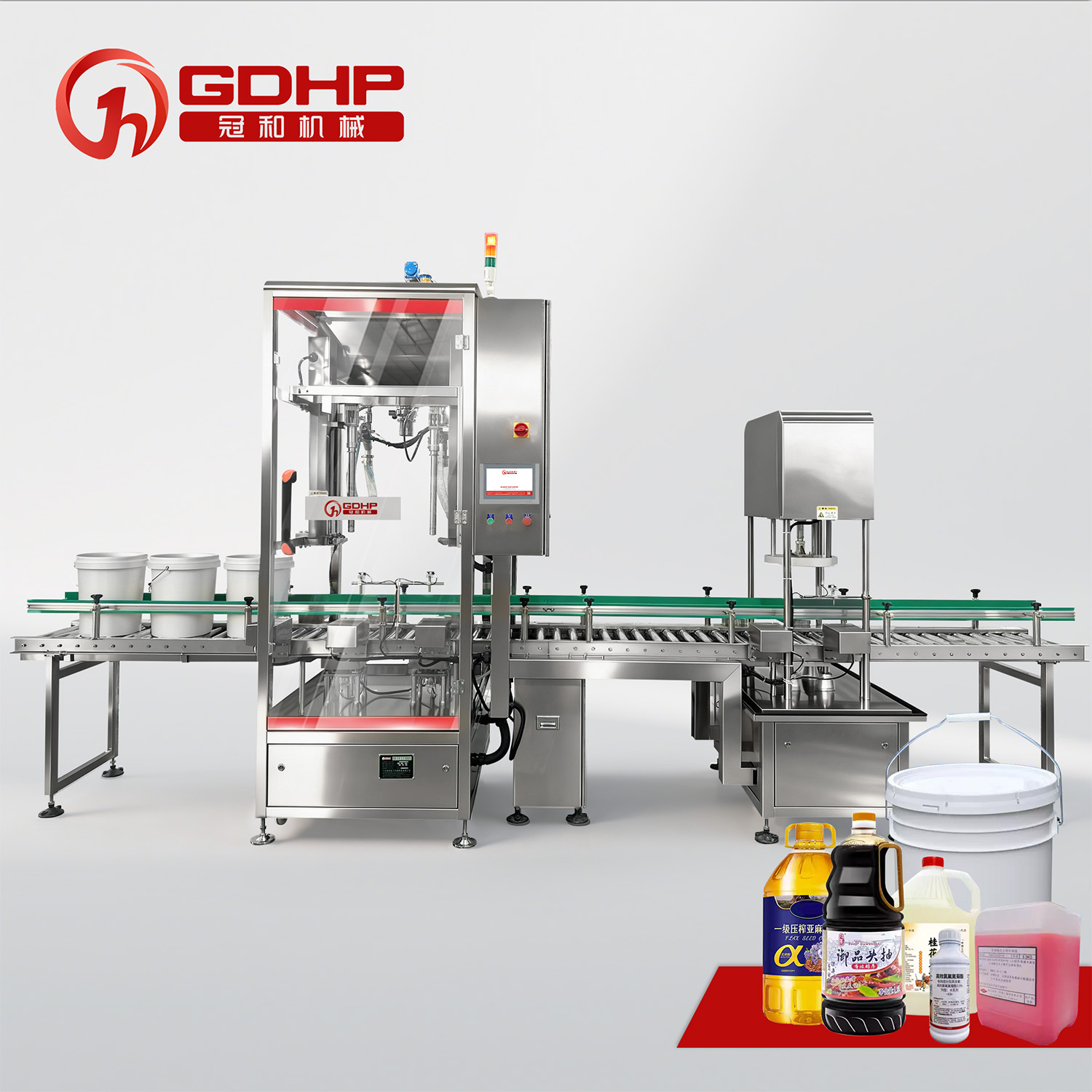
5-gallon soy sauce and edible oil filling line
Bulk liquid filling

A weight-controlled line for soy sauce, vinegar, cooking wine, and edible oil, using dual-speed filling followed by a dedicated drum-capping station.

  • Fill target18–25 kg
  • Filling station300–500 drums/h
  • Capping station150 drums/h
  • Published accuracy±0.5%
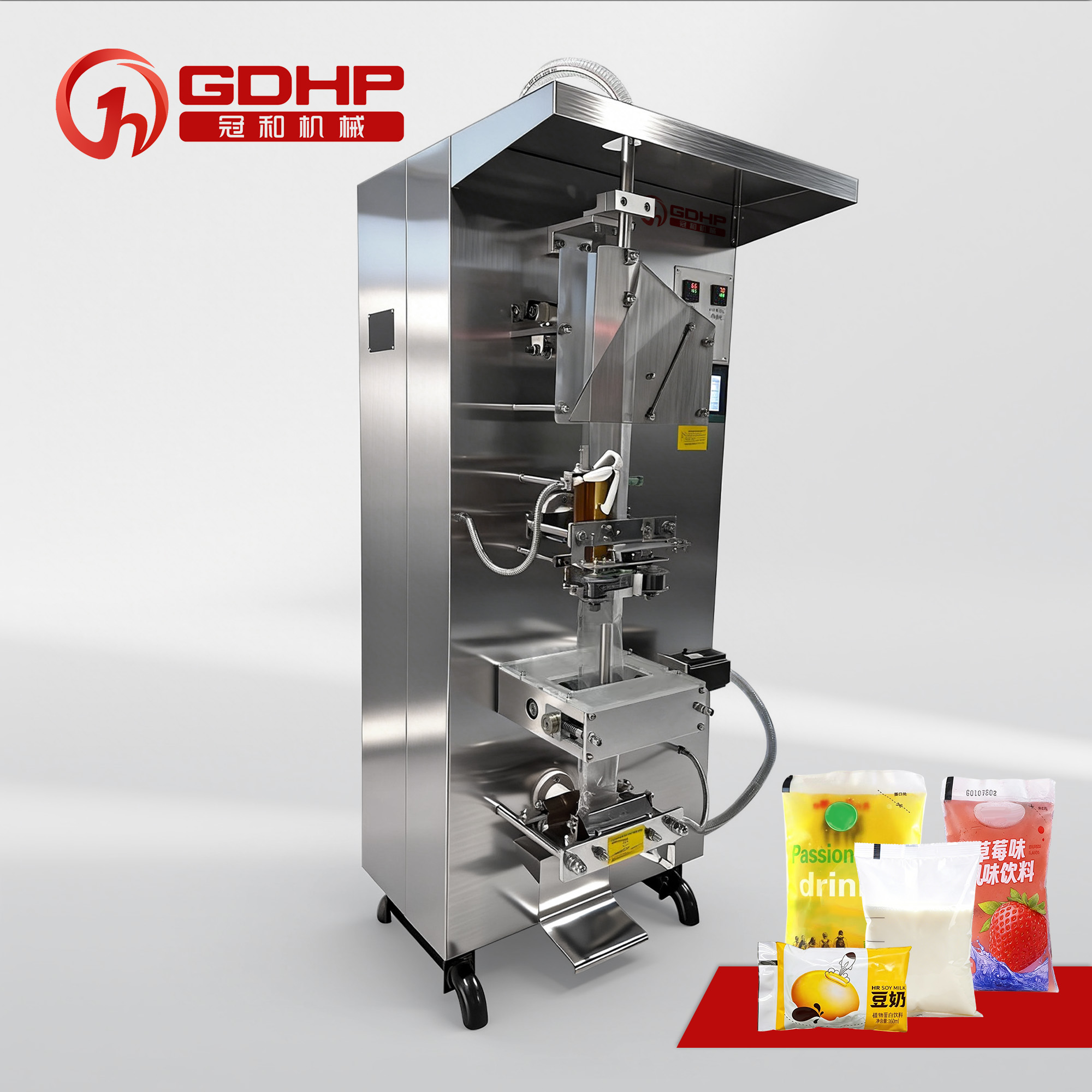
Liquid form fill seal machine for milk and juice
Liquid pouch packaging

Forms, fills, seals, and cuts liquid pouches in one sequence for milk, juice drinks, soy milk, vinegar, and other free-flowing products.

  • Pack volume50–550 mL
  • Published output1,100–1,300 bags/h
  • Film width150–320 mm
  • ModelGHDZ-1000
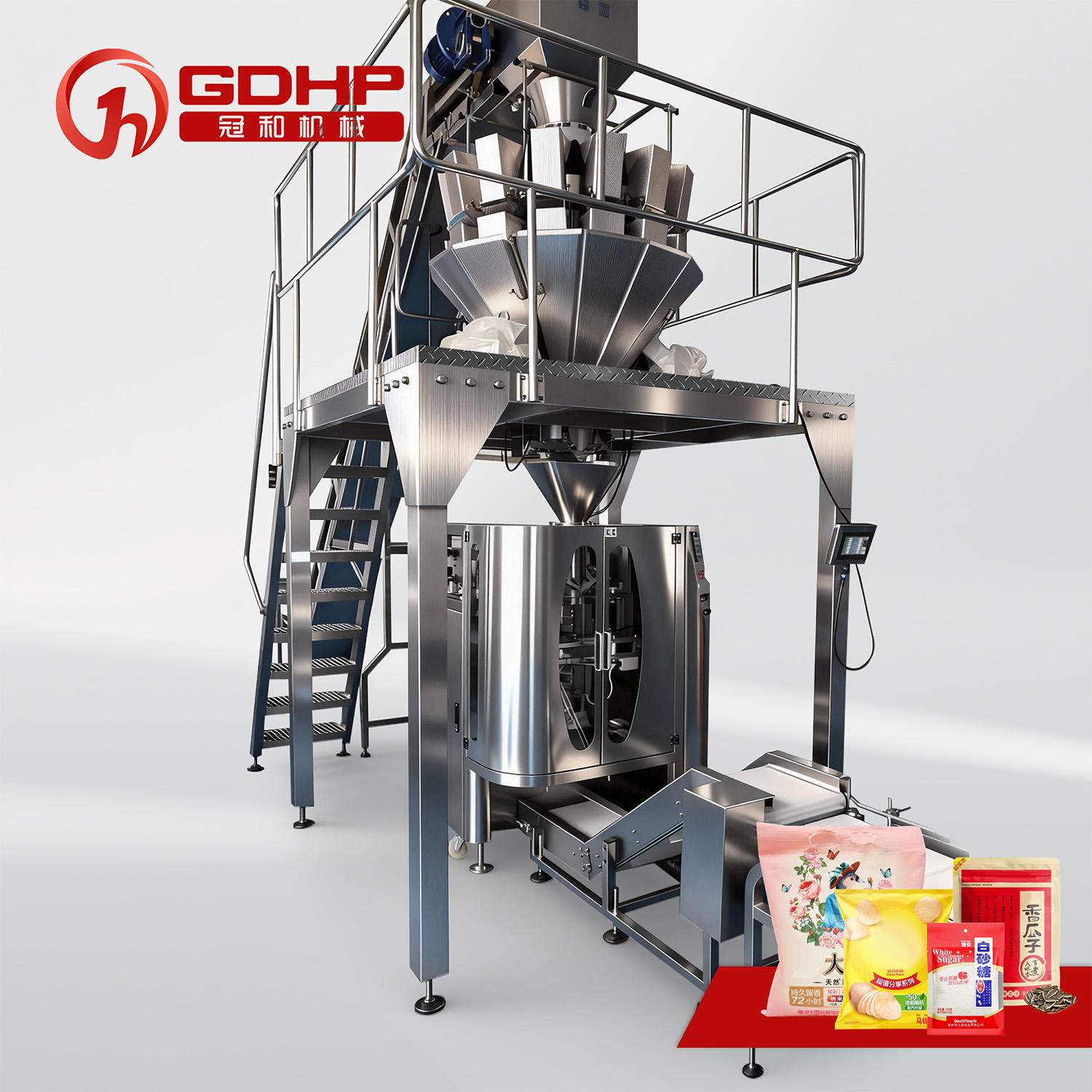
Premade pouch filling machine with 14-head weigher
Granules & snacks

An integrated weighing and pouch-packaging system for nuts, tea, chips, candy, pet food, and other granular or piece products.

  • Weight range120–3,000 g
  • Published output10–60 bags/min
  • Metering14-head weigher
  • Bag materialLaminated pouch
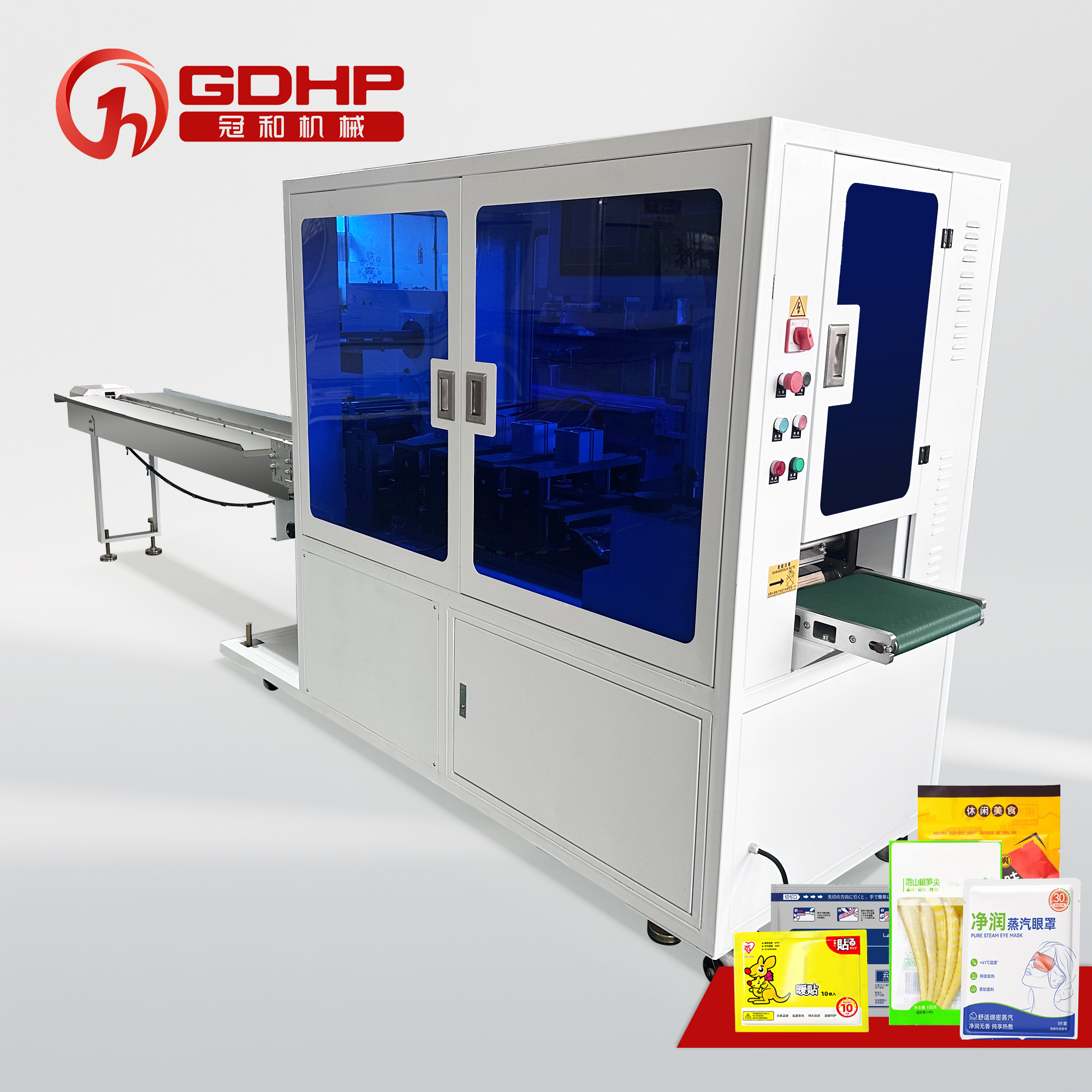
Horizontal form fill seal machine for snacks and candy
Individual flow-wrap packs

A triple-servo horizontal packer for cookies, rice crackers, bread, candy, energy bars, and other products needing four-side sealed packs.

  • Bag width30–110 mm
  • Published output40–230 bags/min
  • Product heightUp to 40 mm
  • DriveTriple servo
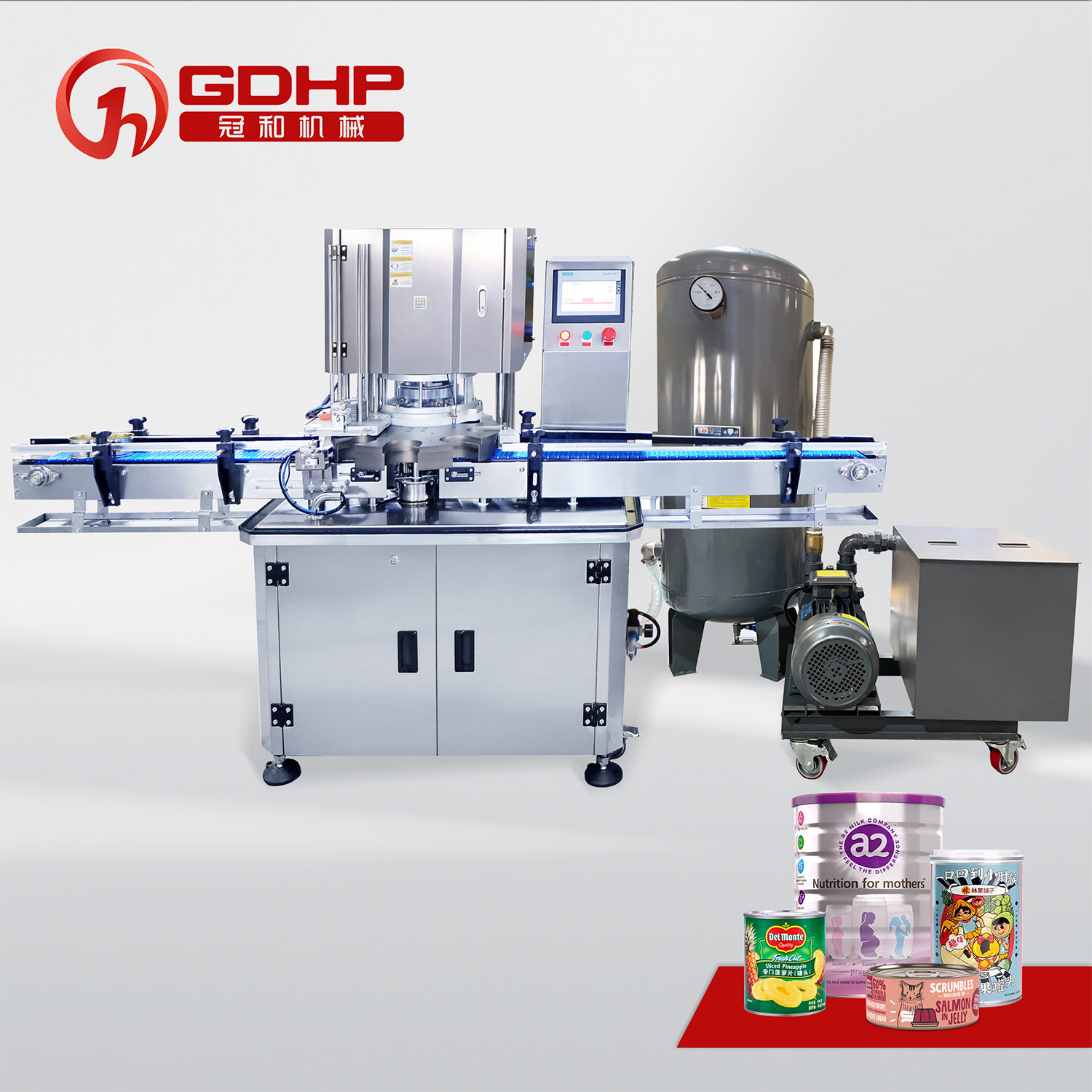
Automatic negative-pressure vacuum can sealing machine
Canned food & pet food

A servo-controlled can-seaming system for canned fruit, porridge, seafood, pet food, nutritional products, and other oxygen-sensitive packs.

  • Can diameter35–105 mm
  • Published output20–40 cans/min
  • Can height35–200 mm
  • Vacuum−0.03 to −0.04 MPa

Process selection

Match the dosing and packaging method to the food

A good line starts with product trials and package samples. Viscosity, particles, temperature, foam, target weight, film or closure behavior, cleaning, and required output all affect the final configuration.
Discuss Your Custom Solution
Food and beverage filling line

Piston & Rotary-Lobe Filling

Mechanism: Positive-displacement dosing driven pneumatically or by servo control.

Best use cases: Sauces, honey, syrups, pastes, and products that may contain small particulates.

Engineering focus: Hopper or feed pressure, nozzle shutoff, suck-back, particle passage, and cleaning access.

Gravity, Flow-Meter & Weight Filling

Mechanism: Product is measured by level, flow, or mass according to viscosity, container size, and accuracy target.

Best use cases: Water-like beverages, juice, vinegar, edible oil, and large drums.

Engineering focus: Flow stability, foam control, two-stage filling, temperature compensation, and representative product trials.

Form-Fill-Seal & Premade Pouch Systems

Mechanism: Film forming or premade-pouch handling combines metering with controlled heat sealing.

Best use cases: Liquid sachets, snacks, nuts, tea, candy, powders, and piece products.

Engineering focus: Film structure, seal window, product-in-seal contamination, bag size, weighing range, and downstream handling.

Selection guide

Choose the package and product path before choosing the model

The best-fit food packaging machine depends on product behavior, package format, closure or seal method, cleaning plan, output, and downstream operations—not one headline capacity.

Bottled & drummed products

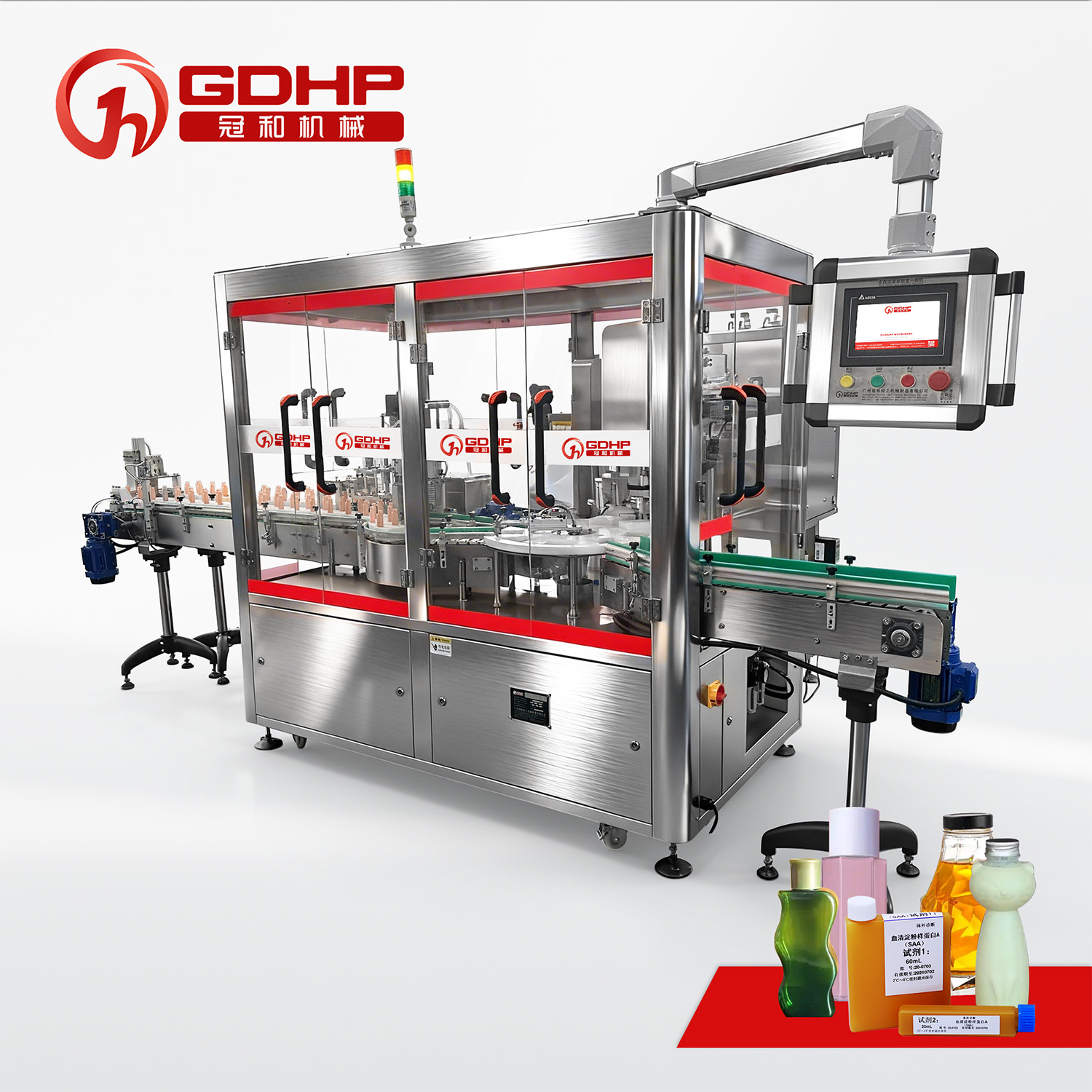
Filling and capping line

Use when the product is dosed into rigid containers and needs coordinated feeding, filling, closure, and optional labeling.

  • Liquid & viscous filling
  • Bottle or drum handling
  • Cap, plug, or induction seal
Flexible packaging

Pouch or FFS system

Use when rollstock or premade pouches suit the portion size, shelf presentation, shipping weight, and barrier requirement.

  • Liquid or dry product metering
  • Film and seal-window testing
  • Recipe-based format changes
End-to-end output

Turnkey packaging line

Use when primary packaging, labeling, coding, inspection, and secondary packing need coordinated controls and acceptance criteria.

  • Line-level takt balance
  • Inspection and coding interfaces
  • Case packing and expansion plan

Typical process architecture

From product trial to packed food

A project may use all or only part of this sequence. Pouches, cans, large drums, hot-fill products, and particulate foods add format-specific equipment and controls.

01Define productViscosity, particles, temperature, foam, cleaning, and target dose
02Feed the packageBottle unscrambler, pouch pickup, film unwind, can feed, or manual loading
03Meter & fillProduct-selected pump, gravity, flow, weight, or combination weigher
04Close or sealCap, plug, induction foil, heat seal, can seam, or bag seal
05Inspect & codePresence, weight, seal, torque, label, date, and reject logic as specified
06Secondary packingConvey, collate, case pack, seal, palletize, or connect to existing equipment

Support From Product Trials to Production Handover

01 Product & Package Analysis

We review viscosity, particles, foaming, temperature, fill target, bottle or pouch geometry, closure, seal requirements, and target output. Representative samples are used to select the metering method, product path, tooling, and change parts.

02 Line Design & Factory Acceptance Testing

The layout, interfaces, controls, utilities, safety logic, and acceptance criteria are agreed before build. Factory trials can use your packages and representative product or a mutually agreed test liquid, with results recorded against the approved protocol.

03 Installation & Operator Training

Site integration covers equipment positioning, utilities, line connections, recipes, changeovers, cleaning steps, routine checks, and operator training. Site acceptance scope and documentation should be defined in the purchase specification.

04 After-Sales Technical Support

Remote diagnostics, maintenance guidance, spare-parts planning, and on-site service can be included according to the project contract. Keep wear-part lists, recipes, electrical drawings, and maintenance records available for faster troubleshooting.

Beginner to project-ready

How to specify a food or beverage packaging line

Define the product and package together

A food or beverage packaging machine meters, forms, fills, closes, seals, labels, or packs a product into its sale or transport package. The required equipment changes with the food and the package; “filling machine” alone is not a complete specification.

Start with a product list and SKU matrix. Record fill target, temperature, viscosity, particle size, foam, oxygen sensitivity, package dimensions, closure or film structure, shelf-life process, cleaning method, and required output for every SKU.

Select the product path from real samples

Free-flowing juice, edible oil, viscous sauce, honey, and particulate condiments do not behave the same. Pump type, hose diameter, valves, nozzle bore, hopper design, agitation, heating, and drip control must be selected from the actual product and operating temperature.

One anonymized food-line specification in our project experience used a stepper-driven rotary-lobe pump for viscous liquids, with stored filling recipes in the PLC/HMI. Another specified servo piston filling with suck-back nozzles and SUS316L product-contact parts for multiple bottle formats. These are configuration examples; final suitability still requires your samples and acceptance tests.

Package geometry controls line stability

Round bottles can often use adjustable guides or starwheels. Irregular bottles may need dedicated pucks. Pouches need reliable pickup and opening; rollstock needs stable tracking and a workable sealing window; cans need matched seaming tooling.

Send representative bottles, caps, liners, cans, labels, pouches, and film early. Dimensional tolerance, stiffness, static, surface finish, cap variation, and product residue at the sealing area can matter as much as the nominal drawing.

Define accuracy together with product and speed

An accuracy percentage is meaningful only with its fill target, product conditions, test method, sample size, and line speed. State whether speed is measured at the filler, at the closing station, or as sustained good packs from the complete line.

Factory trials should use the intended package and representative product. For a multi-machine line, agree the bottleneck station, buffer capacity, changeover target, reject rules, restart behavior, and the conditions under which output will be accepted.

Design hygiene around the cleaning process

For U.S.-market projects, 21 CFR 117.40 requires food-contact equipment to be adequately cleanable and food-contact surfaces to be corrosion-resistant, nontoxic, and able to withstand their intended use and cleaning. Other markets and products may add different requirements.

Equipment can support hygienic production through material choice, drainage, access, guarded zones, and documented cleaning steps. Final food-safety compliance depends on the installed process, sanitation program, utilities, facility, product controls, validation, and the food manufacturer’s quality system.

What to include in your URS

  • Product names, recipes, and physical properties
  • Target plus minimum and maximum fill amount
  • Bottles, caps, cans, pouches, film, labels, and samples
  • Required good-pack output and shift pattern
  • Accuracy definition, test method, and sampling plan
  • Feeding, filling, closure, sealing, inspection, and packing sequence
  • Product-contact materials and cleaning method
  • Product temperature, heating, cooling, agitation, and hold-time needs
  • Alarm, reject, interlock, recipe, and traceability logic
  • FAT, SAT, documentation, training, and spare-parts scope
  • Voltage, compressed air, water, drainage, and plant utilities
  • Line layout, access, buffers, and future expansion interfaces

Frequently asked questions

Food & beverage packaging machine FAQ

There is no universal method. Gravity or flow-meter filling often suits free-flowing liquids; piston or rotary-lobe systems are common for viscous products; weight filling is useful for bulk containers. Selection must follow product tests, fill range, particles, foam, temperature, cleaning, and accuracy criteria.

Yes, when it is engineered with adjustable guides, recipe-controlled settings, and identified change parts. The compatible range and practical changeover time must be confirmed from actual containers, closures, film, pouches, labels, and product conditions.

FFS forms packs from rollstock and can reduce material handling at scale. Premade pouches provide access to formats and features supplied by the pouch converter. The choice depends on product metering, film structure, seal area contamination, pack appearance, speed, batch size, and changeover needs.

Confirm product temperature at the filler, viscosity at that temperature, container and closure temperature limits, holding time, headspace, cooling method, condensation, label timing, and safe operator access. Product and package trials should reproduce the intended process conditions.

Provide representative product, bottles or drums, caps, cans, pouches or film, labels, drawings, fill target, acceptable deviation, output, temperature, cleaning plan, utilities, and available layout. Physical samples help verify feeding, filling, sealing, closure, and changeover assumptions.

No. Equipment design can support hygienic production, but compliance belongs to the complete installed process. It depends on materials, facility conditions, sanitation procedures, utilities, hazard controls, validation, documentation, staff practices, and the food manufacturer’s quality system.

Build Your Custom Solution

Your information is secure - we respect your privacy and will only use these details to contact you.

Build Your Custom Solution