How to Fix Powder Filling Machine Clogs: A Practical Guide
Learn how to diagnose and prevent powder filling machine clogs caused by moisture, bridging, static, dust and auger settings—with safe,…
September 5, 2026

Material behavior must drive every production line acceptance decision. Before accepting a line, your verify that the delivery, mixing, and filling equipment matches the product’s viscosity, particle size, flowability, and temperature sensitivity. A system built for free-flowing liquid will not perform the same way with dense paste, heated product, powder, or granules.
Inspect the selected filling method under normal operating conditions:
Run acceptance tests with the actual product or an agreed representative material. Confirm stable product flow, consistent filling, and no clogging, separation, or handling issue at the required operating conditions.
Material contact parts must be appropriate for hygiene and chemical compatibility. Your inspect whether the line uses suitable SUS304 stainless steel for machine structures and SUS316 stainless steel or medical-grade silicone tubing where product contact requires improved corrosion resistance or controlled fluid handling.
Pay close attention to corrosive or toxic liquids. These applications require properly selected contact materials and sealed product paths to reduce the risk of leakage, contamination, and premature component wear.
Production line acceptance should also confirm the controls that protect product quality during transfer and filling:
Acceptance standard: The line should handle the specified product consistently without unnecessary waste, blockage, contamination, or loss of process control.
FAT works best when purchasing requirements are defined from the start. Use our complete filling line buying and selection guide before issuing an RFQ or approving a machine design.
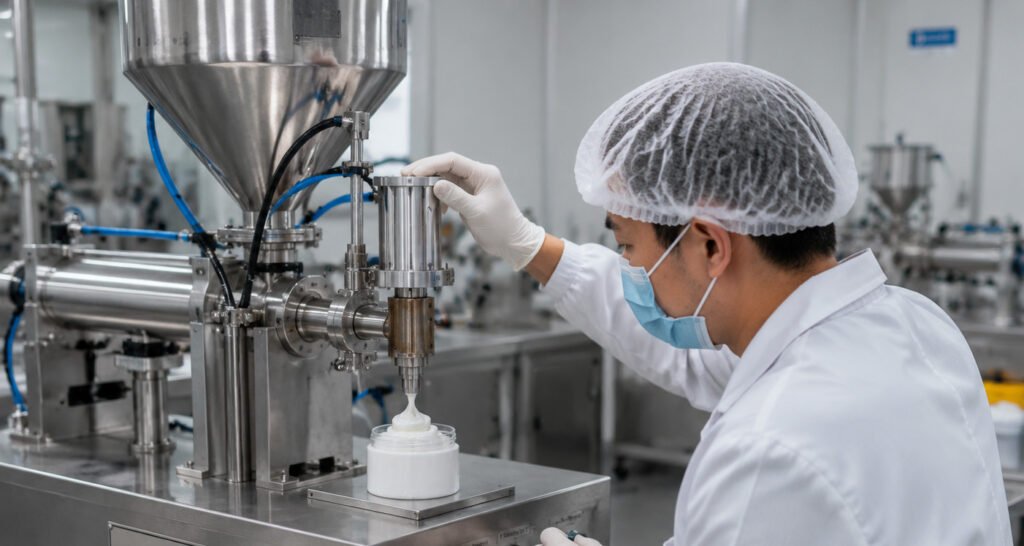
For flammable, alcohol-based, volatile, corrosive, or toxic products, safety controls must be proven before production line acceptance. Your treat this as an operating requirement, not a paperwork exercise.
Verify that the line uses suitable explosion-proof machinery where the product or process requires it. Inspect explosion-proof motors and electrical boxes, along with the intended operating conditions for spark-free operation.
Check that the safety design matches the material being filled, transferred, capped, or sealed. A standard machine configuration should not be accepted for a hazardous application without the required protective design.
Review the controls that reduce ignition and leakage risks:
Acceptance focus: Safety components must be installed, connected, and operating correctly during testing—not simply listed in the machine specification.
For toxic or corrosive fluids, confirm that product-contact and containment systems support safe handling. Material contact parts may require SUS316 stainless steel or medical-grade silicone tubing, depending on the product.
Inspect negative-pressure sealing measures designed to prevent toxic gas leakage. Verify that ventilation and containment arrangements are included in the line layout and can operate safely with the actual product process.
Key takeaway: Hazardous-area protection must be verified under operating conditions before accepting a production line. Explosion-proof controls, anti-static design, electrical isolation, and negative-pressure sealing directly protect people, equipment, and production continuity.
I match the filling system to the product and container before accepting the line:
I define an acceptable dosing accuracy range and test filling accuracy at the intended operating speed. The test should include repeated cycles to confirm stable results, not just one successful sample.
I also inspect the nozzles for:
Key takeaway: Accurate, repeatable dosing reduces product waste, protects filling quality, and supports better Overall Equipment Effectiveness (OEE).
Container handling must be proven with the actual bottles, pouches, cans, jars, and closures planned for production. During production line acceptance, your check each format against its dimensional tolerances, including height, diameter, shape, neck finish, and stability on conveyors.
Reliable handling depends on correctly matched mechanical components. Inspect the line’s:
The container should move smoothly through every station without tipping, jamming, scuffing, or misalignment. A line that fills accurately but cannot reliably transfer containers will reduce UPM throughput and Overall Equipment Effectiveness (OEE).
For multi-SKU production, machine changeover efficiency is a practical acceptance point. Measure the time required to switch between approved package formats and confirm that the process fits the planned production schedule.
Check that format changes are clearly documented and that adjustments can be completed consistently. Where tool-less changeover is included in the line design, verify its operation during testing.
Acceptance focus: Every supported package format must run reliably, and changeovers must be practical for the planned SKU mix.
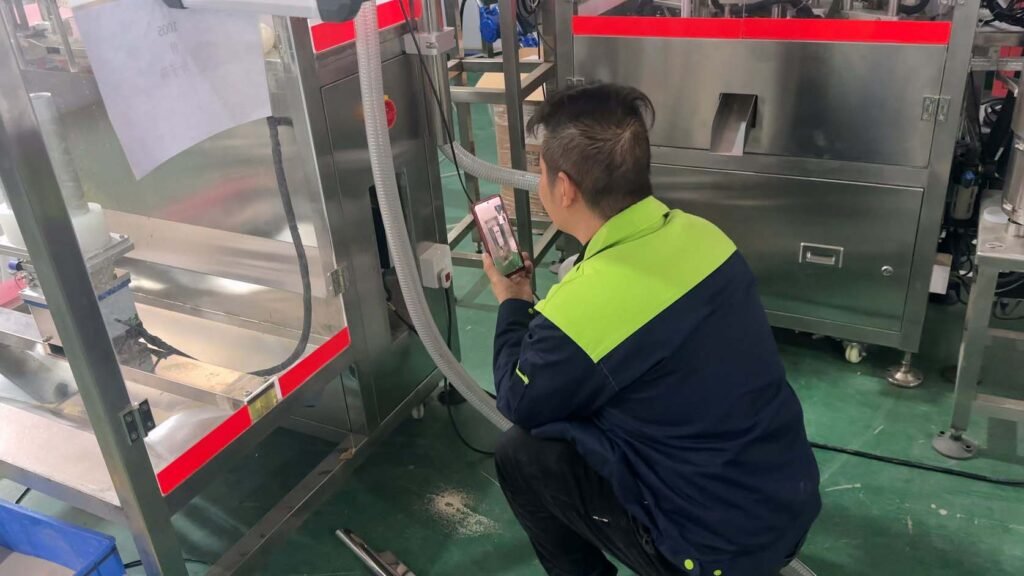
A production line only performs as well as its slowest connected station. During production line acceptance, your verify that bottle unscrambling, washing, filling, capping, labeling, and end-of-line packaging operate as one synchronized system.
Check product flow under normal operating conditions, including start-up, short stops, and restart. Conveyors, transfer points, and each machine must maintain steady movement without product buildup, gaps, jams, or unnecessary manual intervention.
Verify that:
Compare the measured Units Per Minute (UPM) against the agreed production target during Factory Acceptance Testing (FAT). Do not rely only on individual machine speeds. The accepted figure should reflect stable output across the complete automated line.
Record performance at the intended product, container, and operating settings. This provides a more practical view of expected throughput, line balance, and Overall Equipment Effectiveness (OEE).
Key check: A fast filler does not guarantee a high-output line if capping, labeling, or end-of-line packaging cannot maintain the same pace.
Review sensor signals, fault alarms, and line-balance data before acceptance. Repeated stops, rejected containers, low-speed operation, or product backups point to a bottleneck that should be corrected before final approval.
Focus on:
A properly integrated turnkey packaging machinery line should deliver stable, measurable UPM performance from container handling through final packaging.
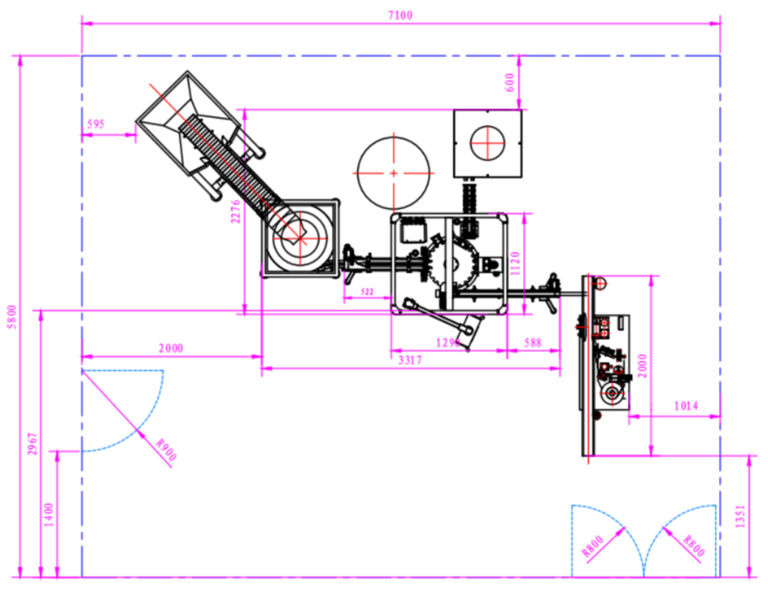
Before production line acceptance, I verify that the complete line fits the real facility, not only the equipment drawing. The layout must support safe material flow, operator movement, maintenance access, and reliable utility connections.
| Area to Inspect | Acceptance Check | Why It Matters |
|---|---|---|
| Machine footprint | Compare the full line footprint with the approved facility layout. | Prevents installation conflicts and restricted access. |
| Material flow | Confirm clear paths for containers, product supply, packaging materials, and finished goods. | Reduces handling delays and line congestion. |
| Operator access | Check space around controls, guards, filling stations, and inspection points. | Supports safe daily operation and faster response to faults. |
| Maintenance clearance | Verify access to motors, electrical panels, conveyors, nozzles, and service points. | Makes preventive maintenance practical. |
| 3D layout plans | Review the 3D layout before shipment and confirm site dimensions. | Identifies clearance issues early. |
For turnkey packaging machinery, I also check clearance around conveyors, safety guards, electrical enclosures, and access panels. A line may fit within the stated plant floor space while still leaving too little room for cleaning, format adjustments, or component replacement.
| Utility | What to Verify |
|---|---|
| Compressed air | Supply routing and connection points for pneumatic equipment. |
| Electrical power | Required load, panel location, cable routing, and electrical enclosure access. |
| Water and drainage | Connection locations and drainage capacity for washing or processing equipment. |
| Steam | Availability and routing where heating or insulated mixing systems require it. |
| Exhaust ventilation | Suitable ventilation for product vapors, dust, or hazardous material handling. |
Small production lines may require about 50-100 m2, while larger high-speed lines may need about 200-500 m2. Final plant floor space planning should follow the approved 3D layout, actual equipment configuration, and required operating clearances.
Regulatory compliance must be verified before production line acceptance. For food, pharmaceutical, and IVD operations, hygienic design affects product safety, cleaning time, and compliance readiness.
Confirm that the line is designed and documented for the standards required by the product, facility, and destination market.
| Requirement | Acceptance Check |
|---|---|
| ISO 9001 | Confirm the manufacturer’s quality management documentation. |
| CE | Verify applicable machine safety and electrical compliance documents. |
| FDA and cGMP | Review suitability for regulated food, pharmaceutical, or IVD production. |
| EHEDG / 3-A | Confirm hygienic design requirements where these protocols apply. |
| Market-specific rules | Check local regulatory and customer requirements before shipment approval. |
Inspect all product zones closely, especially material contact parts. SUS316 contact surfaces or medical-grade silicone tubing may be required for corrosive products or higher hygiene needs.
Check for:
Key takeaway: A line may meet output targets but still fail acceptance if its surfaces, drainage, or cleaning access create hygiene risk.
For applications requiring clean-in-place (CIP) systems, verify that the line can support the planned cleaning process without unnecessary dismantling. Review sanitation procedures for tanks, pipelines, fillers, and other product-contact components.
| Area | What to Verify |
|---|---|
| Cleaning access | Product-contact areas can be cleaned and inspected effectively. |
| Drainability | Cleaning fluids and product residues can drain from relevant sections. |
| Filling system | Nozzles, valves, and contact paths are suitable for the sanitation method. |
| Documentation | Cleaning and hygienic operating procedures are available for the line. |
For turnkey packaging machinery, hygienic machine design should be treated as an acceptance requirement, not a later improvement. This protects product quality, supports reliable production, and reduces avoidable cleaning-related downtime.
Factory Acceptance Testing (FAT) is the last controlled check before shipment approval and final payment. Your run the line at the manufacturer using the actual product, containers, closures, and operating settings wherever possible. This confirms that the turnkey packaging machinery performs as agreed before it reaches the plant.
Verify the complete operating sequence under realistic conditions:
A FAT protocol should include functional checks for:
Key takeaway: A line should not only run under normal conditions. It must also stop safely, report faults clearly, and return to stable production without creating safety, quality, or product-waste risks.
Use a signed FAT record with clear pass/fail criteria for each test. Record any deviation, its corrective action, retest result, and closure status under Corrective and Preventive Action (CAPA) controls.
Before shipment approval, confirm that all critical FAT issues are closed and that the final tested configuration matches the approved production line specification.
A sound production line acceptance decision looks beyond the purchase price. Your assess Total Cost of Ownership (TCO) across the line’s expected operating life, including energy use, wear parts, maintenance labor, spare parts, and the cost of unplanned downtime. A lower initial price does not offset avoidable stoppages, frequent part replacement, or difficult maintenance access.
Confirm the supplier provides a clear view of the items that affect long-term cost:
Key takeaway: Evaluate the full operating cost, not only the equipment quotation.
Payment milestones should follow measurable project results. For turnkey packaging machinery, the process should clearly link payment to manufacturing progress and acceptance status.
| Project Milestone | Acceptance Evidence |
|---|---|
| Deposit payment | Confirmed scheme and technical parameters |
| Manufacturing completion | Equipment built to the approved configuration |
| Factory Acceptance Testing (FAT) approval | FAT results meet agreed operating and safety standards |
| Shipment | Approved equipment is released for delivery |
| Installation and commissioning | Line is installed and operating at the facility |
| Site Acceptance Testing (SAT) | On-site performance is verified against agreed requirements |
GDHP’s standard project process includes scheme confirmation, deposit, manufacturing, FAT approval, payment, and shipment. Keep each milestone documented so payment release matches the agreed scope and verified results.
Align delivery timing with the production launch schedule before final acceptance. Typical lead times are 30–60 days after deposit confirmation, depending on the approved customized solution and technical requirements.
Verify:
A clear TCO review and milestone-based payment structure protect project budgets, support reliable line commissioning, and reduce avoidable risk before production begins.
To benchmark equipment price, integration, change parts, logistics, training, and long-term service, review our guide to filling machine total cost of ownership.
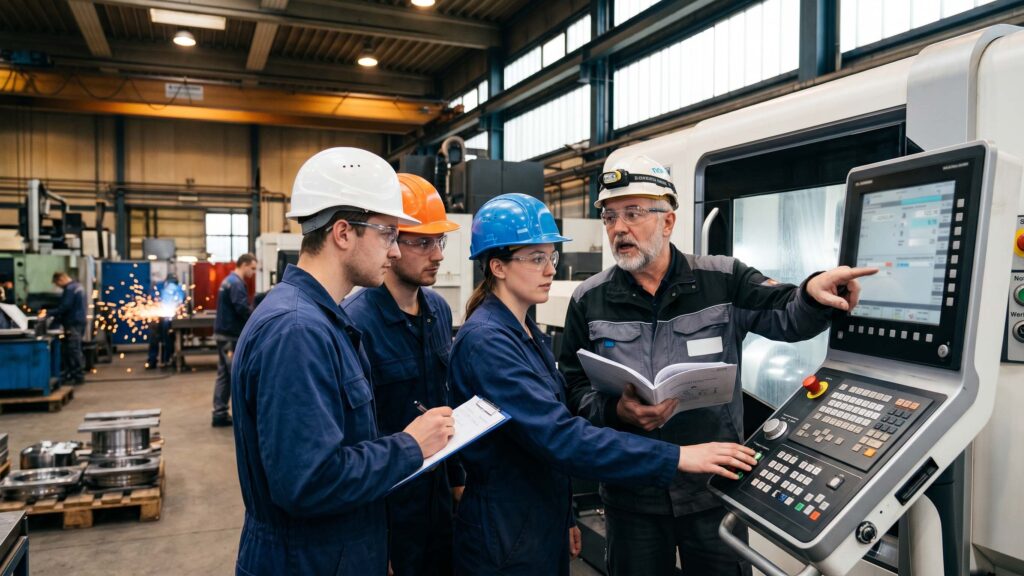
A production line is not ready for final acceptance when it arrives. Your define the vendor scope for installation, line commissioning, and Site Acceptance Testing (SAT) before shipment. This keeps responsibilities clear from delivery through stable production.
| Acceptance Area | What to Confirm |
|---|---|
| Installation | Equipment positioning, utility connections, assembly, and startup support |
| Commissioning | Safe operation, line synchronization, settings, and performance checks |
| SAT | Site-based verification against the agreed operating requirements |
| Training | Operator and maintenance training for daily operation and service |
| Support | Warranty coverage, spare parts, remote guidance, and technical service |
Training should cover the people who run, clean, adjust, and maintain the line. We confirm that the scope includes:
Training should be completed during commissioning, using the installed production line and normal operating conditions.
Review the warranty terms before production line acceptance. GDHP provides a one-year free warranty that includes on-site installation and commissioning, plus lifetime technical support through remote guidance or local engineer service.
| Support Item | Acceptance Check |
|---|---|
| Warranty | Confirm covered equipment, duration, and service conditions |
| Spare Parts | Review recommended spare-parts lists and availability |
| Response Support | Define remote and on-site technical support channels |
| Long-Term Service | Confirm support for troubleshooting, maintenance, and operational issues |
A clear installation, training, warranty, and support plan protects uptime, supports preventive maintenance, and reduces risk after the production line enters service.
A disciplined production line acceptance checklist keeps final approval objective. Your require sign-off from the teams that will operate, maintain, validate, and support the line:
Before releasing production line acceptance, collect and review the complete technical file:
Final acceptance must remain on hold until every critical defect is corrected and all Corrective and Preventive Action (CAPA) items are formally closed. This protects production uptime, filling accuracy, safety, and long-term Overall Equipment Effectiveness (OEE).
We require a complete acceptance file, including:
Use the actual product or an approved representative material. Run the line at the agreed operating speed, then record fill weights or volumes across repeated samples.
Confirm that:
Final approval should be withheld when critical issues remain open, including:
Critical defects must be corrected and retested before shipment approval.
The duration depends on the line scope, automation level, product characteristics, and site readiness. Training should cover operation, cleaning, format changeover, calibration, safety checks, fault recovery, and preventive maintenance.
Line commissioning should continue until operators can run the equipment safely and the production line completes Site Acceptance Testing under normal plant conditions. GDHP provides on-site installation and commissioning within its one-year free warranty scope, with lifetime technical support available through remote guidance or engineering service.