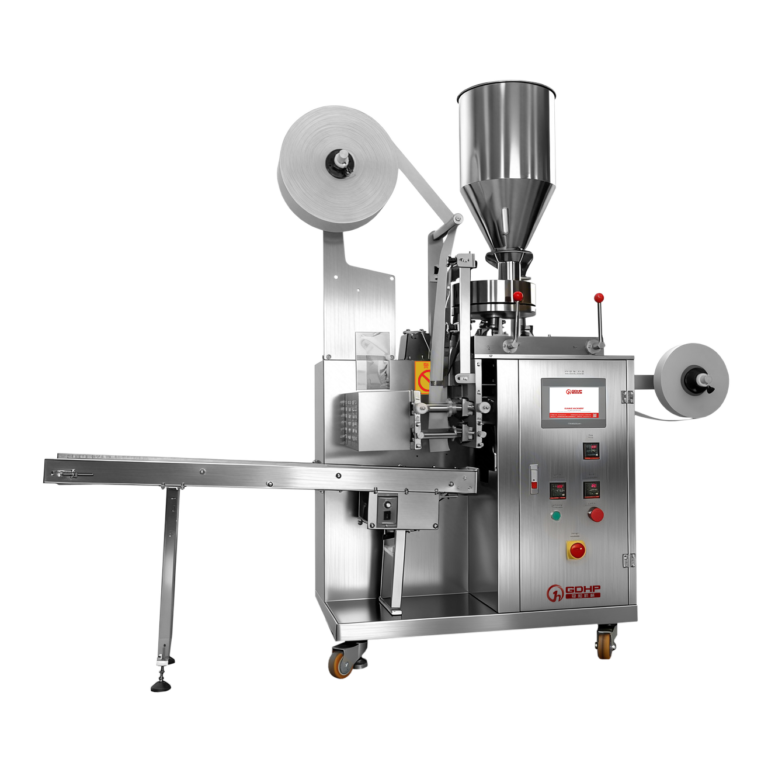
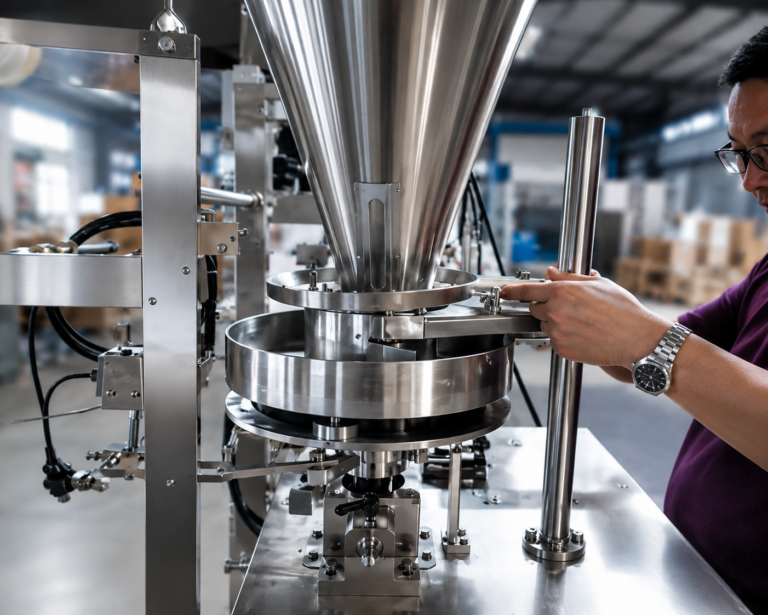
What is a FFS Machine(Form Fill Seal Machine)?
Learn how FFS machines, like those from GDHP, gain an in-depth understanding of the working principles and core advantages of…
March 27, 2026


Hello, I am a senior engineer and founder at GDHP. With 23 years of technical expertise in the filling and packaging industry, we provide more than just equipment—we are dedicated to delivering high-stability, high-efficiency, and fully customized turnkey solutions for your business.
Ketchup is a notoriously difficult liquid to package due to its unique physical and chemical properties. Achieving a consistent fill without splashing or dripping requires specialized engineering and a deep understanding of the product’s behavior.
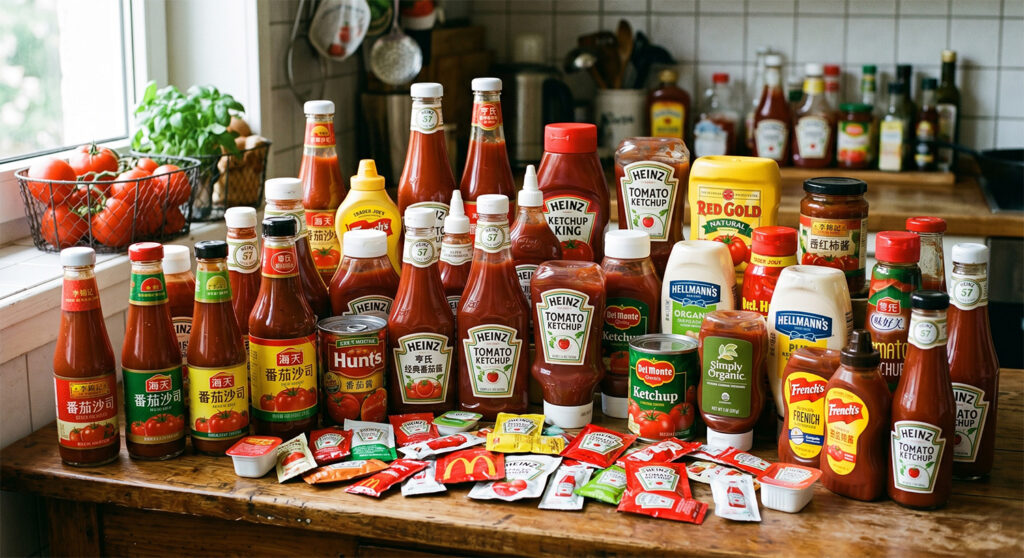
The choice of packaging format directly impacts your brand positioning, shipping costs, and consumer experience.
For dry snacks and bakery products, see how pillow packaging protects food freshness through film barriers and seal integrity.
The classic choice for premium branding. Glass offers the best oxygen barrier, extending shelf life significantly without the need for heavy preservatives.
The standard for modern consumer convenience. Multi-layer technology (incorporating EVOH, PET, PP) is often used to mimic the oxygen barrier properties of glass while remaining lightweight.
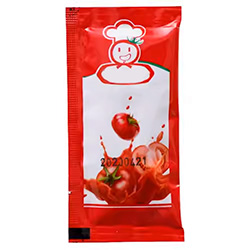
Essential for the “on-the-go” market. These require high-speed vertical form-fill-seal machinery to maintain high-volume profitability.
A growing trend in sustainable packaging. Spouted pouches are increasingly replacing rigid plastic bottles in the retail sector.
Designed for industrial kitchens and B2B ingredient supply. These often utilize “Bag-in-Box” systems or large plastic pails.
Use Case: Large-scale catering, pizza chains, and food manufacturers.
Pros: Maximum cost efficiency and streamlined high-volume storage.
Getting the right ketchup packaging machinery is crucial for efficiency and food safety. Because ketchup is highly acidic, your equipment needs to handle it without corroding over time. We always ensure our food-contact parts use SS316L stainless steel, while the main machine frames use SS304 to meet strict FDA and GMP standards.
For ready-meal lines that combine filling, FFS packaging, and heating components, see how self-heating food production works.
| Target Market | Best Packaging Format | Why It Works |
|---|---|---|
| Fast Food & Takeout | Sachets & Stick Packs | Portion control, cheap to produce, easy on-the-go use |
| Retail Grocery | Squeeze PET Bottles | Ultimate consumer convenience, shatterproof, lightweight |
| Premium Retail | Glass Bottles | High-end feel, excellent oxygen barrier for longer shelf life |
| Restaurants & Catering | Bulk Pouches or Jugs | Cost-effective, high volume, easy to store in commercial kitchens |
For glass or plastic bottles, piston filling machines are the industry standard. They handle the thick, sticky viscosity of ketchup perfectly without clogging.
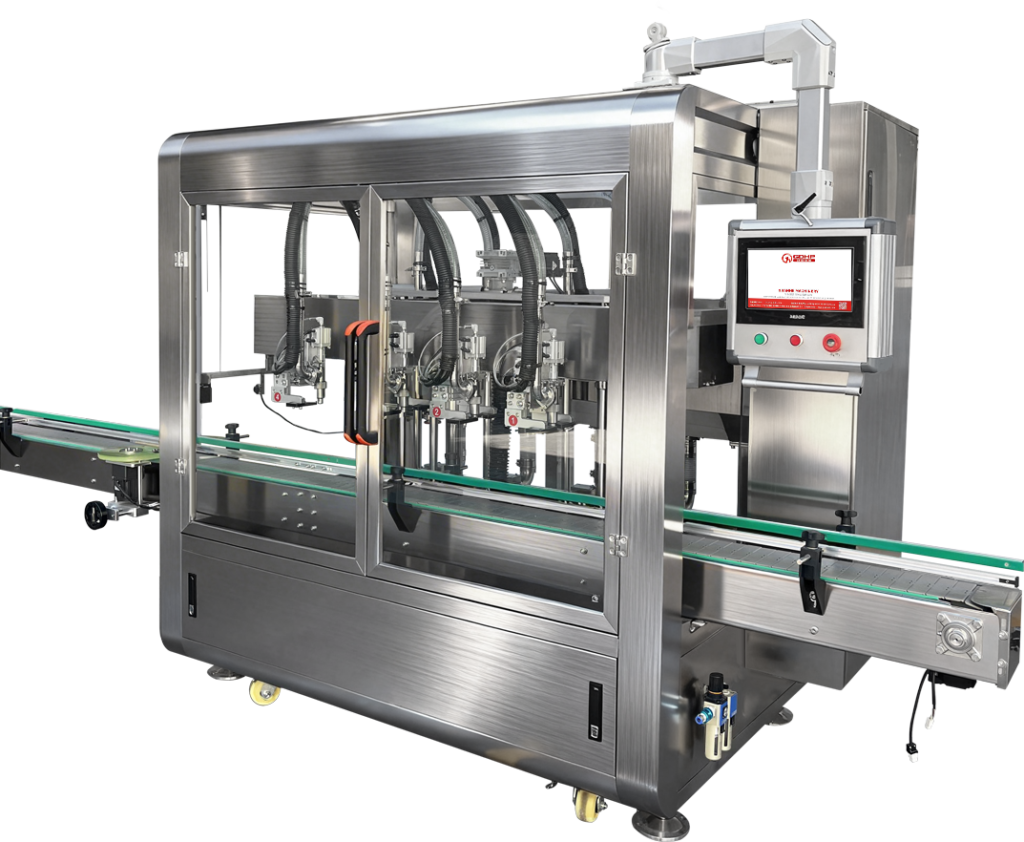
Once filled, bottles need an airtight seal to prevent oxidation and spoilage.
If you are producing single-serve ketchup packets for fast-food chains, VFFS machines are exactly what you need. They form the pouch from a flat roll of film, fill it with ketchup, and seal it in one fluid motion.
Stand-up and spouted pouches are taking over US retail shelves. Rotary pouch machines pick up a pre-made pouch, open it, fill it with ketchup, and heat-seal it shut.
For high-volume commercial production, piecing together standalone machines limits your growth. A fully automated packaging line integrates the entire process—from bottle unscrambling and filling to capping, labeling, and final case packing.
Investing in ketchup packaging machinery is a major decision. Because ketchup is highly acidic and viscous, standard equipment simply won’t cut it. When I evaluate a new packaging line, I look at seven critical factors to ensure smooth operations and a solid return on investment.
If your product uses rigid metal cans, review these can sealing machine buying factors covering automation, dimensions, seam integrity, utilities, and total cost.
Ketchup’s high acidity—I am thank to the tomatoes and vinegar—will quickly eat through cheap metals.
Food safety is non-negotiable in the US market. Your equipment must meet strict regulatory standards to prevent contamination and costly recalls.
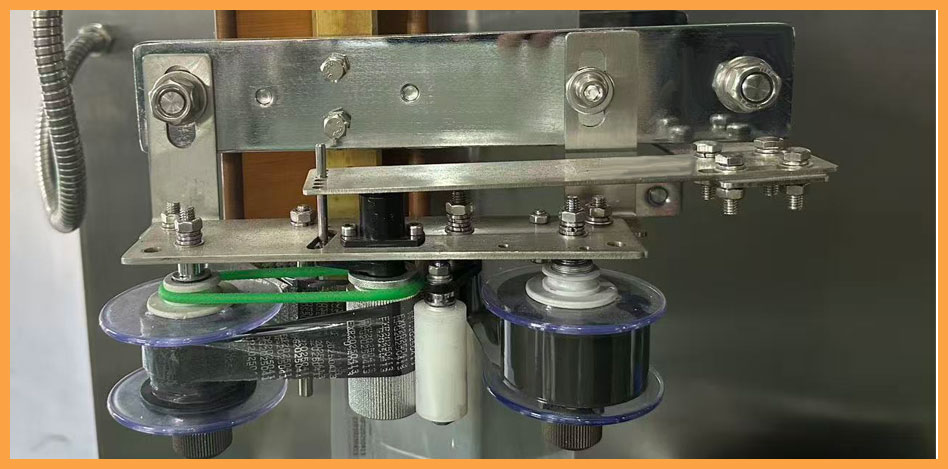
Your machinery needs to keep pace with your sales volume without sacrificing accuracy.
Consumer preferences change rapidly, and your packaging line should adapt without requiring a completely new setup.
A leaking ketchup container ruins brand reputation and causes massive headaches during shipping and warehousing.
Ketchup gets sticky and hardens quickly. If a machine is difficult to clean, your labor costs will skyrocket and contamination risks will rise.
The initial sticker price is only the beginning. I always calculate the long-term operational costs before pulling the trigger on new equipment.
Navigating the world of food manufacturing is tricky, and ketchup presents unique challenges due to its acidity and viscosity. I have seen many businesses lose thousands in product waste and downtime by overlooking these critical areas.
Going for the cheapest machine or material is a trap. Low-cost equipment often lacks the precision needed for consistent fills, leading to overfilling (product waste) or leaking seals. In the long run, the cost of maintenance and lost batches far outweighs the initial savings of a high-quality system.
Ketchup is highly sensitive to oxidation. If you choose a single-layer plastic bottle without a proper oxygen barrier, your sauce will turn brown and lose its flavor profile within weeks. Always ensure your PET or PP bottles use multi-layer technology or oxygen scavengers to maintain that bright red color consumers expect.
Ketchup is highly sensitive to oxidation. If you choose a single-layer plastic bottle without a proper oxygen barrier, your sauce will turn brown and lose its flavor profile within weeks. Always ensure your PET or PP bottles use multi-layer technology or oxygen scavengers to maintain that bright red color consumers expect.
Ketchup is acidic because of its vinegar and tomato content. Using standard steel for your machinery is a recipe for disaster.
A fast filler is useless if your capper can’t keep up. Many owners buy individual components from different vendors to save money, only to face massive integration headaches. Fully automated packaging lines are designed to work in sync, preventing bottlenecks and ensuring a smooth flow from filling to labeling.
Ketchup is a breeding ground for bacteria if equipment isn’t cleaned properly. I cannot stress enough the importance of Clean-In-Place (CIP) systems.
Choosing the right ketchup packaging solution depends entirely on your current production volume and your growth targets. I’ve broken down the best paths based on where your business stands today:
When scaling ketchup production, choosing the right machinery partner is just as important as selecting the packaging format itself.
GDHP specializes in complete ketchup packaging solutions, covering everything from bottle filling to high-speed sachet production lines. Unlike single-machine suppliers, GDHP focuses on integrated systems designed specifically for high-viscosity, acidic products like ketchup.
Key capabilities include:
Whether you are producing retail bottles, foodservice bulk packs, or single-serve sachets, GDHP systems are engineered to maximize output, minimize downtime, and protect product quality.
| Your Scenario | Recommended GDHP Solution |
|---|---|
| Retail Bottles (Glass / PET) | Automatic filling + capping + labeling line |
| Fast Food Sachets | High-speed VFFS packaging system |
| Foodservice Bulk Supply | Large-volume filling with pump systems |
| Premium Packaging | Pre-made pouch filling machines |
Selecting the right ketchup packaging involves more than just picking a pretty bottle or a cheap sachet. It requires a strategic balance between material science, hygiene requirements, and mechanical efficiency. By matching your machinery to your specific production stage and prioritizing high-grade materials like SS316L, you protect both your product quality and your bottom line. Investing in a reliable, automated system is the most effective way to scale your brand while meeting the strict safety standards of the United States food industry.
The Technology: They use multi-layer co-extrusion. A microscopic EVOH layer is embedded in the plastic, acting as an absolute barrier against oxygen to keep the ketchup red and fresh.
The Mechanism: Steam-vacuum capping. Sterile steam is injected right before the lid is applied. As the steam cools and condenses, it creates a powerful, tamper-evident vacuum seal.
The Technique: Acidic splashes ruin heat seals. We engineer bottom-up filling nozzles and use mechanical stripping bars to squeeze the sealing zone completely dry before the heat jaws clamp down.
The Standard: Always demand an IP69K rating. This ensures the machine’s electrical panels and servos survive harsh, high-pressure chemical washdowns without short-circuiting.
The ROI: It provides automated internal washdowns. By eliminating the need to manually disassemble and scrub heavy steel parts, you drastically reduce labor costs and machine downtime.
The Strategy: No. Aim for 75% to 80% of maximum capacity. This “buffer speed” prevents violent vibrations, reduces component wear, and actually delivers higher Overall Equipment Effectiveness (OEE) over a 24-hour shift.
Precision Piston Filling: Their systems guarantee exact volumetric dosing for thick fluids, eliminating the nightmare of nozzle dripping and messy splashing.
Thermal Tolerance: GDHP equipment natively supports hot-filling (Constant 95°C), perfectly balancing product sterilization with optimal flow characteristics.
Sanitary Durability: Constructed with premium SS316L and SS304 food-grade stainless steel, their machines easily resist acidic corrosion and meet stringent GMP hygiene standards.
Seamless PLC Automation: The entire architecture—filling, capping, cooling, labeling, and packing—is fully synchronized, allowing you to switch between bottle and pouch formats with minimal downtime.
The stainless steel disc bottle feeder does more than just organize bottles.
Personnel Safety: It allows workers to stay away from the core filling zone, where gas concentrations are highest.
Static Risk Mitigation: By reducing the need for staff to move around the hazardous zone, risks from static electricity on clothing or footwear are minimized.
Beyond the 66.7% increase in output, the value lies in “invisible assets”.
Compliance: The full explosion-proof certification provides solid grounding for safety inspections by fire and health authorities.
Brand Security: Automated rejection of faulty products protects the brand’s reputation from the fallout of leaking or ineffective products.
Scalability: The modular design allows for smooth upgrades or further speed increases as market demand grows.