Factory Acceptance Test Checklist: 10 Critical Factors for Your Turnkey Filling Line
Accepting a new production line is a high-stakes decision. Get it right, and you gain reliable output, consistent quality, and…
July 27, 2026

A filling machine cost is based on the exact production requirements rather than a fixed catalog price. The final investment can range from a standalone semi-automatic unit to a fully integrated turnkey line that handles product preparation, filling, capping, labeling, inspection, packing, and palletizing.
The main distinction is the level of engineering required. A basic machine for standard liquid filling generally requires less investment than a customized system for hot products, viscous creams, powders, corrosive chemicals, or hazardous materials. Production speed, container design, automation level, and safety requirements also directly affect the project cost.
Our filling equipment is configured around the product, container, output target, and facility conditions. Typical projects may include:
For custom projects, commercial terms follow clear production milestones: the project begins after plan confirmation and deposit, followed by manufacturing and Factory Acceptance Testing (FAT). Final payment is completed after successful FAT and before shipment.
The lowest machine price is not always the lowest operating cost. A properly matched filling system can support stable output, safer material handling, easier line integration, and stronger Overall Equipment Effectiveness. For this reason, filling machine cost should be evaluated against long-term production performance, technical support, and the ability to expand from a single machine into a complete packaging line.
Price only becomes meaningful after product, capacity, container, automation, and acceptance requirements are defined. Start with our complete filling machine buying guide.
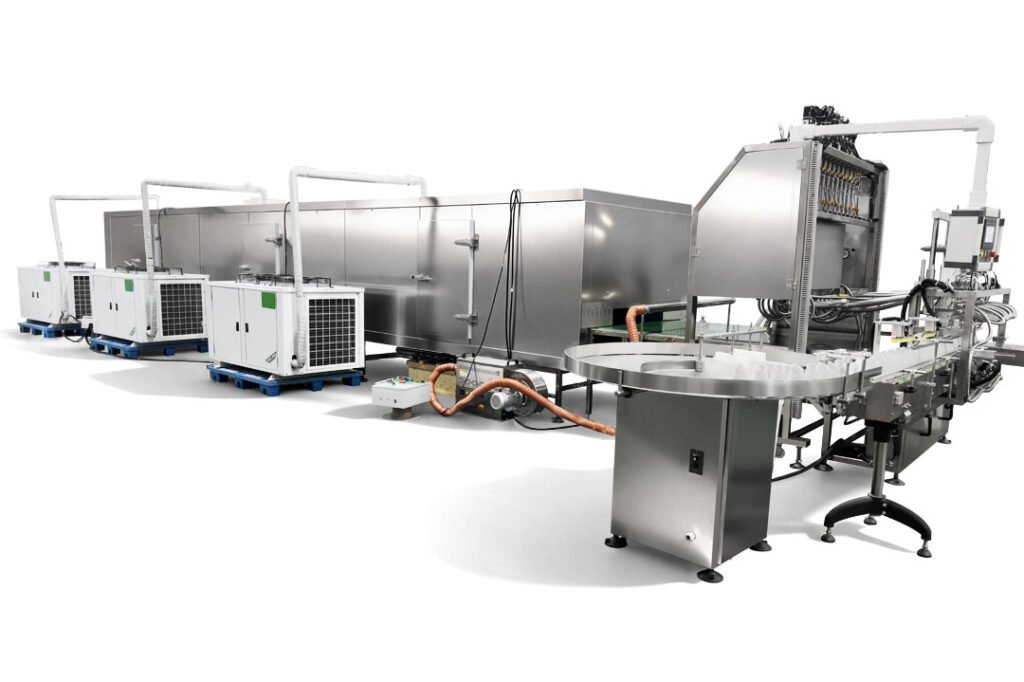
Filling machine cost is based on the production task, not a one-size-fits-all price. We build each system around the product, container, output target, and required safety level. The biggest cost factors are automation, filling technology, material compatibility, packaging integration, and customization.
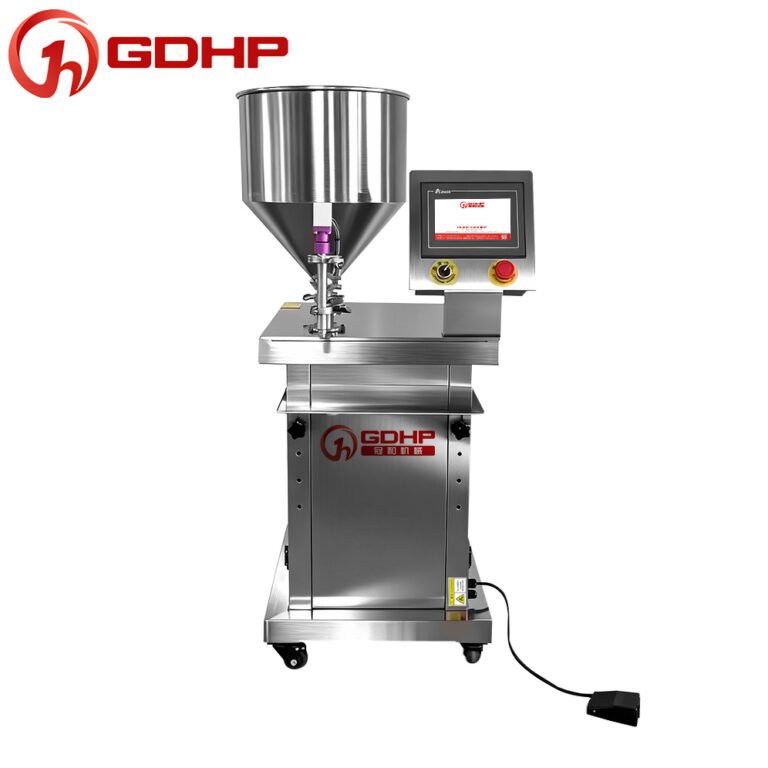
A semi-automatic filling machine generally requires a lower initial investment and can suit smaller batches or flexible production needs. A fully automatic filling line involves more equipment and controls, but supports higher-volume production and integrated handling from filling through end-of-line packaging.
Common automation additions include:
The more processes handled within one connected line, the greater the upfront project scope.
The product being filled has a direct effect on machine design and filling machine cost.
| Product Type | Typical Filling Approach | Main Cost Considerations |
|---|---|---|
| Liquids | Gravity filling, gear pumps, anti-drip systems | Flow control, speed, and drip prevention |
| Pastes and creams | Piston filling, insulated hot-fill systems | Viscosity handling, bubble-free filling, temperature control |
| Powders and granules | Auger fillers, measuring cups, stream filling | High-precision dosing, anti-clogging, dust control |
| Corrosive or toxic liquids | Fully sealed, negative-pressure systems | Material resistance and gas-leak prevention |
| Flammable products | Explosion-proof systems | Explosion-proof motors, electrical boxes, anti-static piping, and protected enclosures |
Standard liquids usually require a simpler configuration than high-temperature creams, corrosive chemicals, or hazardous materials.
Machine construction must match the product and operating environment. Our machinery can use SUS304 stainless steel for the casing, with SUS316 stainless steel or medical-grade silicone tubing for product-contact components where needed.
Higher-specification requirements can increase project cost, including:
These features are essential for safety, product quality, and reliable operation in regulated or demanding applications.
Higher capacity usually means larger or more advanced equipment. A multi-head automatic filler can serve a different production target than a single-head or semi-automatic unit. Output requirements affect filling heads, conveyor configuration, pump selection, controls, and the level of line automation.
We assess the required production volume early so the equipment is sized for practical operating needs rather than overbuilt or undersized.
Bottle and package specifications also influence filling machine cost. Simple, consistent containers are easier to handle than multiple bottle shapes, sizes, or closures. Projects that require fast mold changes or flexible handling for several package formats may need additional change parts and engineering.
Key container factors include:
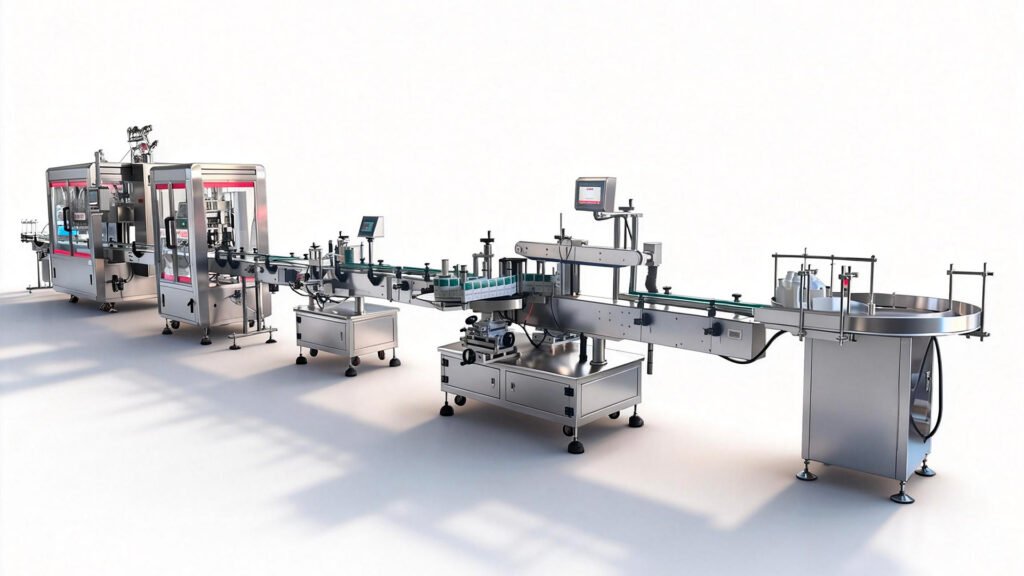
A standalone filler has a different cost structure from a complete turnkey production line. A full line may include pre-treatment and blending equipment, filling, capping, sealing, labeling, inspection, cartoning, case packing, and palletizing.
A turnkey approach can simplify system coordination because the equipment, layout, and production flow are planned as one project. This also supports more consistent integration from raw material preparation to finished-product handling.
Available plant space affects equipment arrangement and line design. Smaller production lines may require around 50–100 m², while high-speed automated lines can require approximately 200–500 m². Space limitations can influence conveyor routing, equipment selection, maintenance access, and overall automation design.
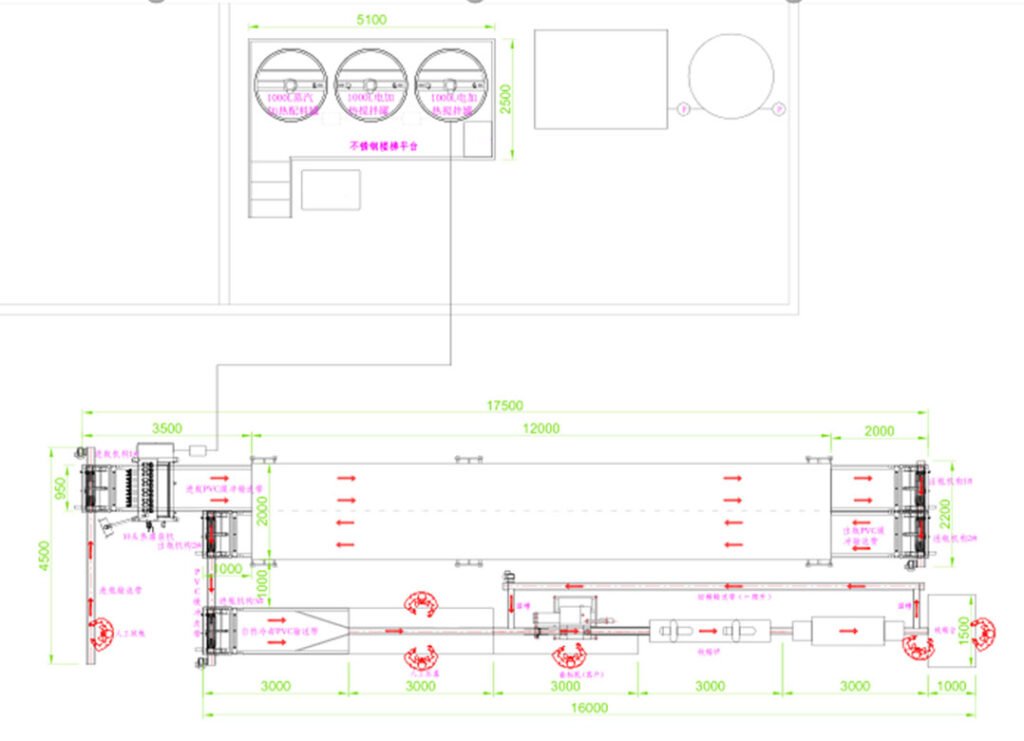
A 3D floor plan helps confirm that the filling and packaging line fits the site before manufacturing begins.
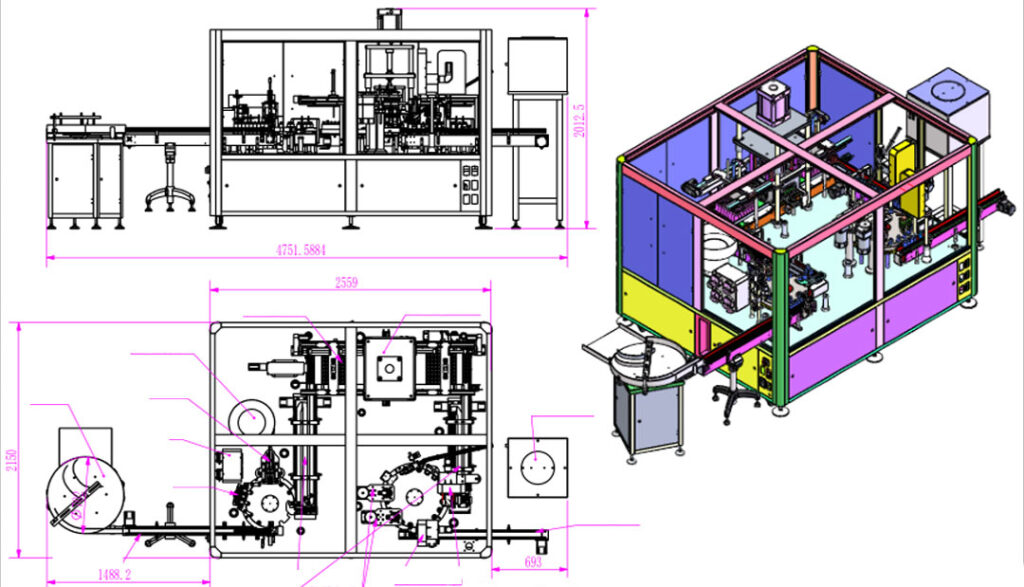
Filling machine cost depends heavily on the product, hygiene level, filling method, and safety requirements. We match each line to the material and production environment rather than applying one standard machine design.
| Industry | Typical Products | Main Equipment Needs | Main Cost Factors |
|---|---|---|---|
| Food & Beverage | Drinks, sauces, edible liquids, hot-fill products | Liquid fillers, gravity or gear-pump systems, capping, sealing, labeling | Output speed, hot-fill insulation, bottle format, complete line integration |
| Pharmaceutical | Liquid medicines, capsules, powders | High-precision filling, capsule filling, hygienic contact parts, inspection | cGMP and CE requirements, filling accuracy, SUS316 contact parts, controlled handling |
| IVD | Antigen reagents and diagnostic liquids | Small-volume filling, precise dosing, sealed handling | Accuracy requirements, medical-grade silicone tubing, compact line configuration |
| Chemical | Corrosive, toxic, or flammable liquids | Sealed filling, negative-pressure systems, explosion-proof equipment | Corrosion resistance, SUS316 construction, explosion-proof motors and electrical boxes |
| Daily Chemical & Cosmetics | Detergent, cream, lotion, shampoo | Piston fillers, anti-drip systems, mixing and emulsifying equipment | Product viscosity, bubble-free filling, container changes, automated capping and labeling |
| Powder & Granule Products | Powders, granules, capsules | Auger fillers, measuring-cup fillers, dust control | Metering precision, anti-clogging design, dust suppression, packaging format |
Food and beverage filling machine cost is shaped by line speed and product temperature. Standard liquid products may use gravity filling or gear pumps. Hot-fill products require insulated or heat-jacketed equipment, which adds to the project scope. A full line may also include bottle washing, drying, capping, sealing, labeling, coding, and packing.
Pharmaceutical and IVD projects place more emphasis on precise filling, hygienic design, and compliant materials. SUS316 stainless steel product-contact parts and medical-grade silicone tubing may be required. Costs also rise when the line includes capsule filling, visual inspection, or specialized small-volume reagent handling.
Chemical filling machine cost can vary widely because material safety drives the design. Corrosive or toxic liquids may need fully sealed filling under negative pressure to help prevent gas leakage. Flammable products may require explosion-proof motors, electrical boxes, anti-static gas piping, and protective stainless steel or tempered-glass construction.
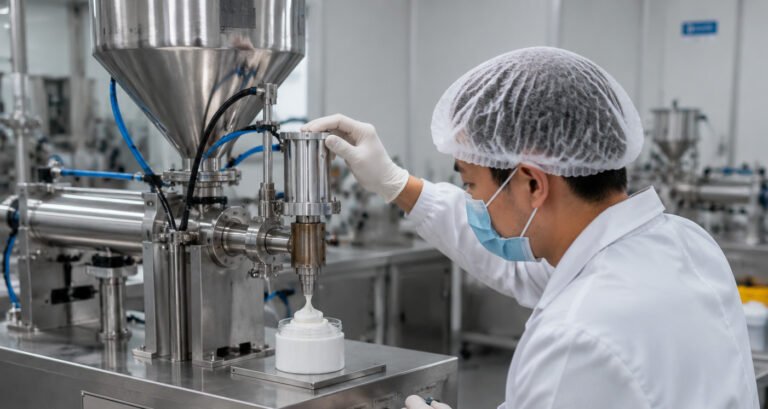
Cosmetic and daily chemical filling lines often handle liquid detergent, shampoo, lotion, cream, and other viscous products. Piston filling, anti-drip control, and bubble-free or stringing-free performance are important for these applications. Costs increase with emulsifying and mixing equipment, multi-head filling, monoblock filling and capping, and frequent container changeovers.
The right filling machine cost is based on the full production need: product behavior, container type, output target, automation level, safety requirements, and the level of packaging integration.
Filling machine cost varies by supplier location, engineering scope, compliance needs, and the level of customization. We recommend comparing the complete project value, not only the initial machine quotation.
| Comparison Area | China Turnkey Supplier | European Supplier |
|---|---|---|
| Initial Equipment Cost | Often positioned for strong cost-to-performance value | May include higher premium pricing |
| Customization | Bespoke, non-standard machine design based on product and container needs | Depends on supplier and standard platform |
| Turnkey Scope | Can cover blending, filling, capping, labeling, packing, and palletizing | Scope varies by supplier |
| Materials | SUS304 machine casing; SUS316 contact parts or medical-grade silicone tubing where required | Must be confirmed by project specification |
| Compliance Support | ISO 9001, cGMP, CE, FDA, EHEDG/3-A hygienic requirements, and explosion-proof solutions | Must be confirmed by supplier and market |
| Project Delivery | Manufacturing, FAT, export packing, logistics, installation, and training support | Service structure and regional coverage vary |
| Production Lead Time | Typically 30–60 days after deposit | Depends on supplier workload and project complexity |
A lower filling machine cost is only meaningful when the technical scope is the same. We compare suppliers using the same production requirement:
For global buyers, a China filling machine manufacturer can offer a practical balance of customized engineering and controlled project cost. Our turnkey approach connects pre-treatment, blending, filling, capping, sealing, labeling, coding, cartoning, wrapping, case packing, and palletizing under one project plan.
This reduces the risk of purchasing separate machines that do not align in speed, bottle handling, controls, or floor layout. A complete solution also supports clearer responsibility from design through FAT, shipment, installation, training, warranty coverage, and lifetime technical support.
When comparing China vs Europe filling machine cost, evaluate the full operating result:
The best supplier is not defined by origin alone. It is the supplier that can deliver the right filling machine configuration, verified performance, and dependable support for the full production line.
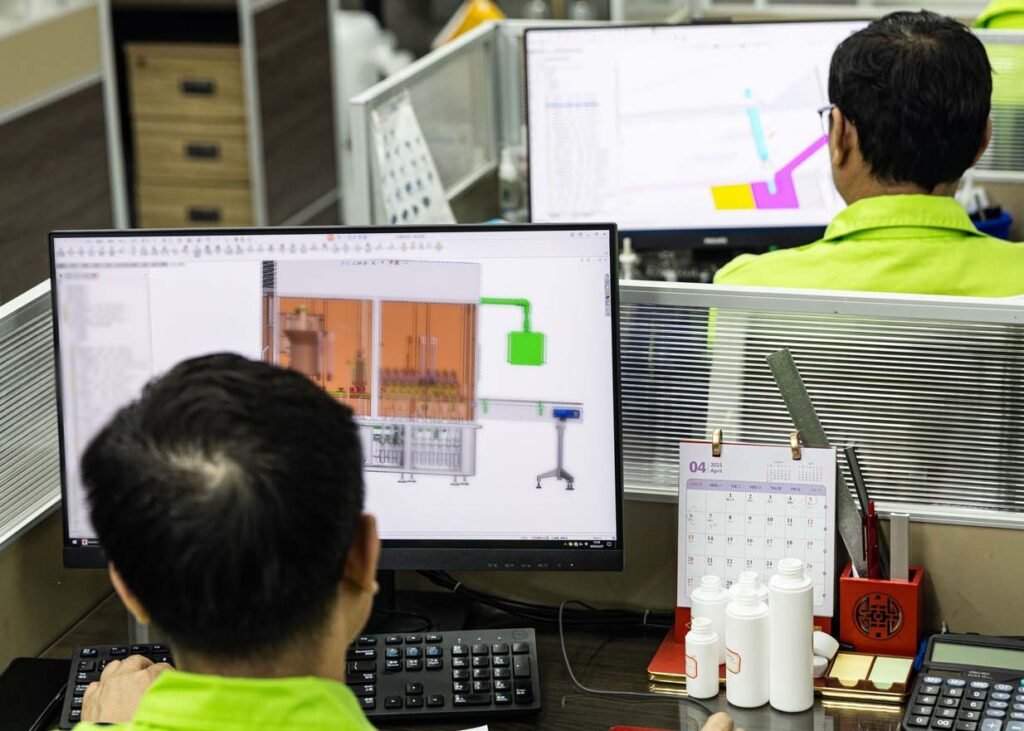
Automatic filling machine cost is shaped by the equipment needed to run a stable, connected production process. Instead of looking at the filler alone, we assess the full scope: product handling, filling accuracy, container movement, capping, inspection, labeling, and end-of-line packaging.
A basic automatic filling system generally includes the filling machine, conveyor system, and controls. Cost increases when the line requires higher output, more filling heads, or integrated functions such as filling and capping in one monoblock unit.
Key configuration points include:
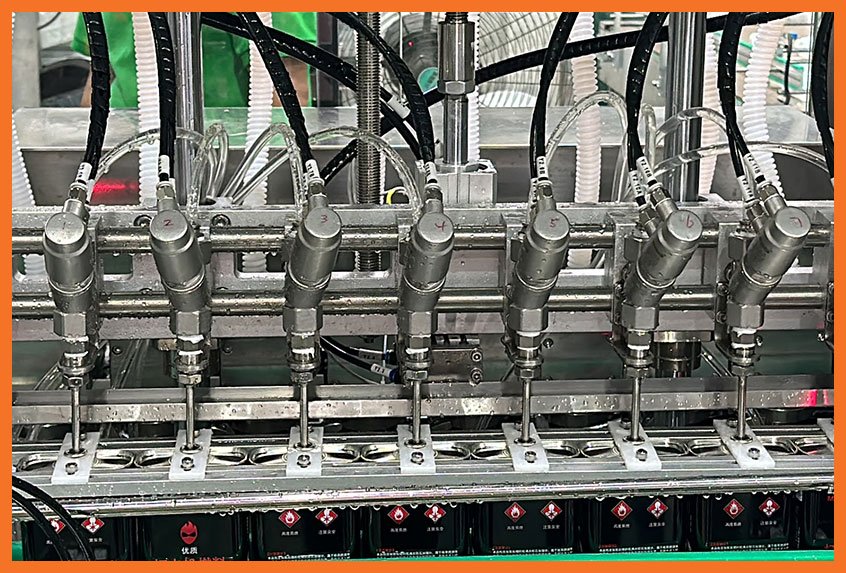
Product characteristics have a direct effect on automatic filling machine cost. Standard liquid applications may use gravity or anti-drip filling systems. Thick creams, pastes, and hot-fill products can require piston filling and insulated or heating-jacketed systems.
For powder and granule filling, the system may need auger fillers, precise metering, anti-clogging design, dust control, and anti-caking measures. Corrosive, toxic, flammable, or high-temperature materials require more specialized construction and safety protection.
Typical upgrades can include:
A fully automatic filling line can extend far beyond the filling station. Depending on the application, the complete system may include:
| Production Stage | Typical Equipment |
|---|---|
| Container preparation | Bottle unscrambler, washer, dryer |
| Filling | Liquid, paste, powder, granule, or capsule filler |
| Closing | Capping machine, sealing machine |
| Identification | Labeling, inkjet coding, laser coding, visual inspection |
| Secondary packaging | Cartoning, shrink wrapping, case packing |
| End of line | Case sealing, palletizing |
A standalone automatic filler has a different cost structure from a turnkey filling and packaging line. Integration adds value by helping equipment work as one process, reducing compatibility issues between separate machines.
Automatic filling equipment may require compliance with ISO 9001, cGMP, and CE standards, along with applicable FDA and hygienic requirements such as EHEDG/3-A. These requirements influence material selection, machine design, documentation, and safety controls.
Factory Acceptance Testing is also part of the project process. We verify the machine online or offline before shipment based on the confirmed production plan. This helps confirm that the equipment is built around the agreed product, container, and operating requirements.
Automatic filling machine pricing is normally project-based rather than fixed. The final cost depends on the agreed configuration, required automation level, production capacity, material handling needs, and the level of line integration.
Our standard project workflow follows clear commercial milestones:
This structure keeps automatic filling machine cost aligned with the actual production needs rather than a generic machine specification.
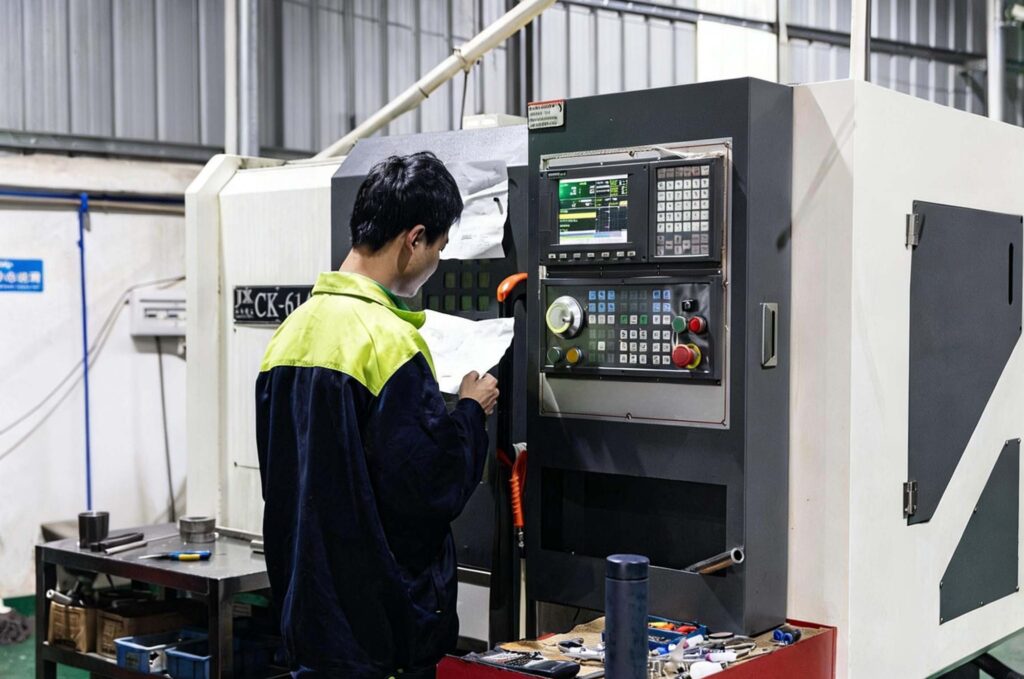
The quoted filling machine cost is only one part of the project budget. We recommend reviewing the full scope before comparing suppliers, especially for customized or turnkey filling lines. A lower machine price can lead to higher spending if the equipment does not match the product, containers, production space, or required safety standard.
Container size, bottle shape, cap type, and filling volume affect the final cost. A line designed for multiple containers may require change parts and quick mold-change capabilities. Custom machine designs also need additional engineering, testing, and manufacturing work.
Key cost items may include:
The filling material often determines the machine configuration. Standard liquid filling may use gravity systems or gear pumps, while paste, powder, and hazardous products need more specialized equipment.
Additional costs can come from:
For demanding applications, product-contact parts may require SUS316 stainless steel or medical-grade silicone tubing rather than standard configurations.
International buyers should include packaging, freight, local handling, installation, and training in the total filling machine cost. A complete project may also require remote support or door-to-door installation support, depending on the site and line complexity.
A clear supplier process helps control these costs. We use defined stages from requirement analysis and scheme design through Factory Acceptance Testing, packaging, shipping, installation support, and staff training.
Compliance is not an optional add-on for many food, pharmaceutical, IVD, chemical, and cosmetic projects. Requirements related to ISO 9001, cGMP, CE, FDA, hygienic protocols, or explosion-proof protection can affect equipment design and project cost.
Factory Acceptance Testing is also important. FAT, whether completed online or offline, helps verify the machine before final payment and shipment. This reduces the risk of paying for equipment that does not meet the confirmed production requirements.
Downtime, difficult maintenance, and limited technical support can cost more than the initial equipment savings. When evaluating filling machine cost, include warranty coverage, spare-part planning, and technical support over the operating life of the line.
A practical cost review should cover:
A complete cost view makes it easier to select filling equipment that supports stable production rather than simply choosing the lowest initial price.
Protect the investment by defining measurable acceptance criteria and using a filling-line FAT checklist before final payment and shipment.
Choosing the right filling machine starts with the product, container, output target, and production environment. We match the filling method and automation level to the actual requirements of each line, rather than using a one-size-fits-all setup.
Different materials need different filling technologies. The wrong system can affect filling consistency, product handling, and line efficiency.
| Product Type | Suitable Filling Approach | Key Considerations |
|---|---|---|
| Standard liquids | Gravity fillers, gear pumps, anti-drip systems | Filling speed and drip control |
| Pastes and creams | Piston fillers, insulated hot-fill systems | Bubble-free and stringing-free filling |
| Powders and granules | Auger fillers, measuring cups, stream fillers | Accuracy, dust control, anti-caking |
| Corrosive or toxic liquids | Sealed negative-pressure filling systems | Leak prevention and material compatibility |
| Flammable materials | Explosion-proof filling equipment | Explosion-proof motors, electrical boxes, and anti-static piping |
For product-contact components, SUS316 stainless steel or medical-grade silicone tubing may be needed where the material requires higher compatibility. Standard machine casings are commonly built with SUS304 stainless steel.
The right automation level depends on your daily production needs, labor plan, and expected growth.
| Production Need | Recommended Equipment | Best Fit |
|---|---|---|
| Small batches or flexible production | Semi-automatic filling machine | Lower initial investment and simpler operation |
| Higher-volume production | Fully automatic filling machine | Stable output and reduced manual handling |
| Filling and capping in one process | Monoblock filling and capping system | More compact line integration |
| Complete production flow | Turnkey filling line | Blending, filling, packaging, and palletizing in one project |
A fully automatic filling machine is often the better fit for high-speed, repeated production. A semi-automatic system can be more practical when output is lower or product formats change frequently.
Bottle size, shape, closure type, and changeover needs all affect filling machine selection. A line designed for one fixed container is different from a line that handles multiple bottle formats.
Check these points before finalizing the system:
For a complete line, equipment can include bottle unscramblers, washers, dryers, capping machines, sealing machines, labeling equipment, coding and inspection systems, cartoning, shrink wrapping, case packing, and palletizing.
Production space should be reviewed before equipment design. Small filling lines may require around 50–100 m², while high-speed automated filling lines may require around 200–500 m².
A practical layout should account for:
We use scheme and layout design, including 3D floor plans, to help ensure the production line fits the available facility space.
For food, pharmaceutical, IVD, chemical, and daily chemical production, equipment requirements can vary by product risk and local compliance expectations. A suitable filling machine should align with applicable production and hygiene requirements.
Key considerations include:
A reliable filling machine project should move from requirements to verification before shipment.
The right filling machine is not only about filling speed. It must work with the product, container, factory space, safety standard, and full production workflow. A customized turnkey system helps connect these requirements from blending through final packaging and palletizing.
An automatic filling machine can justify its higher initial cost when production volume, product consistency, and line efficiency are priorities. For growing operations, automation can reduce manual handling across filling, capping, sealing, labeling, inspection, and end-of-line packaging.
The return on investment comes from better overall equipment effectiveness, not simply faster filling. A properly matched automatic line helps us improve:
Semi-automatic filling machines remain a practical option for smaller batches, varied container formats, or early-stage production. They can lower the initial investment while allowing us to build production experience before moving to a fully automatic filling line.
Automation becomes more valuable when manual work creates bottlenecks, output requirements rise, or products need tighter control during filling. This is especially relevant for pastes, powders, corrosive liquids, hot-fill products, and applications requiring specialized safety measures.
A filling machine ROI calculation should include the full production process. A fast filler may not deliver expected results if bottle feeding, capping, labeling, packing, or palletizing cannot keep pace. Turnkey line planning helps align each machine with the required capacity and facility layout.
For customized projects, we assess:
The strongest return comes from equipment that is designed for the real product, container, and operating environment. SUS304 machine construction, SUS316 contact parts where required, sealed negative-pressure systems for toxic materials, and explosion-proof configurations for flammable products can be essential project requirements rather than optional upgrades.
Factory Acceptance Testing helps verify the equipment before shipment, while installation support, training, warranty coverage, and lifetime technical support help protect long-term line performance. For many manufacturers, automation is worth the investment when it is engineered as a complete, production-ready solution rather than purchased as an isolated filling machine.