Laundry Detergent Packaging: Types, Materials & Machinery
Learn how to choose laundry detergent packaging materials, containers, filling machines, capping, sealing, and complete production lines.
September 19, 2026

There is no single best powder filling machine for every product. Use an auger filler for fine, cohesive or non-free-flowing powders such as flour and protein powder. Use volumetric cups for stable, free-flowing powders and granules. Choose net-weight filling when target-weight control and product giveaway are the main priorities. Final selection should be confirmed through a product trial and FAT.Choosing the right powder filling machine can improve filling accuracy, reduce labor, increase output, and deliver a cleaner, more professional package.
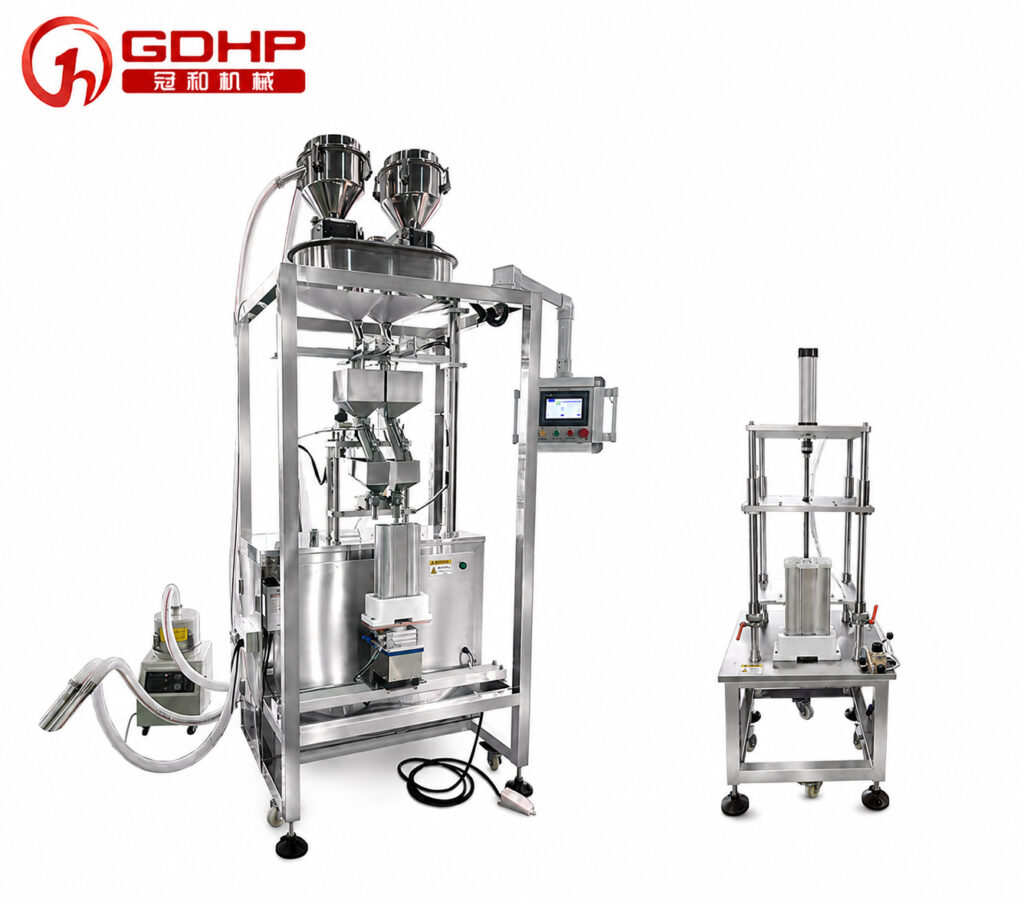
Choosing the best powder filling machine starts with matching the dosing method to powder flow behavior, required output, and target fill consistency. Our powder filling systems support auger-type, volumetric measuring cup, and stream-type filling for different production requirements.
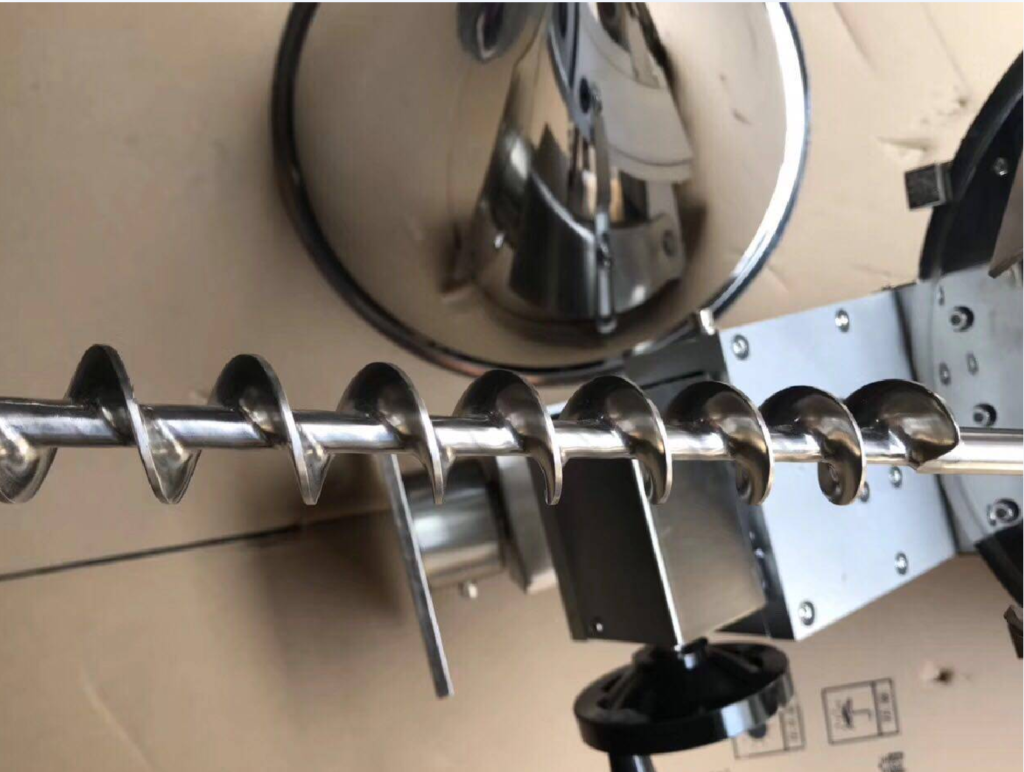
An automatic auger filling machine doses powder through a controlled auger mechanism. This method is well suited to fine, cohesive, and non-free-flowing materials, including protein powder, flour, and pharmaceutical active ingredients.
Auger filling is designed for applications requiring controlled dosing where powder may bridge, compact, or flow inconsistently. Integrated agitation can help keep material moving into the dosing area and support stable fills.
Best suited for:
A volumetric cup filler uses measuring cups to dispense a defined volume of product. Fixed or adjustable cup designs are commonly used for free-flowing powders and granules with consistent bulk density.
This system offers an efficient approach for products such as salt, sugar, seeds, and similar materials that flow reliably. It is often selected where high-speed volumetric output is the primary operational requirement.
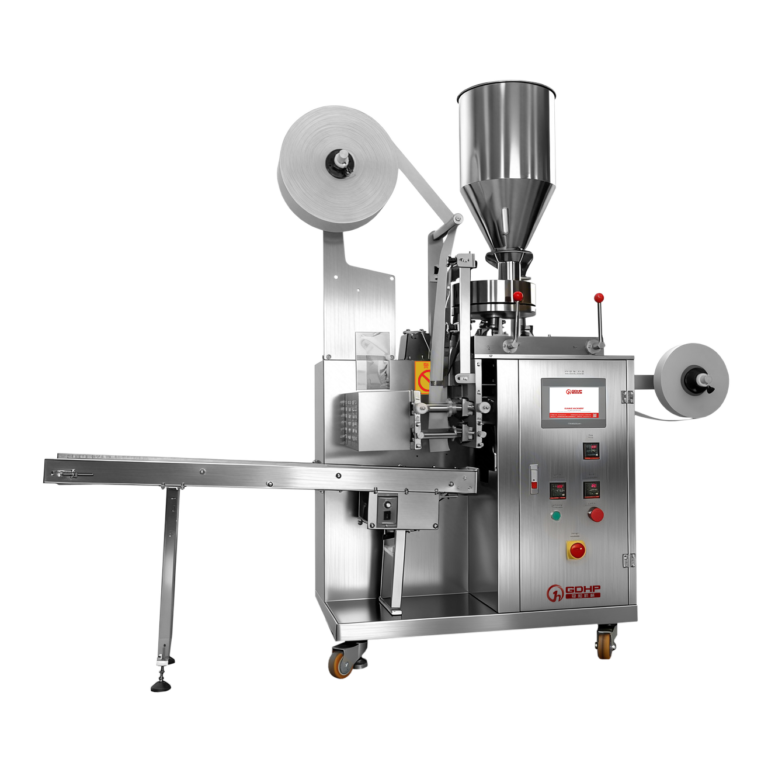
For powder sachets, one machine in our range is the GH240FZ three-side-seal powder packaging machine. It combines measuring-cup dosing with bag forming, filling, heat sealing, cutting, and counting. The configuration used for one project was about 40 bags per minute, with a target accuracy of ±2%, bag dimensions of L 20–160 mm × W 15–110 mm, and a 220 V, 2.0 kW electrical setup. The model is a practical reference when the product is filled into film pouches rather than rigid containers.
Best suited for:
Stream-type filling uses a continuous material flow for industrial powder dosing applications. Depending on the production design, the powder may be delivered through gravity-based or pneumatic transfer arrangements.
This approach is appropriate for high-speed, large-volume production lines where a continuous filling process is required. The final system configuration should account for powder behavior, packaging format, and line integration needs.
The main difference between net weight and volumetric filling is how the dose is controlled.
| Dosing Method | Control Principle | Primary Advantage | Key Consideration |
|---|---|---|---|
| Net weight filling | Weight-based measurement using load-cell control | Supports precise target-weight control | Output may be lower than purely volumetric systems |
| Volumetric filling | Defined volume through cups or dosing mechanisms | Supports fast, consistent output for stable materials | Results depend on powder bulk density and flow consistency |
For high-value powders, net-weight control can help manage fill variation and product giveaway. For stable, free-flowing products, volumetric cup filling can provide efficient throughput. Auger dosing provides a practical option for powders that need controlled feeding and handling during filling.
We saw this clearly in a molecular-sieve filling project built around the GHCZ-2 semi-automatic dual-head weighing filler. The machine covered 100–1,400 g, with a target accuracy of ±1% and an output of 100–120 containers per hour, depending on the fill weight and operator pace. We also integrated material feeding and a semi-automatic pressing station. The real output therefore depended on the whole workflow—not simply on how fast the filling heads could discharge.
For the wider decision process—including containers, automation, budget, supplier evaluation, and FAT—use our industrial filling machine selection guide.
If your production portfolio includes more than powders, use this liquid, paste, and powder filling comparison to separate material requirements before selecting equipment.
Powder behavior determines whether a powder filling machine runs smoothly, fills consistently, and stays clean. We assess each material before configuring the dosing and containment system.
A free-flowing powder moves readily through the hopper and dosing path. Salt, sugar, and some seed products are common examples. A non-free-flowing powder may bridge, clump, or compact during filling, and may even clog the filling machine. Protein powder, flour, and fine pharmaceutical powders often require more controlled handling.
Key powder flow properties include:
These factors guide the selection of auger dosing, volumetric filling, hopper design, and powder handling controls.
Dust control is essential for product hygiene, operator exposure control, weighing reliability, and housekeeping. In one molecular-sieve project, we used sealed transfer to the intermediate hopper, suction at the discharge area, a dedicated dust collector, and a protective enclosure. On another completed dual-head line, we combined enclosed-mouth filling with a vent and local extraction around the filling heads.
These examples support a practical rule: define the dust source before choosing the control. Transfer-point dust, hopper venting, and dust at the container mouth may require different capture arrangements. The final design should be based on a site risk assessment and, where operator exposure is relevant, applicable occupational exposure limits. For U.S. projects, the OSHA Annotated Permissible Exposure Limits provide a starting reference for occupational exposure limits; the applicable local regulations and product safety data sheet should also be reviewed.
Powders that absorb moisture, bridge, or compact need stable flow support. Possible methods include hopper agitation, container vibration, controlled refill, or fluidization, but the correct choice depends on the material.
Depending on the material, flow assistance may include:
We have used the GHCZ-KL-2 dual-head weighing filler in molecular-sieve projects so the granules settle into long, narrow containers while filling. In one dual-material system, the machine handled 50–1,000 g with a target accuracy of ±1% and an output of 150–200 containers per hour. We added two hoppers, two weighing stations, two vacuum feeders, and programmable container rotation so A and B materials could be filled in two or three layers. For larger multi-layer containers, the GHCZ-4 four-head weighing filler is another configuration we use, with a specified range of 100–1,200 g. Vibration helped compact the material, but weighing still controlled the dose. This is why vibration strength and timing should be tested with the actual product.
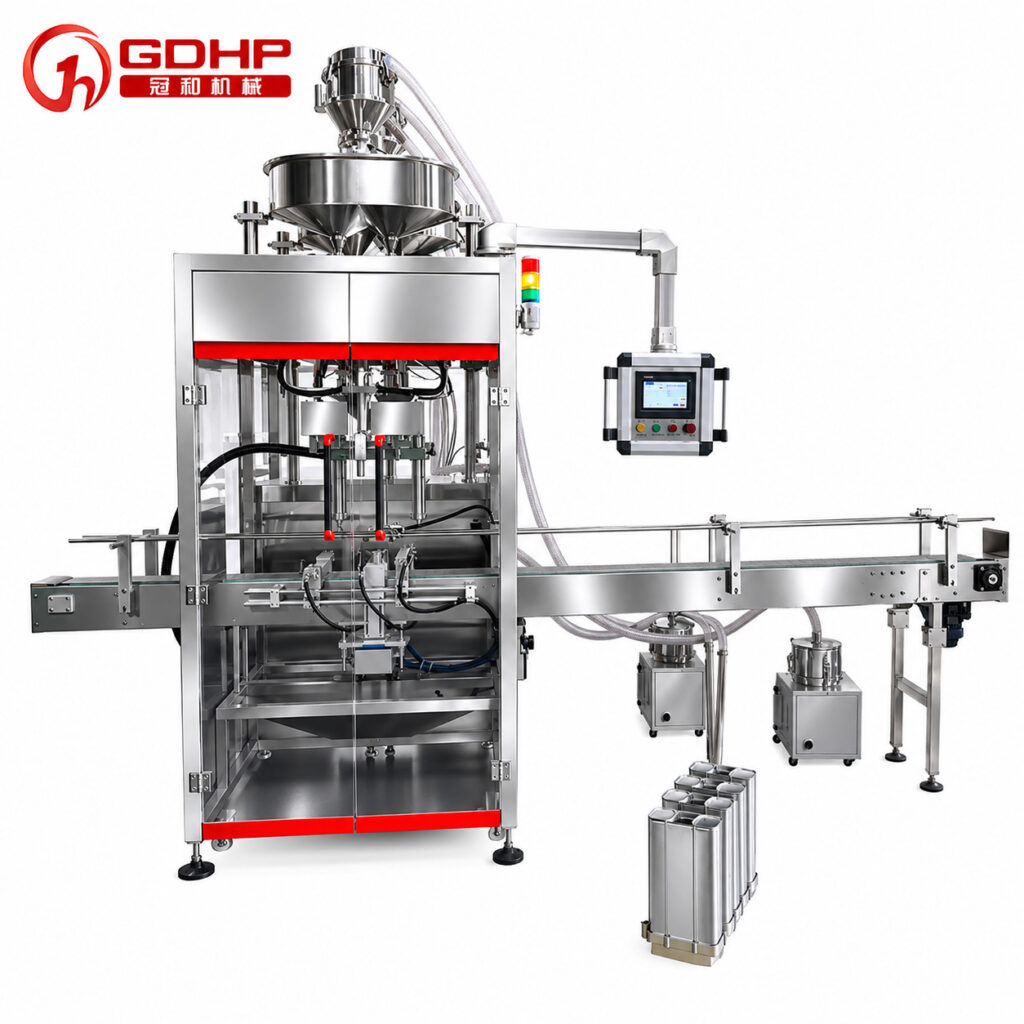
The best powder filling machine must match your output target, powder behavior, package format, hygiene standard, and available plant space. We configure powder filling lines around these operating requirements rather than using a one-size-fits-all design.
These model examples show how we translate a product brief into a machine configuration. They are starting points for engineering discussions; the final model, tooling, and settings are confirmed after material and container trials.
| Model or configuration | Typical application | Project specification example |
|---|---|---|
| GH240FZ | Three-side-seal powder sachets with measuring-cup dosing | About 40 bags/min; ±2%; L 20–160 mm × W 15–110 mm bags |
| GHCZ-2 | Dual-head weighing filler for granules or powder salt, with optional feeder and pressing station | 100–1,400 g; ±1%; 100–120 containers/hour, depending on operator pace |
| GHCZ-KL-2 | Dual-head weighing filler for molecular-sieve granules and two-material layered filling | 50–1,000 g; ±1%; 150–200 containers/hour; programmable vibration and rotation |
| GHCZ-4 | Four-head weighing filler for alternating A/B materials and multi-layer containers | 100–1,200 g; ±1% target; vacuum feeding, vibration, and dust-extraction options |
Choose the automation level based on production volume, labor availability, and changeover frequency.
| Production Need | Suitable Approach | Key Consideration |
|---|---|---|
| Low-volume or flexible production | Semi-automatic powder filler | Practical for smaller runs and frequent product changes |
| High-volume production | Fully automatic powder filling line | Supports continuous operation with integrated packaging equipment |
| Custom packaging requirements | Non-standard equipment or monoblock system | Built around the product, container, and line workflow |
For high-output operations, the filling system can connect with capping, labeling, can sealing, pouch packaging, case packing, and palletizing equipment as part of a turnkey powder packaging line. In one two-material molecular-sieve project, each cycle was designed to fill two screen tubes with about 2 kg total. The target was 100–150 pairs per hour: operators placed the tubes and cover plates, while the machine handled dual-head filling and automatic cover pressing. This hybrid layout kept automation focused on the steps that controlled dosing and assembly.
Powder packaging equipment must be designed around the final pack format. Common applications include:
The container opening, fill volume, powder flow properties, and downstream sealing method all affect machine configuration. For a three-side-seal powder sachet project, we designed the complete process around volumetric dosing, bag forming, filling, heat sealing, cutting, and counting. The machine was configured for about 40 bags per minute, with a target accuracy of ±2% and a bag-size range of L 20–160 mm × W 15–110 mm. It used a 220 V, 2.0 kW configuration. The project showed why film width, bag length, registration, sealing temperature, and powder metering have to work as one system.
Fill accuracy directly affects compliance, product giveaway, and operating cost. The right dosing system depends on the powder and required target weight.
| Dosing Requirement | Selection Focus |
|---|---|
| Fine or cohesive powders | Auger-type filling with controlled powder handling |
| Stable, free-flowing products | Measuring cup filling for efficient volumetric output |
| High-speed or larger-volume filling | Stream-type filling configuration |
| High-value products | Validate dosing consistency during Factory Acceptance Testing (FAT) |
Rather than relying on a universal accuracy figure, accuracy should be confirmed using the actual powder, target fill weight, and selected dosing mechanism. Bulk density changes, moisture, caking, refill cycles, and inconsistent powder flow can all affect results. Across our projects, we have worked with targets including ±1 g at 100 g, ±1% at 400 g, and ±5 g at 600 g. Each figure only makes sense when the reference fill and test conditions are stated.
A purchase specification should state all of the following:
Without those conditions, two suppliers can quote the same “±1% accuracy” while proposing materially different acceptance tests. Ask for the reference weight, sample size, test duration, and acceptable number of outliers before comparing the figures.
Food, pharmaceutical, and sensitive chemical applications require materials and construction that support the user’s cleaning and contamination-control plan. On one completed molecular-sieve filling line, we used SUS304 for the machine structure and SUS316 for product-contact parts. Material selection is important, but stainless-steel grade alone does not establish cGMP, FDA, EHEDG, or 3-A compliance.
FDA explains that drug cGMP regulations establish minimum requirements for the methods, facilities, and controls used in manufacturing, processing, and packing. More specifically, 21 CFR Part 211 Subpart D addresses equipment design and location, product-contact surface compatibility, cleaning and maintenance, and the inspection or calibration of automated equipment.
Ask the supplier to document:
“Food grade,” “medical grade,” and “FDA compliant” should never be accepted as stand-alone marketing phrases. Tie each claim to a component, material declaration, drawing, test, or certificate that the buyer can review.
Fast changeovers help protect line availability when production includes multiple products or package sizes. Key design priorities include:
For powders that create dust or buildup, the machine design should support regular cleaning without causing unnecessary downtime.
As explained in OSHA’s combustible dust guidance, fine combustible dust can create a fire or explosion hazard, but not every dusty process has the same risk. Before specifying motors, electrical boxes, extraction, or grounding, the plant owner should obtain a dust-hazard assessment based on the actual material and the installation location.
Depending on that assessment and local law, the engineered controls may include:
Do not accept a generic “ATEX” or “explosion-proof” label without the equipment category or protection method, zone or division, dust group, temperature rating, certificate scope, and installation requirements. Dust extraction and enclosed filling help with containment, but they are not substitutes for certified explosion protection where the process requires it.
Floor space planning should cover more than the powder filler itself. Allow room for material feeding, filling, sealing, inspection, end-of-line equipment, operator access, and maintenance.
| Layout input | What must be shown on the approved drawing |
|---|---|
| Machine and guarding envelope | Operating footprint, door swing, access panels, and safety clearances |
| Material flow | Raw-material staging, feeder route, filled-product exit, and reject handling |
| People and maintenance | Operator positions, change-part storage, cleaning access, and component-removal paths |
| Utilities and environment | Power, compressed air, extraction, drainage, room classification, and HVAC interfaces |
A universal square-meter allowance is unreliable because two fillers with the same rated speed may have very different feeding, guarding, dust-collection, and downstream requirements. Approve a scaled layout and service-clearance drawing before the equipment design is frozen.
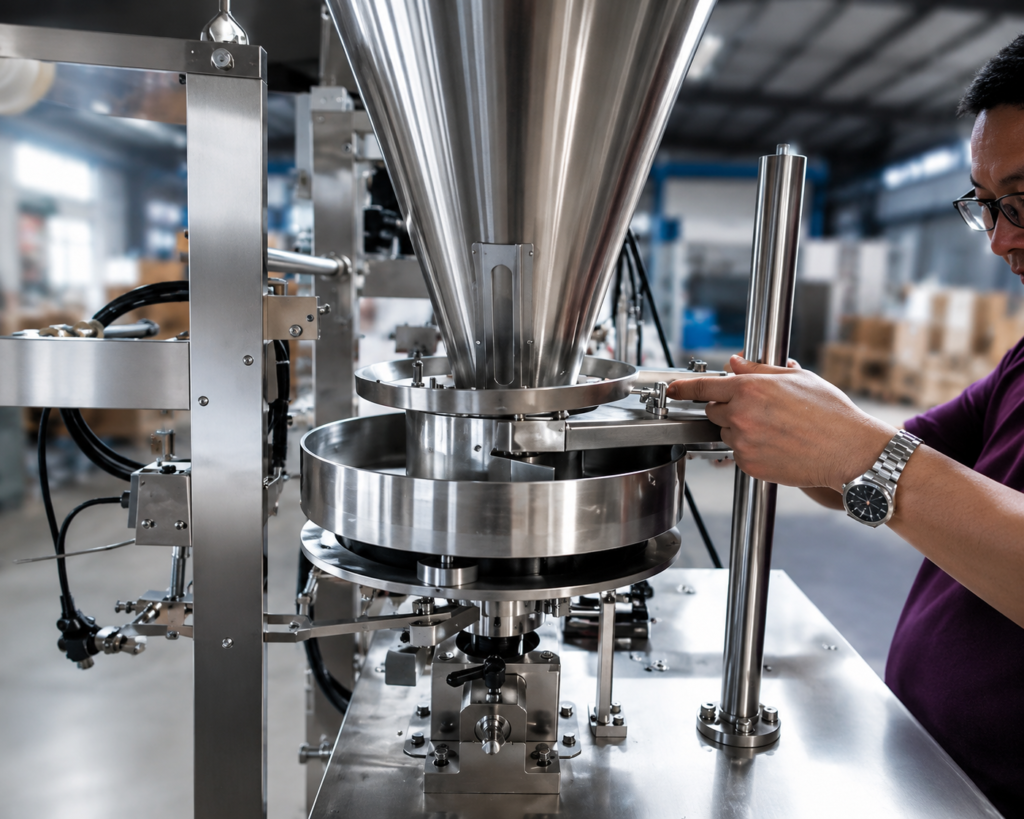
A powder filling machine should be evaluated on more than rated speed. We focus on validated filling results, changeover time, service access, and the operating costs that affect long-term ROI.
FAT should test the machine against an agreed user requirement specification rather than a demonstration chosen after the machine is built. A good example is an A/B molecular-sieve line we engineered for 350 g, 600 g, and 1,400 g formats. At 600 g, the target was ±5 g and 150–200 containers per hour. The actual sequence included A-material filling, screen and spring assembly, B-material filling, end-cap pressing, airtightness inspection, and product output. Testing only the empty machine would have told us very little about that workflow.
A useful FAT protocol includes:
FAT reduces commissioning risk, but it does not replace site acceptance testing. Site utilities, extraction, upstream supply, operators, and environmental conditions can change performance after installation. On a completed GHCZ-KL-2 dual-head molecular-sieve line, we combined vacuum feeding, base vibration, enclosed-mouth filling, venting, and local dust extraction. The machine covered 80–1,000 g per side, with a target of ±1% at 400 g and 100–120 containers per hour, depending on the operator cycle. Those are exactly the conditions that should be rechecked after installation.
Frequent SKU or container changes can reduce output if equipment is difficult to adjust. A practical powder filling system should support fast, repeatable setup and easy maintenance access.
| Performance area | What to assess | Operational impact |
|---|---|---|
| Format change | Quick mold or format-part changes | Less downtime between products |
| Cleaning access | Accessible product-contact and powder-handling areas | Faster cleaning and inspection |
| Controls | Stored operating settings where configured | More consistent repeat runs |
| Maintenance | Serviceable components and clear machine layout | Shorter maintenance stops |
| Powder control | Dust suppression and anti-caking design | More stable filling performance |
Lead time, payment milestones, warranty, installation, and service response are commercial terms and should be taken from the signed quotation or contract for the specific project. A generic website range is not a delivery commitment.
Before ordering, document:
The lowest purchase price does not always produce the lowest operating cost. A complete cost review should include:
Higher dosing stability and effective powder containment can help control giveaway, especially for higher-value powders.
Overall Equipment Effectiveness (OEE) combines availability, performance, and quality. For an industrial powder dosing machine, these factors are closely connected.
| OEE factor | Powder filling impact |
|---|---|
| Availability | Fewer stops from caking, dust buildup, or difficult changeovers |
| Performance | Stable filling speed through the planned production run |
| Quality | Consistent target fills with reduced underfill, overfill, and giveaway |
| Reliability | Dependable operation supported by suitable materials and system design |
A well-engineered powder filling machine balances speed with controlled powder flow, reliable dosing, and maintainable operation. This supports stronger OEE and a more predictable return on investment.
Use this FAT checklist for filling equipment to verify accuracy, dust control, changeover, safety, and sustained throughput with your real powder.
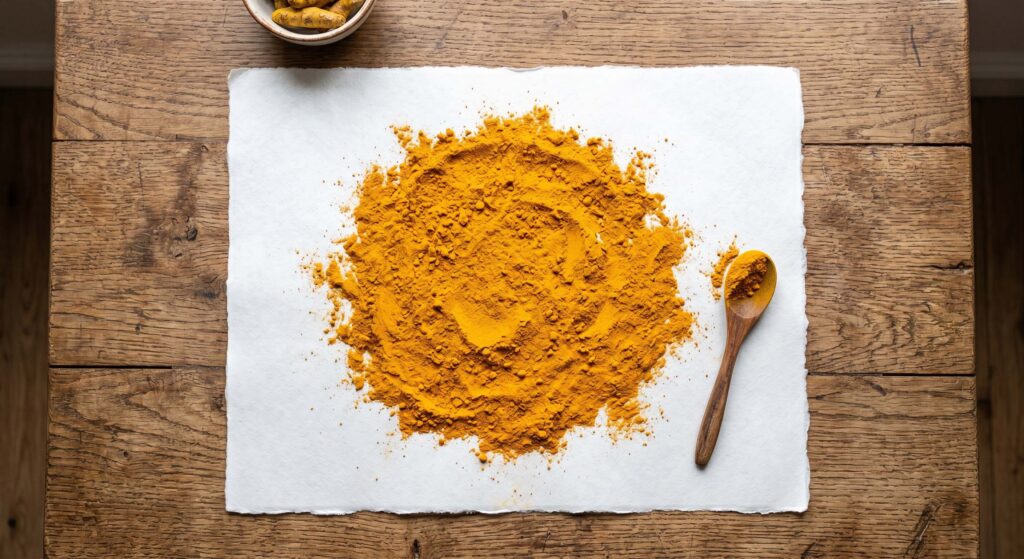
Use this quick decision table to narrow the starting configuration. We confirm the final model, tooling, and settings after testing the actual powder and package.
| What are you filling? | Recommended starting point | Relevant GDHP model or configuration | Why it fits |
|---|---|---|---|
| Fine, cohesive powder in bottles, jars, or cans | Auger filler | Auger system selected after powder trials | Controlled screw dosing helps manage bridging, compaction, and uneven flow. |
| Free-flowing powder or granules in film sachets | Volumetric cup filler with VFFS/three-side sealing | GH240FZ | One project configuration was about 40 bags/min with ±2% target accuracy and 20–160 mm × 15–110 mm bags. |
| Granules or powder salt in 100–1,400 g rigid containers | Dual-head net-weight filler | GHCZ-2 | Practical for semi-automatic operation with optional feeding and pressing; one configuration targeted ±1% and 100–120 containers/hour. |
| Molecular-sieve A/B granules with two- or three-layer filling | Dual-head, dual-hopper weighing filler with vibration and controlled rotation | GHCZ-KL-2 | Supports 50–1,000 g fills, ±1% target accuracy, and 150–200 containers/hour in a project configuration. |
| Multi-layer A/B material in larger or multi-position containers | Four-head weighing filler with vacuum feeding, vibration, and dust control | GHCZ-4 | Designed around a 100–1,200 g range when alternating or layered material placement is required. |
Before choosing a model, confirm the target weight, acceptable tolerance, bulk-density range, container opening, manual handling steps, dust controls, cleaning method, and FAT test plan. A model number is a useful starting point, but the powder trial and complete line workflow determine the final specification.
With more than 23+ years of manufacturing experience, GDHP designs and builds turnkey powder filling and packaging lines for food, pharmaceutical, chemical, and daily chemical applications. Our work covers powder dosing, material feeding, dust control, sealing, downstream packaging, testing, installation, and technical support.
| GDHP Capability | Practical Value |
|---|---|
| Turnkey engineering | One coordinated solution from machine design and 3D layout to manufacturing, FAT, installation, and commissioning |
| Custom non-standard equipment | Filling and packaging systems tailored to powder properties, output targets, containers, and automation needs |
| Powder handling design | Anti-caking measures, dust suppression, enclosed construction, and negative-pressure sealing options |
| Project support | Project experience across more than 50 countries, with remote video guidance and on-site service options |
| Factory Acceptance Testing | Equipment is tested before shipment to confirm the agreed machine performance |
| After-sales coverage | Warranty, installation, commissioning, and long-term technical support are available according to the signed project terms |
Our powder filling machine systems can use auger-type, measuring cup, or stream-type filling according to the product and production requirement. For hygienic or corrosion-sensitive applications, equipment can use SUS304 stainless steel construction with SUS316 product-contact parts.
We also prepare 3D layouts around the customer’s available space, material route, extraction system, guarding, utilities, operator access, and downstream equipment. For many custom projects, production takes about 30–60 days after the configuration, samples, and drawings are confirmed.
Our goal is not simply to offer a faster filler. It is to build a line that handles the real material reliably, fits the factory, is practical to clean and maintain, and can be tested against clear acceptance targets before shipment.
Choose an auger-type filling machine for fine, cohesive, or non-free-flowing powders where controlled dosing is important. Choose a volumetric cup filler for consistent, free-flowing powders and granules when bulk density is stable. If the product is sold by weight or density varies materially, compare both options with a net-weight trial.
| Powder condition | Suitable dosing method |
|---|---|
| Fine, cohesive, or difficult-flowing powder | Auger filling |
| Stable, free-flowing powder or granules | Volumetric cup filling |
| Large-volume, continuous production | Stream-type filling |
There is no responsible universal accuracy promise. Fill accuracy depends on powder behavior, dosing method, target weight, scale resolution, environmental control, and setup. An auger system may be appropriate for fine powders, but the final claim should be based on a documented FAT using the actual product, container, sample plan, and statistical acceptance limits. Ask whether the quoted tolerance is relative (for example, ±1%) or absolute (for example, ±1 g or ±5 g) and state the reference fill.
Net weight filling uses weight measurement to control the final dose. It is suitable where weight control and reduced product giveaway are priorities.
Volumetric filling doses a defined volume through a measuring cup or similar mechanism. It supports efficient filling when powder bulk density remains stable.
Bulk density affects how much powder occupies a given volume. If density changes during production, a volumetric dose can produce inconsistent weights.
The angle of repose indicates how readily powder flows. Powders with poor flow, higher cohesion, moisture sensitivity, or irregular particle size may bridge, compact, or feed unevenly. These conditions should be assessed before selecting a powder filling machine.
A properly engineered powder filling line helps control losses by improving dosing consistency and containing dust. Key factors include:
Reduced dust loss, fewer rejected packs, and stable output can support better overall operating efficiency.
For a business case, calculate giveaway from measured production data rather than a brochure claim: giveaway cost = max(0, average actual fill − target fill) × saleable units × material cost per unit of mass. Include cleaning labor, changeover loss, filter or extraction maintenance, calibration, rejected containers, and the cost of downtime.
For powder applications with dust-related safety risks, explosion-protection design may be required. The correct solution depends on the dust-hazard assessment and the jurisdiction; it is not established by a generic “explosion-proof” description. Ask for the applicable zone or division, equipment category, dust group, temperature rating, certificate scope, and installation limits.
Many custom powder filling projects take about 30–60 days after the deposit and technical confirmation. A simple semi-automatic filler may take less time, while multi-machine integration, special safety controls, additional change parts, or late samples can extend the schedule. We confirm the final production and FAT plan after the machine configuration is approved.
GDHP supplies turnkey filling and packaging solutions with hygienic construction, material options, and project engineering for food, pharmaceutical, chemical, and related industries. The company can propose SUS316 product-contact parts, enclosed powder handling, FAT, installation, commissioning, and technical support, but the buyer should define each cGMP- or FDA-oriented deliverable in the user requirement specification. Material grade alone is not regulatory approval.