Pharma & IVD · Filling Series

IVD Filling & Capping Solution 

Compare application-specific systems for LBC preservative solution, blood culture bottles, culture media, antigen reagents, PCR tubes, and irregular IVD containers—from benchtop dispensing to integrated turnkey lines.

IVD production has no margin for error.

Container geometry, reagent behavior and contamination control directly affect assay performance. Your equipment must account for all three.

01

Precision challenge

High-sensitivity assays can demand sub-microliter dosing and accuracy of ±0.5% or better.

02

Cross-contamination

High-sensitivity assays can demand sub-microliter dosing and accuracy of ±0.5% or better.

03

Format variation

From 0.2 mL PCR tubes and dropper bottles to 5 L buffer containers, stability changes everything.

04

Corrosive chemistry

Lysis buffers, solvents and high-salt reagents require carefully selected wetted materials.

Product portfolio

IVD filling systems, organized by application

Start with the package format and process—not only the nominal filling speed. Each system below links to a detailed product page with its model-specific workflow and technical table.

Turnkey line

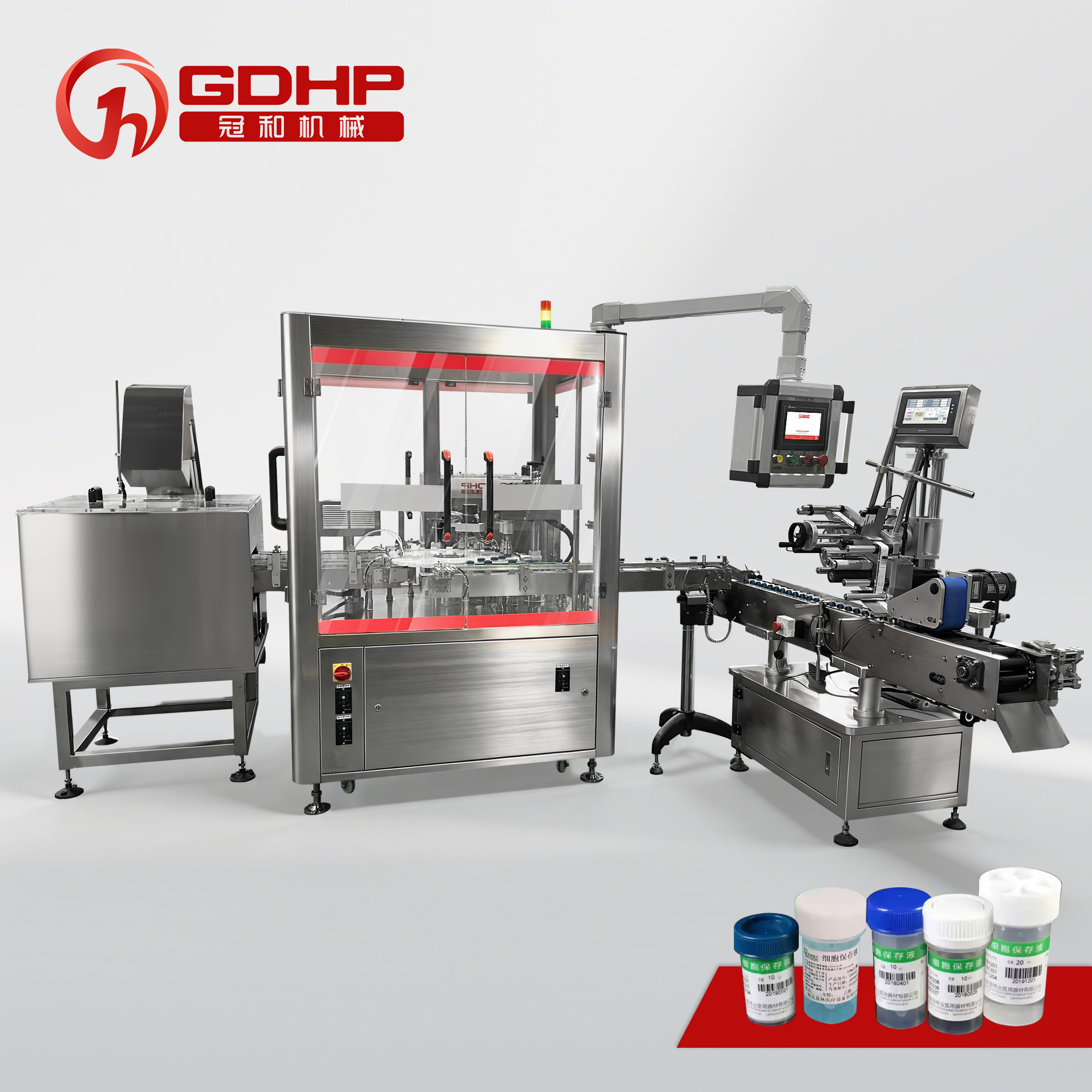
LBC Preservative Solution Filling Line

Integrated bottle feeding, dual-head peristaltic filling, cap sorting, servo capping, horizontal labeling, and inkjet coding for LBC and related low-viscosity laboratory solutions.

  • Fill volume10 mL
  • Output50 bottles/min
  • Accuracy±0.3 mL
  • ModelGHALF-2-2 line
View LBC line
Vacuum & gas exchange

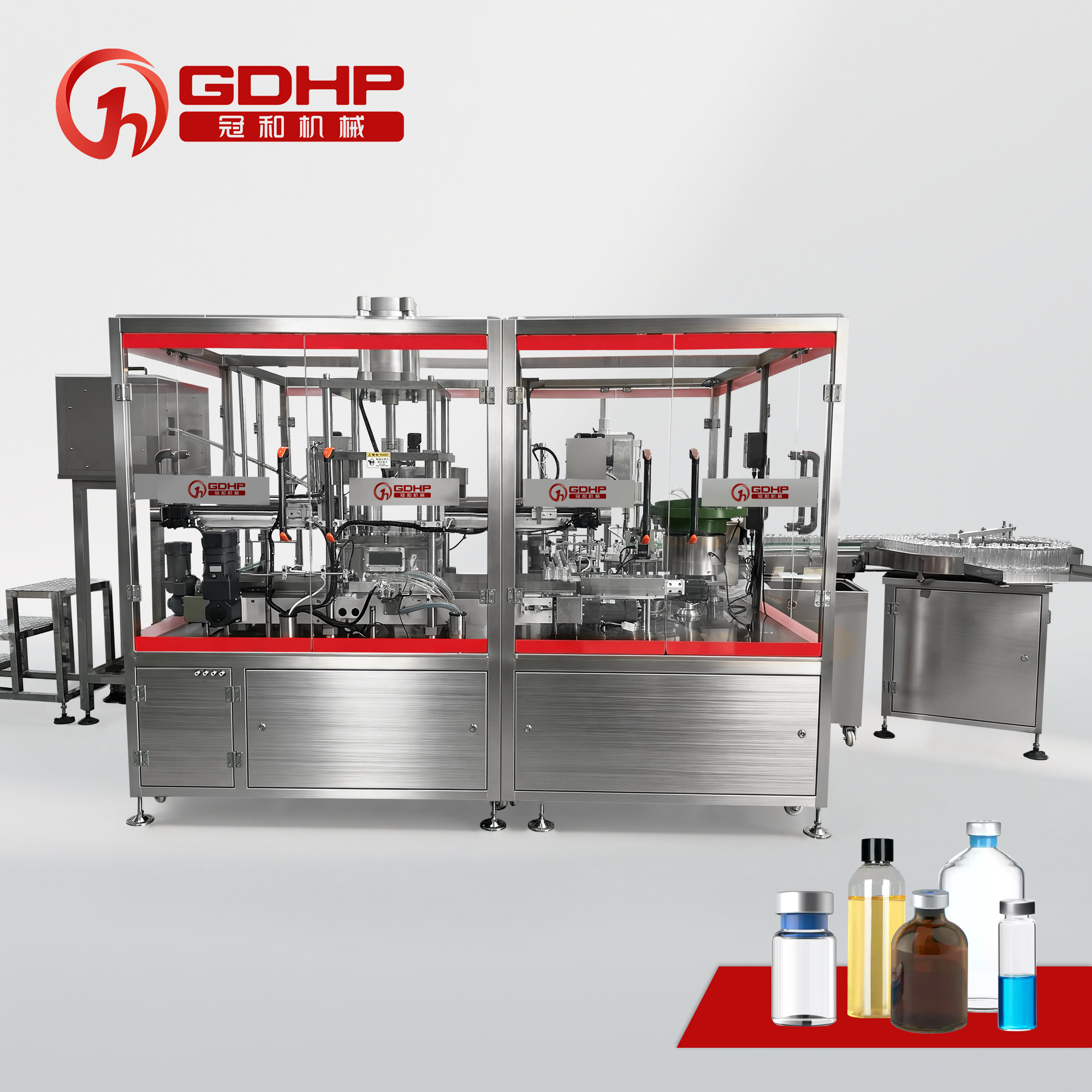
Blood Culture Bottle & Vial Monoblock

A purpose-built filling, semi-stoppering, vacuuming, gas-exchange, full-stoppering, and crimping sequence for blood culture bottles and pharmaceutical vials.

  • Fill range10–60 mL
  • Output1,300–1,500 BPH
  • Accuracy±0.5 mL*
  • ModelGHAFC-1-1-1
View blood culture system
Petri dish monoblock filling
Large-volume media

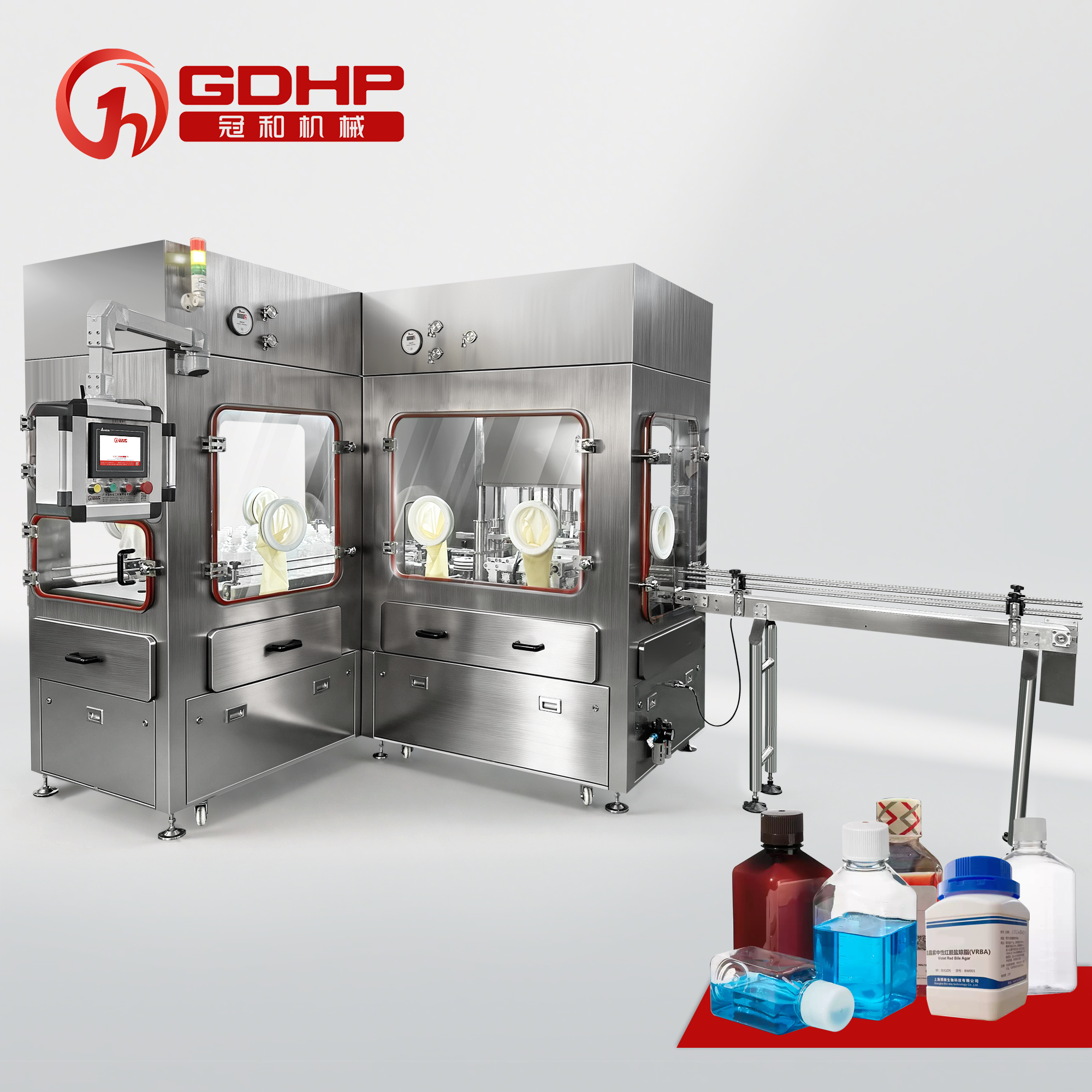
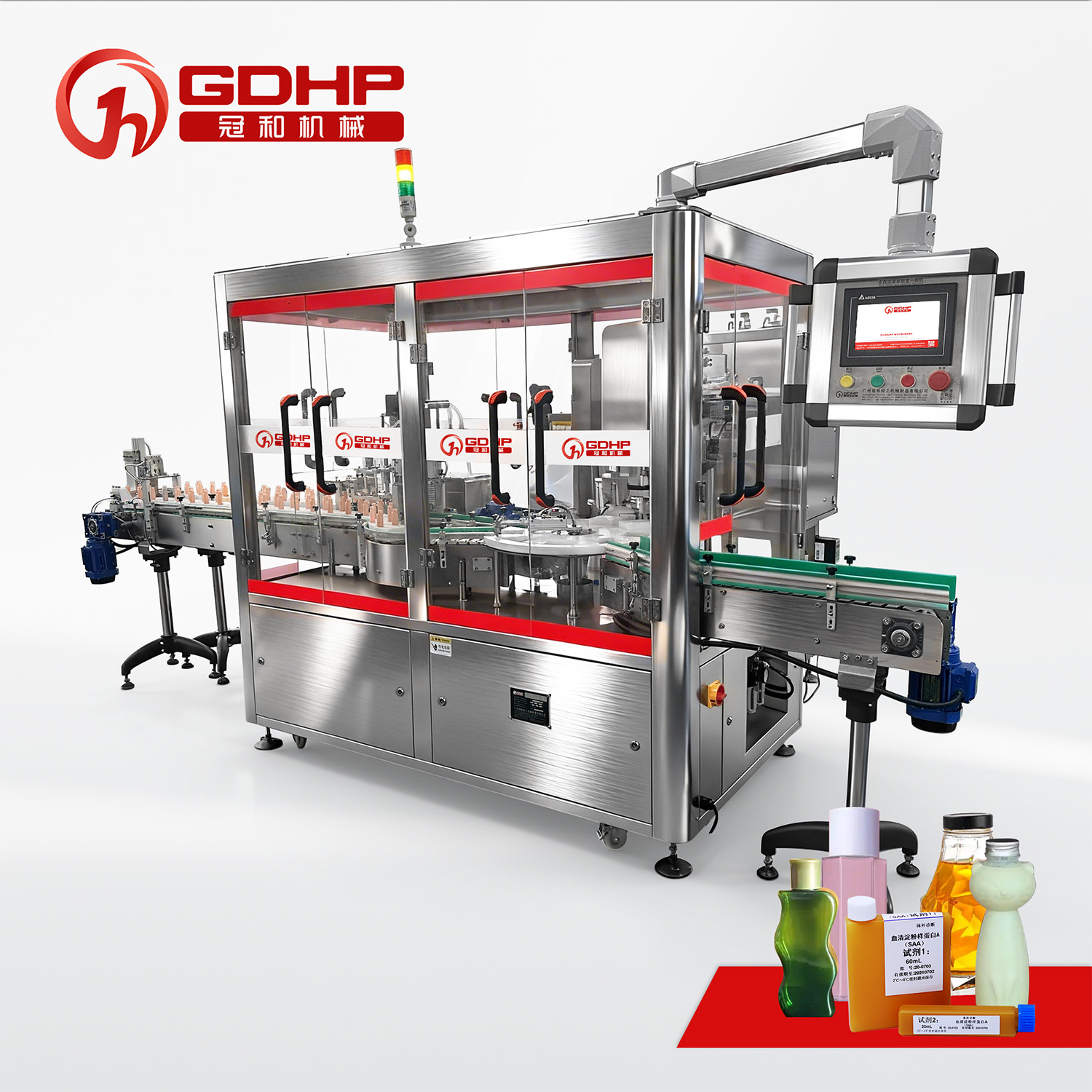
Culture Medium Filling & Capping Monoblock

Peristaltic-pump filling and four-head cap placement/capping for culture media, buffers, reagent bottles, and other low-viscosity liquids under a localized laminar-flow configuration.

  • Fill range500–1,000 mL
  • OutputUp to 700 BPH
  • Fill error±2%
  • MethodPeristaltic pump
View culture media system
Tube handling

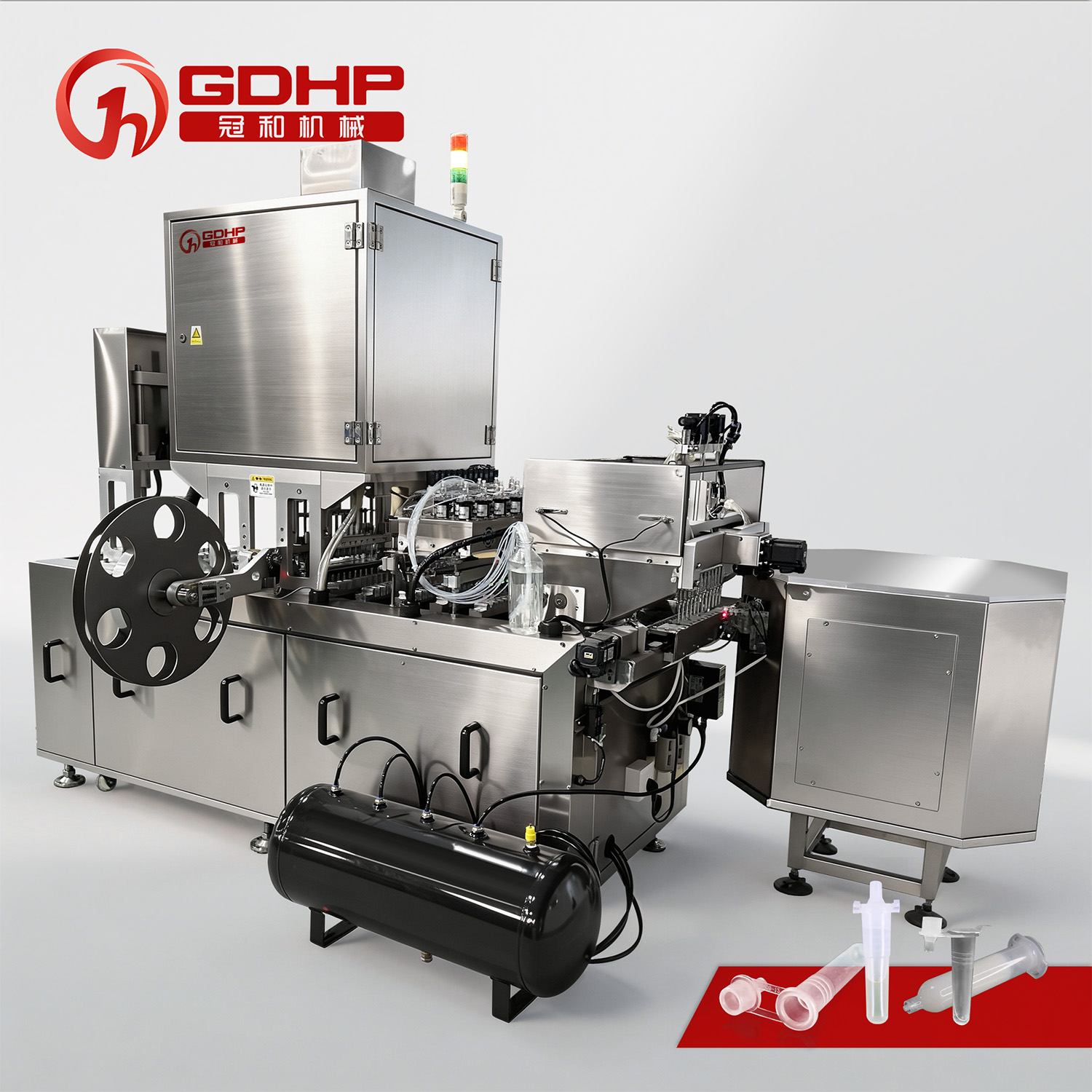
Antigen Reagent Monoblock Filling Line

An automated platform for centrifuge tubes, PCR single tubes, cryovials, nucleic-acid sampling tubes, and rapid-test reagent packaging, with format-dependent handling.

  • FormatsMicro & PCR tubes
  • Published output4,000–8,000 pcs/h*
  • ControlPLC
  • PowerApprox. 2.5 kW
View antigen line
Lab & pilot scale

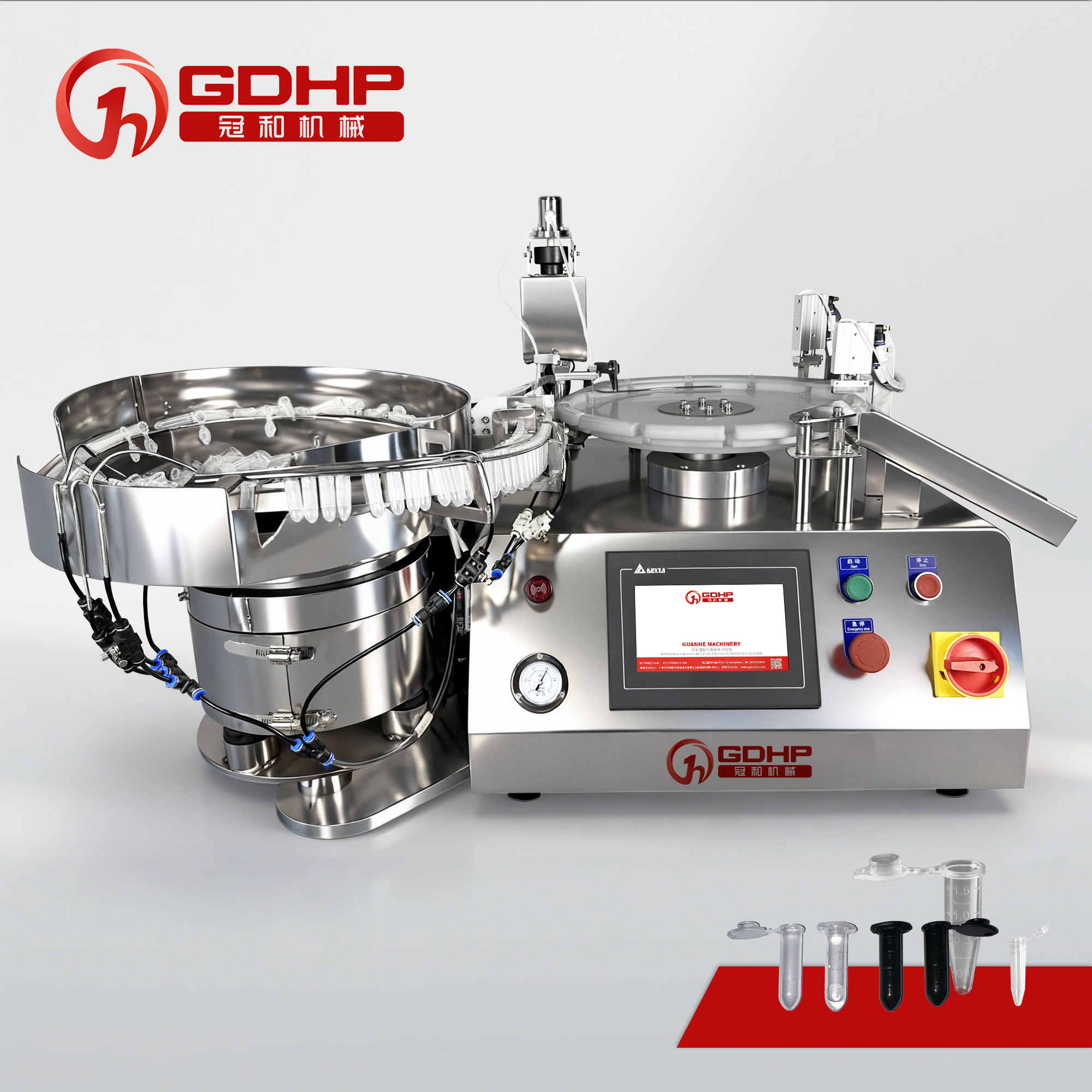
Benchtop Antigen Reagent Machine

A compact single-head workstation for automated bottle feeding, micro-filling, guiding, capping, and discharge in laboratories, pilot plants, and small-batch production.

  • Technical range0.1–1 mL
  • Output2,000 BPH
  • Reference dose510 μL ±10 μL
  • Voltage220 V
View benchtop machine

Solution

Filling Solutions for the In Vitro Diagnostic Industry

Addressing the stringent requirements of IVD reagents, our core filling system achieves extreme precision down to the milliliter level, effectively reducing the waste of expensive reagents and ensuring the uniformity and reliability of every sample test. Simultaneously, we employ fully enclosed filling technology and a GMP-compliant anti-contamination design, strictly preventing cross-contamination risks throughout the entire process from bottle washing and filling to capping and labeling, helping your laboratory and production workshop achieve a leap from "manufacturing" to "intelligent manufacturing."
Discuss Your Custom Solution
Peristaltic Pump for IVD Industry

High-Precision Ceramic Piston Pumps

Mechanism: Valve-less rotary ceramic piston designs engineered for micro-scale precision dosing down to sub-milliliter targets.

Best Use Cases: Low-viscosity reagents, master mixes, and high-repeatability micro-dosing requiring strict ±0.5% volumetric accuracy.

Key Advantages: Exceptional wear resistance, zero material shedding, and reliable sub-microliter dispensing over long continuous production runs.

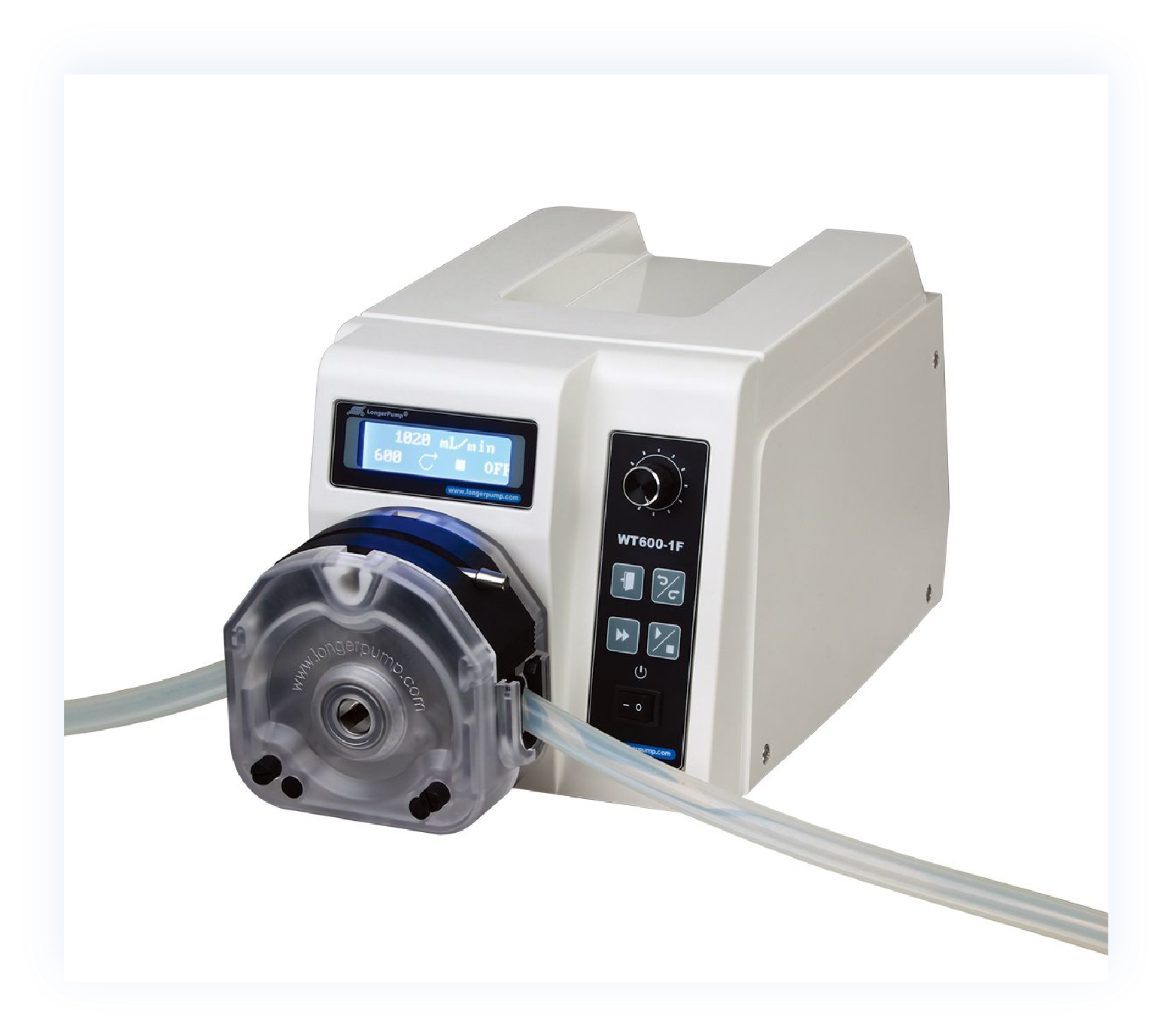
Peristaltic Pump Dispensing Systems

Mechanism: Single-use fluid paths featuring medical-grade silicone or Pharmed tubing for pure contactless liquid filling technology.

Best Use Cases: Biologics, shear-sensitive enzymes, monoclonal antibodies, and cross-contamination-sensitive assays.

Key Advantages: Zero liquid-to-machine contact, elimination of complex cleaning validation between batches, rapid changeovers, and simplified CIP/SIP workflows.

Servo-Driven Positive Displacement Systems

Mechanism: Direct-drive servo motor profiles providing dynamic, programmable volumetric control.

Best Use Cases: High-viscosity buffers, culture media, and dense chemical suspensions.

Key Advantages: Prevents fluid shear and air entrainment in thick liquids while adapting on the fly to varying container geometry.

Selection guide

Choose the line architecture before choosing the model

The best-fit IVD filling machine depends on production stage, container stability, dose range, closure sequence, hygiene strategy, and downstream inspection—not on one headline capacity.

R&D / pilot

Benchtop system

Use when floor space is limited, batches are short, and operators need frequent recipe or container changes.

  • Micro-volume work
  • Manual or compact handling
  • Lower entry complexity
Integrated production

Monoblock platform

Use when filling, cap placement, capping, and discharge must share one compact indexing platform.

  • Controlled bottle transfer
  • Compact process footprint
  • Central PLC/HMI control
End-to-end output

Turnkey filling line

Use when bottle feeding, air cleaning, filling, capping, labeling, coding, and inspection need coordinated interfaces.

  • Line-level takt balancing
  • Upstream/downstream integration
  • Project documentation planning

Typical process architecture

From empty container to coded IVD reagent

A production line may include all or only part of this sequence. Blood culture and special closure formats can add vacuum, gas exchange, stopper pressing, crimping, or format-specific inspection.

01Feed & orientTray, hopper, vibratory bowl, or puck loading
02Clean or prepareAir cleaning or controlled pre-treatment when specified
03Meter & fillPeristaltic or application-selected dosing system
04Place closureCap, plug, stopper, membrane, or nested closure
05Seal & inspectTorque capping, pressing, crimping, and detection
06Label & codeIdentification, traceability, and downstream packing

We Help From Design to Validation

01 Diagnostic Needs Analysis & Tooling Customization

We build every machine around your specific fluid characteristics and packaging formats. Reagent Rheology Assessment: Analyzing fluid viscosity, surface tension, and shear sensitivity to select the ideal pump mechanism. Container Mapping: Designing custom tooling, starwheels, and filling nozzles for microtubes, PCR strips, or multi-liter buffer bottles. Throughput Target Definition: Matching line speeds and station configurations directly to your target output metrics.

02 Precision Manufacturing & Factory Acceptance Testing (FAT)

We assemble and thoroughly validate your equipment in our facilities before shipping. Offline System Checks: Verifying component precision, including ceramic pump dosing accuracy and capping torque limits. Online FAT Protocols: Running full-speed trial tests using your sample containers and test fluids. Compliance Sign-Off: Complete Factory Acceptance Testing (FAT) validation ensuring zero defects before factory release.

03 Cleanroom Commissioning & Qualification Support

Our field engineers manage on-site integration into your cleanroom space to simplify compliance. Cleanroom Setup: Precision positioning and integration inside ISO Class 5 / Class 100 environments or RABS suites. IQ/OQ/PQ Documentation Frameworks: Providing pre-validated test protocols and turnkey execution records for fast regulatory approvals. Operator Training: Direct, hands-on instruction for your operating team covering batch setups, cleaning, and rapid changeovers.

04 Global After-Sales Technical Support

We keep your production running smoothly throughout the equipment’s entire operational lifecycle. Preventive Maintenance: Scheduled inspections to replace wear items like seals and tubing before downtime occurs. Remote & On-Site Assistance: Fast diagnostic support paired with global field technician dispatch. Spare Parts Availability: Quick-ship access to critical replacement parts to protect your production targets.

Beginner to project-ready

How to specify an IVD reagent filling machine

What is an IVD filling machine?

The FDA describes in vitro diagnostics as tests performed on samples such as blood or tissue taken from the human body. In manufacturing, an IVD filling machine meters a diagnostic reagent, buffer, culture medium, preservative, or related liquid into its primary container and may integrate closure placement, capping, sealing, inspection, labeling, and coding.

The word “IVD” defines the product context; it does not by itself determine the pump, filling range, automation level, or cleanroom design. Those decisions come from the reagent, container, closure, production target, and validation strategy.

Start with the reagent and product-contact path

Document viscosity, foaming tendency, suspended particles, sensitivity to shear, corrosiveness, temperature, cleaning method, and acceptable product-contact materials. Peristaltic filling is often selected for low-volume diagnostic liquids because the product path can be limited to tubing and the filling nozzle, but suitability still requires sample testing.

For biological media or high-value reagents, evaluate tubing life, hold-up volume, priming loss, dripping, bubble control, and changeover cleaning before agreeing on the final pump and nozzle design.

Container geometry controls line stability

Round vials can often use conventional guides, starwheels, or bottle feeders. PCR tubes, cryovials, handled tubes, and asymmetric IVD bottles may require dedicated nests or recirculating pucks. A puck converts an unstable outer shape into a repeatable handling datum through filling and capping stations.

Send representative bottles, caps, stoppers, and membranes early. Dimensional tolerances and closure variation are as important as the nominal drawing when designing sorting, pick-and-place, and torque control.

Define accuracy together with dose and speed

A percentage without its fill volume is not a complete acceptance criterion. Specify the target volume, allowable deviation, test method, sampling plan, liquid conditions, and required output. Confirm whether the published speed refers to bottles per minute, bottles per hour, or individual components, and whether it includes every downstream operation.

Factory trials should use the intended container, closure, and a representative liquid. Acceptance criteria should distinguish equipment design targets from results observed during FAT or site qualification.

Cleanroom classification and product compliance are separate decisions

ISO 14644-1 classifies air cleanliness by airborne particle concentration. It does not certify an IVD product or automatically make a filling line compliant. Likewise, the EU’s Regulation (EU) 2017/746 establishes the regulatory framework for IVD medical devices, but the manufacturer remains responsible for its quality system, risk management, process validation, and conformity assessment.

A machine can be designed to support hygienic or controlled-environment production. Final GMP, IVDR, FDA, cleanroom, and validation compliance depends on the complete installed process, documentation, utilities, operating procedures, and the manufacturer’s regulatory responsibilities.

What to include in your URS

  • Reagent name and physical properties
  • Target and minimum/maximum fill volume
  • Bottle, tube, cap, stopper, and membrane samples
  • Required output and shift pattern
  • Accuracy definition and test protocol
  • Feeding, cleaning, and closure sequence
  • Product-contact and frame materials
  • Cleanroom and localized airflow requirements
  • Reject, alarm, and traceability logic
  • FAT, SAT, IQ/OQ, and documentation scope
  • Available voltage, air, and plant utilities
  • Line layout and future expansion interfaces

Frequently asked questions

IVD filling machine FAQ

There is no universal method. Low-volume, low-viscosity reagents often use peristaltic or precision syringe-pump filling, while other fluids may require a different metering principle. Selection should follow liquid testing, dose range, accuracy criteria, cleaning strategy, and product-contact requirements.

Yes, when the machine is engineered with change parts, adjustable guides, interchangeable pucks, or recipe-controlled settings. The practical changeover time and compatible range must be confirmed from actual container and closure samples.

A monoblock is useful when filling and closure operations need repeatable indexed transfer and a compact footprint. An inline line offers more freedom to add buffers, inspection, labeling, cartoning, and future stations. The choice depends on takt balance, container stability, floor space, and expansion plans.

Dedicated pucks or nests support containers with uneven bases, off-center necks, or low stability. The fixture carries each bottle through filling and capping, while a return conveyor recirculates empty pucks to the loading point.

Provide representative liquid, bottles or tubes, caps, stoppers, seals, drawings, target volume, acceptable deviation, output, utilities, line layout, and cleanroom requirements. Physical samples help verify feeding, filling, closure, and changeover assumptions.

No. Equipment design can support hygienic production and validation, but compliance belongs to the complete manufacturing system. It depends on the installed environment, risk management, qualification, process validation, documentation, operating procedures, and the legal manufacturer’s quality system.

Build Your Custom Solution

Your information is secure - we respect your privacy and will only use these details to contact you.

Build Your Custom Solution