How Volumetric Filling Machines Work and Their Applications
Is there a mismatch between your product and your filling machine? Let us guide you on how to select the…
May 19, 2026

The right hot filling machine starts with the product itself. Temperature loss, poor flow control, and incorrect nozzle design can cause unstable filling, product waste, or inconsistent output. We assess the product temperature, viscosity, and particulate content before selecting the filling configuration.
For many hot-fill applications, the product must remain within 80°C-95°C from the heating tank through the filling nozzle. The system should maintain a stable thermal path through insulated product lines and high-temperature-resistant filling components.
| Requirement | What to Check |
|---|---|
| Filling temperature | Stable control within the required 80°C-95°C range |
| Line stops | Continuous recirculation to avoid temperature drop |
| Temperature stability | Temperature recirculation valves to return product safely during pauses |
| Upstream preparation | Heating jacketed mixing tanks and insulated transfer lines |
Juices and teas usually flow easily, while sauces, jams, pulp products, and chunky products require wider product passages and more controlled dosing. Product viscosity and particulate handling directly affect the filling valve, nozzle, and transfer system design.
| Product Type | Recommended Hot Filling Machine Features |
|---|---|
| Juices and teas | Smooth-flow passages and stable temperature control |
| Sauces and pastes | Controlled cut-off valves and filling systems suited to higher viscosity |
| Jams and pulp products | Large-orifice passages for suspended solids |
| Chunky products | Product-contact paths sized to reduce blockage and product damage |
We specify anti-drip filling nozzles to reduce stringing and product loss after each fill. Cut-off valves provide cleaner filling control, while large-orifice passages support products containing pulp, particulates, or larger suspended solids.
For hot products requiring mixing or holding before filling, heating jacketed mixing tanks help maintain process temperature. Thermal insulation around tanks and upstream piping reduces heat loss before the product reaches the hot filling machine.
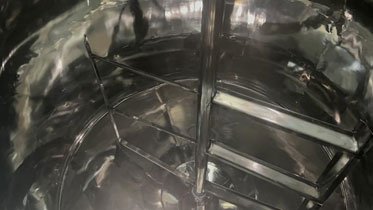
The right hot filling machine must match the container’s heat resistance, shape, and handling method. I would confirm the packaging design before finalizing filling, capping and conveying .
| Packaging type | Key requirement | Hot-fill handling point |
|---|---|---|
| Heat-set PET bottles | Heat-resistant design for temperatures up to about 90°C | Use vacuum panels to manage pressure changes and help prevent bottle collapse. |
| Standard PET bottles | Limited resistance to hot-fill conditions | Standard PET can deform under heat and vacuum. Use a suitable bottle design to reduce paneling and collapse risk. |
| Glass containers | Good thermal shock resistance | Control temperature differences during filling and cooling to reduce cracking risk. |
| Flexible pouches | Stable pouch material and controlled sealing | Check heat resistance, filling accuracy, and seal performance. |
| Aluminum cans | Compatible can and closure handling | Coordinate filling temperature, seaming, and downstream cooling. |
| Irregular bottles | Secure transport through the line | Use container-specific handling to keep bottles stable during filling and capping. |
For hot-fill products, heat-set PET bottles are generally better suited than standard PET. Their design can handle higher temperatures and pressure changes more reliably. Vacuum panels help absorb the vacuum created as the product cools after filling.
A hot fill production line should also control cooling conditions. Fast or uneven temperature changes can cause bottle paneling, buckling, or deformation.
Irregular bottles, shaped containers, and other non-standard formats need stable conveying. We use the handling approach that best matches the bottle structure:
This helps keep containers aligned through hot filling, capping, cooling, and labeling.
The headspace sterilization process supports hygienic hot filling by treating the area between the product and closure. Depending on the container and line design, this may use:
The selected method must work with the bottle material, cap type, filling temperature, and conveyor layout. Proper headspace treatment helps maintain a stable sealing process without damaging the container.
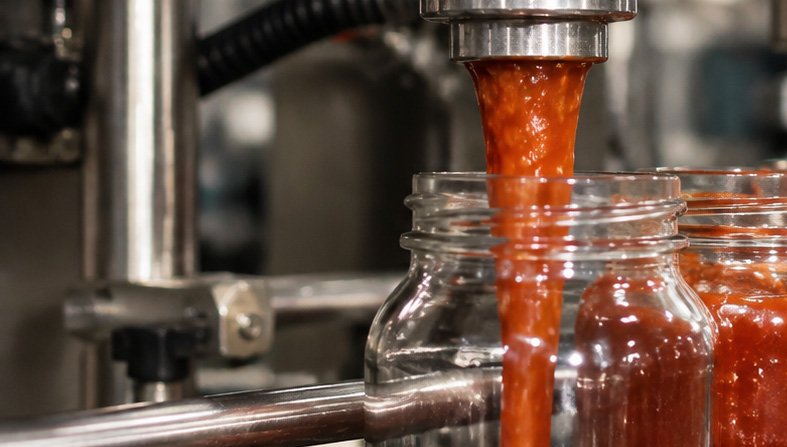
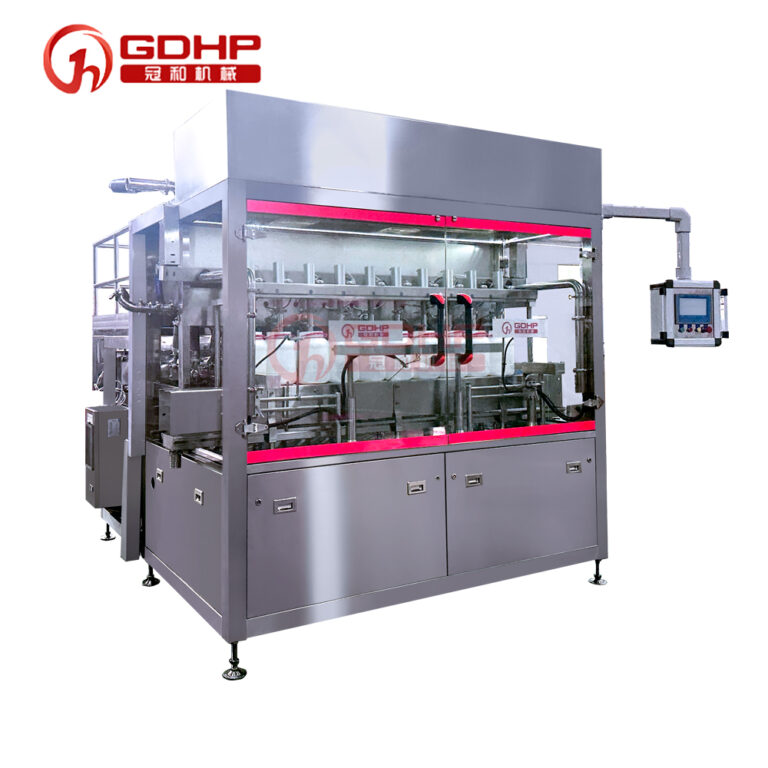
The right hot filling machine depends on product flow, viscosity, particulates, target fill volume, and required output. I recommend matching the dosing method to the product before selecting nozzle count or automation level. This helps control fill consistency, product loss, and cleaning effort.
| Filling technology | Best suited to | Main advantage | Key consideration |
|---|---|---|---|
| Gravity filling | Free-flowing, low-viscosity liquids | Simple, efficient filling | Best where product flow is stable |
| Vacuum overflow filling | Low-viscosity products needing a uniform visual fill level | Consistent fill appearance | Product and container design must suit overflow handling |
| Volumetric piston filler | Sauces, pastes, jams, and products with particulates | Controlled dosing for thicker products | Requires cleaning access suited to the product |
| Flowmeter filling machine | Liquid products requiring measured digital dosing | Helps reduce product giveaway | Select compatible meters and product-contact materials |
| Net-weight filling machine | Applications where weight-based control is required | Accurate weight verification | Line speed and container handling must be coordinated |
A gravity hot filling machine is generally suitable for products that move easily through the filling path. A volumetric piston filler is a stronger choice for higher-viscosity products and products containing pulp or suspended solids.
| Selection point | Gravity filling | Piston hot filling |
|---|---|---|
| Product viscosity | Low | Medium to high |
| Particulate handling | Limited by product flow | Better suited to thicker or particulate products |
| Fill control | Suitable for stable liquids | Controlled volumetric dosing |
| Production setup | Straightforward | More product-specific configuration |
| Cleaning needs | Simpler fluid path | Must allow effective cleaning of piston and valve areas |
| Cost basis | Often lower system complexity | Higher complexity for demanding products |
Nozzle design should match the product and container. Anti-drip filling nozzles and reliable cut-off valves help keep containers, conveyors, and machine surfaces clean. For products with suspended solids, use passages sized to allow smooth product movement without unnecessary restriction.
I would confirm these points during machine selection:
A correctly configured hot filling machine combines the right dosing technology, nozzle arrangement, and hygienic product path for stable production and dependable fill results.
The right hot filling machine must match real demand, peak demand, and planned growth. I recommend calculating both bottles per hour (BPH) and containers per minute (CPM) before selecting the filler, capper and conveyors.
Plan for current output plus reasonable expansion over the next three to five years. A line that only meets today’s demand can quickly become a production constraint.
| Production Need | Recommended Configuration | Key Benefit |
|---|---|---|
| Lower output, frequent product changes | Linear hot filling machine | Lower investment and faster changeovers |
| Higher output, compact line layout | Rotary monoblock filling capping machine | Integrated filling and capping with efficient flow |
| Small-batch or developing production | Semi-automatic hot filling machine | Practical control with lower automation requirements |
| Continuous, higher-volume production | Fully automatic hot fill production line | Consistent operation and reduced manual handling |
A linear filler is often suitable where production speed is lower, bottle formats change regularly, or budget control is important. A rotary monoblock filling capping machine is better suited to higher-speed operations that need filling and capping in a compact, hygienic layout.
Select automation based on staffing, output targets, container handling, and changeover frequency.
Production line footprint planning must include more than the filling machine. Allow space for upstream product handling, hot filling, labeling, secondary packaging, access, and maintenance.
| Line Type | Typical Floor Space |
|---|---|
| Small hot filling line | About 50-100 m² |
| High-speed automated line | About 200-500 m² |
We use 3D layout planning to position each module around the available plant space and production flow. This helps avoid congested conveyors, difficult maintenance access, and unnecessary material movement.
Sanitary design protects product quality, limits contamination risk, and reduces cleaning downtime. I recommend specifying hygienic materials and a cleaning method at the start of every hot filling machine project.
| Area | Recommended Requirement |
|---|---|
| Machine structure | SUS304 stainless steel casing and frame |
| Product-contact parts | 316 stainless steel or medical-grade silicone tubing |
| Fluid path | Food-grade seals, hoses, valves, and smooth product channels |
| Cleaning | Clean-in-Place (CIP) loops designed for repeatable internal cleaning |
| Higher hygiene needs | Sterilize-In-Place (SIP) integration where required |
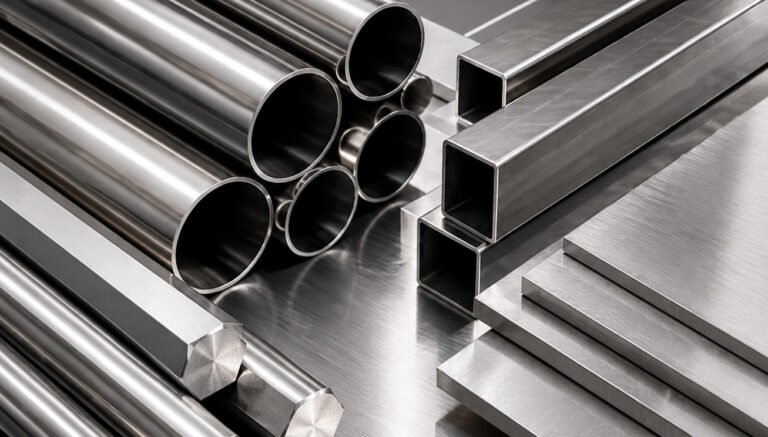
The machine frame should use SUS304 stainless steel for durable, cleanable construction. Product-contact components need stronger compatibility with heated products and cleaning media. Use 316 stainless steel, medical-grade silicone tubing, and food-grade seals in all wetted areas.
Check that valves, hoses, filling nozzles, and internal channels are designed to avoid trapped product. This helps prevent cross-contamination and reduces the need for manual teardown.
A well-designed Clean-in-Place (CIP) system cleans tanks, pipes, filling valves, and nozzles without dismantling the line. Key components may include:
For applications with higher sterilization requirements, SIP integration adds another level of process control. This supports consistent sanitation and helps reduce contamination risk between production runs.
Confirm that the hot filling machine design aligns with the standards required for your market and product category:
A sanitary hot filling machine should be easy to clean, built with compatible materials, and engineered to keep cleaning time under control without compromising product safety.
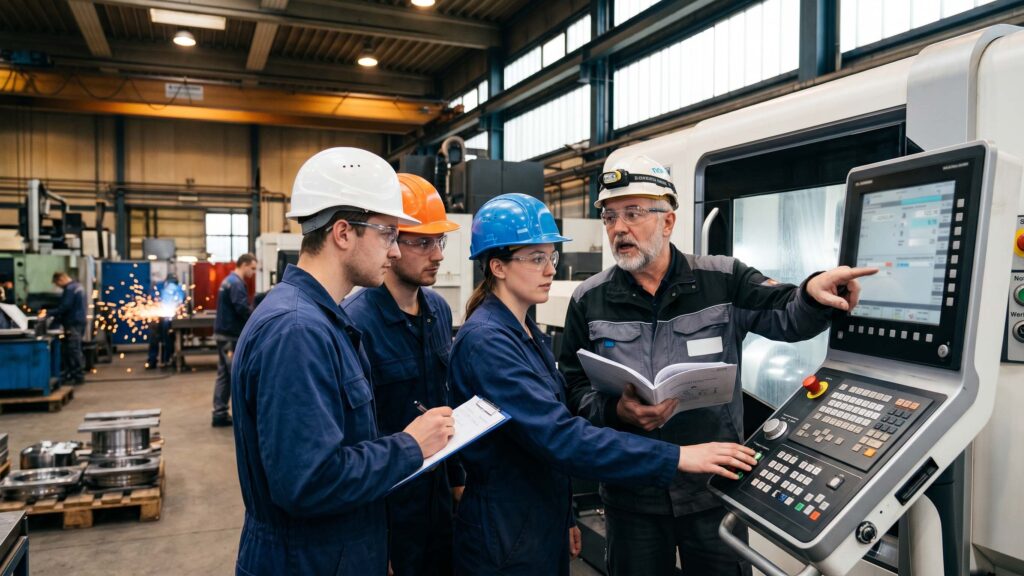
A hot filling machine must work as one timed system with capping, inversion, and drying equipment. I recommend confirming cap type, neck finish, and required torque before selecting a vacuum capping machine. Reliable torque control supports hot-fill sealing performance and helps prevent leakage during cooling.
The line should synchronize filling, cap sterilization, capping, bottle inversion, and conveyor transfer. Where required, the headspace sterilization process can use bottle inverters, tipping belts, or steam treatment. Correct timing is essential because an incomplete seal or poorly managed headspace can affect package integrity.
For irregular bottles and other non-standard containers, use conveyor handling that supports the bottle at the neck or base. This reduces instability while containers move through filling, capping, and cooling.
After cooling, use air knife drying to remove surface moisture before labeling. Dry containers support more consistent application of pressure-sensitive labels and sleeve labels, reducing label lift, wrinkles, and poor adhesion.
Use this checklist to compare each hot filling machine option against the real needs of your product, container, production target, and facility.
| Selection Area | What to Confirm |
|---|---|
| Product conditions | Filling temperature, viscosity, particulates, acidity, and required shelf life. Products filled at 80°C-95°C need stable temperature control from the heating tank to the filling nozzle. |
| Container compatibility | Bottle or container material, thermal shock resistance, neck finish, cap type, and resistance to vacuum deformation. Confirm that PET, glass, pouches, cans, or irregular bottles are suitable for the process. |
| Filling technology | Select gravity, vacuum overflow, volumetric piston, flowmeter, or net-weight filling based on product flow behavior, required accuracy, and particulate content. |
| Capacity and flexibility | Target bottles per hour (BPH) or containers per minute (CPM), peak demand, changeover frequency, container range, and future expansion plans. |
| Hygienic design | CIP or SIP requirements, product-contact materials, food-grade seals and hoses, and suitable stainless steel construction for the application. |
| Compliance | Required ISO 9001, cGMP, CE, FDA, 3-A, or EHEDG sanitary design requirements for the target market and industry. |
| Utilities and layout | Available steam, electricity, cooling water, compressed air, drainage, and production line footprint. Small lines may need about 50-100 m², while high-speed lines may require 200-500 m². |
| Supplier evaluation | Compare Total Cost of Ownership (TCO), FAT results, delivery scope, spare parts, installation, commissioning, operator training, warranty, and long-term technical support. |
| Performance expectations | Review expected Overall Equipment Effectiveness (OEE), including uptime, speed losses, reject rates, cleaning time, and maintenance intervals. |
A complete hot filling machine selection should balance product protection, packaging strength, hygienic control, output, and operating cost. We evaluate these factors together when developing turnkey hot fill production lines, including mixing, filling, capping, cooling, labeling, and end-of-line packaging.
A hot filling machine should be evaluated by more than its purchase price. GDHP recommend comparing Total Cost of Ownership (TCO) across the full operating life of the line, including utilities, maintenance, change parts, service, and production losses.
| Cost Area | What to Review |
|---|---|
| Capital cost | Filling, capping, cooling, conveyors, controls, and installation scope |
| Utilities | Steam or electricity demand, cooling-water use, and compressed-air consumption |
| Maintenance | Service intervals, wear parts, lubrication, and planned downtime |
| Change parts | Cost and lead time for bottle, cap, nozzle, and format change components |
| Production losses | Rejects, product giveaway, speed loss, and unplanned stops |
Use Overall Equipment Effectiveness (OEE) to measure real line performance. OEE combines availability, operating speed, and quality output. A lower-priced hot fill production line can create a higher long-term cost when it causes frequent stoppages, slow changeovers, rejected containers, or excess product loss.
Confirm that the supplier can customize the hot filling machine for your product, bottle, cap, production layout, and automation target. This is especially important for unusual containers, high-temperature products, and viscous materials.
GDHP will verify the project scope before release:
For a complete project, use turnkey engineering that connects mixing, hot filling, capping, labeling, and end-of-line packaging. This helps align line speed, conveyor timing, thermal control, and container handling across the full production process.