










How Does a Monoblock Filling Machine Work?
Discover how monoblock filling machines integrate bottle feeding, filling, and capping into one efficient system. Learn about technical specs, components.
April 29, 2026
When you are setting up a packaging line, your product’s specific traits must dictate every mechanical decision. The corrosiveness, hygiene requirements, and oxidation potential of a material dictate the equipment’s material, sealing method, and core accessories. For example, corrosive materials require PTFE materials, sanitary products demand 316L stainless steel, and easily oxidized materials need sealed material cylinders. Furthermore, a material’s fluidity, tendency to foam, or likelihood to clump will directly impact the filling speed and precision. These traits dictate whether you need auxiliary devices like stirring breakers, bottom-up diving nozzles to prevent foam, or nitrogen flushing to keep the product fresh.
In this comprehensive guide, I will walk you through exactly how to align your product—whether it is a thin liquid, a chunky paste, or a dusty powder—with the right machinery, ensuring your production runs flawlessly.
Preliminary Determination of the Appropriate Filling Pump for the Product:
| Product type | pumps |
|---|---|
| Liquid | flowmeter pump, negative pressure pump, magnetic gear pump, rotor pump, piston pump |
| Paste and sauce | piston pump, |
| Powder | screw pump |
Material properties—specifically flowability, corrosiveness, and aeration—directly dictate the pump type, sealing method, and construction material of your filling equipment. You cannot put a thick, sticky paste into a machine designed for flowing water.
Corrosive products require equipment made from specialized materials like PTFE (a highly resistant plastic) or 316L stainless steel, while easily oxidized products demand sealed hoppers. Furthermore, a material’s tendency to foam or clump dictates whether your production line requires additional auxiliary devices like bottom-up filling mechanisms or stirring devices.
Low-Viscosity Liquids: If your product flows like water (e.g., vinegar, mineral water, clear beverages), it requires a fast, cost-effective machine without complex pumps. We typically use flowmeter, negative pressure, or time-gravity filling methods for these. Standard stainless steel cylinders and regular nozzles work perfectly here. However, if your thin liquid foams easily—think shampoo or laundry detergent—you must use a bottom-up lifting filling mechanism. This means the nozzle dives to the bottom of the bottle and rises with the liquid level, preventing impact-induced foaming that causes inaccurate measurements and messy overflows.
Medium-Viscosity Liquids: Products like cooking oil, syrup, and cosmetic lotions have a thicker consistency. For these, magnetic gear pumps, rotor pumps, or standard piston pumps are ideal. They handle slight fluctuations in thickness and provide stable measurements for continuous production lines. The core accessories here are gear or rotor pumps with sealed cylinders, usually made of 304 or 316L stainless steel.
High-Viscosity Liquids: When dealing with sticky, sluggish liquids like honey or malt extract, you need force. A servo-driven piston filler is the absolute best choice. The piston acts like a giant, precise syringe, using pressure to forcefully extrude the material. The thicker the liquid, the more necessary the piston becomes. If your product tends to solidify as it cools, we integrate a heating and insulated hopper to keep it flowing smoothly.
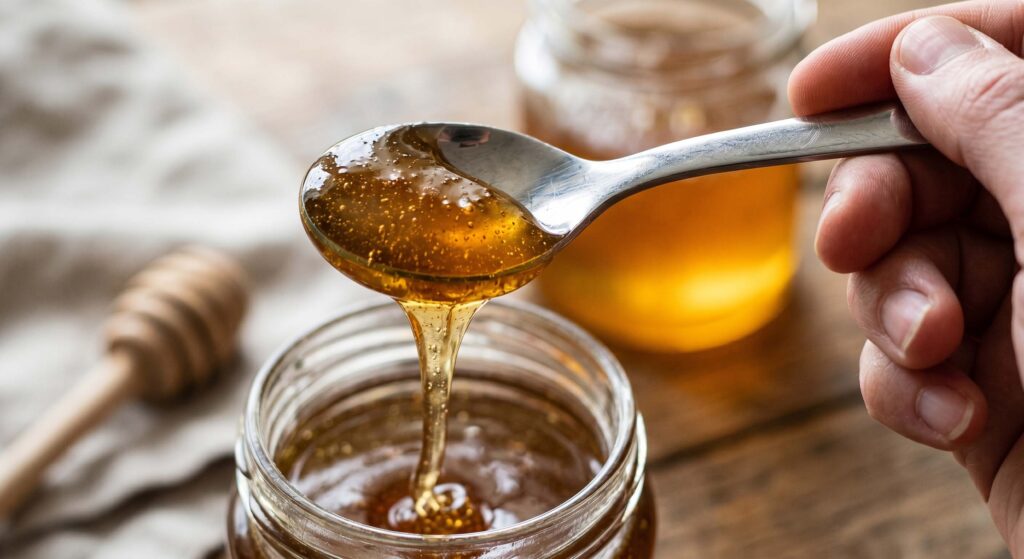
Some liquids fight back. Understanding their chemistry is vital to protecting your investment.
Strong Corrosives: Chemicals, pesticides, and strong acids will eat through standard steel in days. For these hazardous liquids, the machine must be entirely anti-corrosive. Every part that touches the liquid—the cylinder, the pump, and the nozzle—must be constructed from PTFE, PVDF, or specialized 316L stainless steel. We prioritize pneumatic diaphragm pumps or fluorine plastic pumps for these setups because they are highly resistant to corrosion and particulates, making them exceptionally safe for explosion-proof factory environments.
Easily Oxidized Liquids: High-value products like wine, olive oil, and vitamin supplements degrade when exposed to air. To preserve them, the core focus must be on isolating the liquid from oxygen. We achieve this by either pulling a vacuum inside the bottle before filling, or flushing the bottle with nitrogen gas right after filling to push the oxygen out. The storage cylinders must be completely sealed to minimize the time the liquid is exposed to ambient air.
When liquids cross the threshold into pastes and sauces, gravity is no longer your friend. The core selection logic here revolves around the stickiness of the paste and whether it contains solid chunks. We almost exclusively rely on piston filling machines for pastes to solve issues like poor flow, clogging, and uneven dosing.
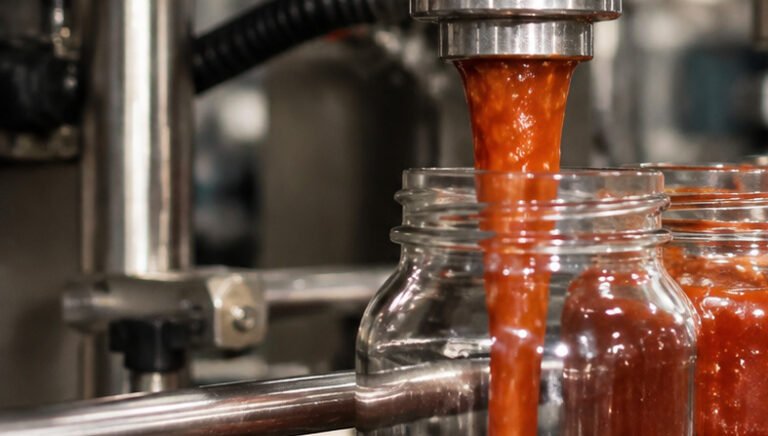
To understand how critical this is, let me share a project we recently engineered at GDHP. A condiment manufacturer in Thailand approached us frustrated; their current machinery was destroying the large pieces of beef and mushroom in their signature chili sauce. Worse, the oil and solids were separating in the hopper, meaning one jar would be entirely chili oil, and the next would be a dry block of ingredients.
We completely redesigned their line using the principles of medium-viscosity, particle-heavy paste filling. First, we installed a servo piston filler equipped with an oversized discharge nozzle. By widening the mechanical pathway and using large ball valves, we created a route where the large chunks of beef wouldn’t get crushed or jammed in the valve mechanism. We utilized wear-resistant pistons to handle the abrasive nature of the chili seeds.
To solve the separation issue, we didn’t just rely on gravity; we installed a specialized stirring hopper. This motorized agitator kept the sauce constantly moving, preventing the heavy particles from settling at the bottom. The result? Every single jar came off the line with the exact same ratio of oil, sauce, and perfectly intact beef chunks.
Smooth Pastes: Products like toothpaste, vaseline, and thick medical gels require high precision. A servo piston dramatically improves dosing accuracy. If the paste is prone to hardening, a heated hopper prevents messy “stringing” or dripping at the nozzle.
Extremely Thick Pastes: For solid-heavy, dense items like peanut butter or the solid portion of hot pot bases, standard gravity feeding fails. You must use a pressurized hopper combined with a servo piston. We force the paste down into the pump. Crucially, these setups require a stirring and “bridge-breaking” device. “Bridging” happens when thick materials form an arch over the drain hole, stopping the flow. The breaker physically smashes these clumps, often paired with heating elements to reduce the overall viscosity.
The primary mechanism for accurate powder filling is the servo double screw auger, which must be uniquely configured based on powder fineness, flowability, and dust generation. Powders behave wildly differently depending on their environment, making the correct mechanical attachments critical.
Standard Fine Powders: Milk powder, flour, and baking sodas have moderate flow and low dust. A servo double screw mechanism provides high precision and stable speed for continuous production. The hopper simply needs standard sealing to prevent moisture ingress.
Dusty, Light Powders: Powders like talc or carbon black will coat your entire factory floor if not handled properly. The goal is strict dust prevention. We engineer these lines with a diving down-spout that lowers directly into the bottle neck to minimize the distance the powder falls. Simultaneously, negative pressure dust collection vacuums up any rogue particles, protecting both the facility and the operators’ respiratory health.
Hygroscopic (Moisture-Absorbing) Powders: Salt, sugar, and certain pharmaceutical powders soak up humidity and form solid rocks. To prevent the machine from jamming, the dual-screw feeder must be paired with a vibrating or stirring breaker. This constant kinetic energy smashes clumps before they enter the screw. The hopper must be strictly sealed against moisture, and we often integrate active desiccant dryers.
Poor Flowing Powders: Extremely light or sticky powders will cause the main screw to spin empty, starving the bottle. We solve this by adding a secondary “forced feeding” screw that physically pushes the sluggish powder into the path of the main metering screw.
High-Hygiene Powders: Infant formula and pharmaceuticals require a flawless, sterile environment. Every component must be crafted from 316L mirror-polished stainless steel to prevent bacterial adhesion. The structural design must allow for rapid disassembly and Clean-In-Place/Sterilize-In-Place (CIP/SIP) procedures to avoid cross-contamination.
Packaging automation presents a high-stakes puzzle involving physics, materials science, and mechanical engineering—an arena where guesswork is simply not an option. By thoroughly understanding your product’s viscosity, particulate content, and chemical properties—and aligning these factors with the appropriate filling, sorting, and capping technologies—you can transform your production line from a source of daily headaches into a reliable, high-speed asset.
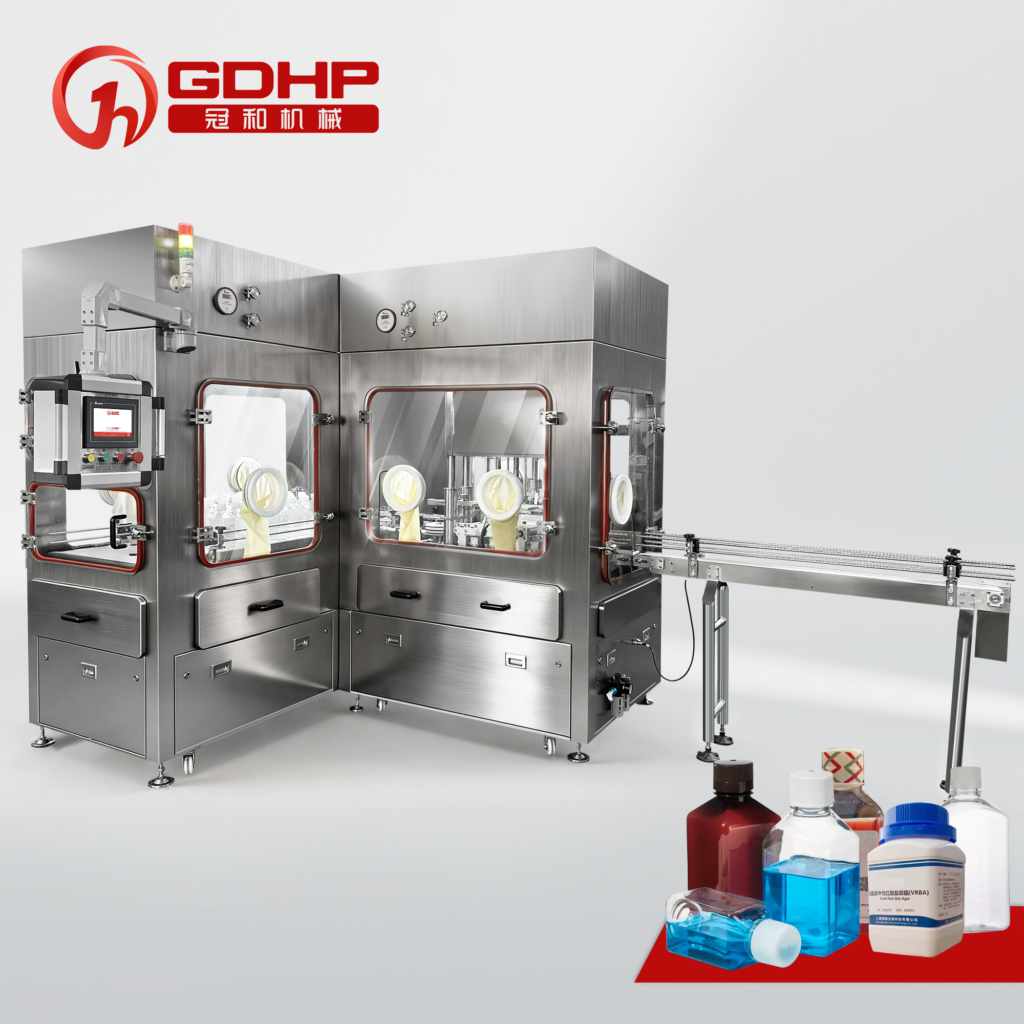
GDHP Machinery specializes in crafting filling machines custom-engineered to your exact specifications, ensuring a perfect match for your product’s attributes, bottle type, and cap design. Simply provide us with your requirements, and our expert engineers will deliver a comprehensive, one-stop solution.
The core issue lies in the filling channel being too narrow. For medium-viscosity sauces containing particles or fibers, you must utilize a servo-driven piston filling machine equipped with a large-diameter filling nozzle.
Absolutely not. All components that come into contact with the product (including the material tank, pump body, and filling nozzles) must be constructed from PTFE (Polytetrafluoroethylene), PVDF, or specialized corrosion-resistant 316L stainless steel. Regarding the pump body, we strongly recommend prioritizing the use of corrosion-resistant pneumatic diaphragm pumps or fluoroplastic pumps.
We will enhance the standard servo-driven twin-auger mechanism device to ensure a continuous and smooth flow of powder. These devices continuously break up any clumps, ensuring a smooth and uninterrupted flow of powder. Additionally, the hopper must feature a sealed, moisture-proof design; if necessary, we can also equip the system with an optional drying unit.
For low-viscosity liquids that are free of particles and non-corrosive, and which possess excellent fluidity, we recommend prioritizing flow-meter-based, negative-pressure gravity-flow, or time-based gravity-flow filling machines. These models do not require complex pump structures. Consequently, they not only offer high filling speeds but also entail lower equipment acquisition and long-term maintenance costs.
A pressurized hopper system combined with servo-driven piston filling is required. This setup utilizes pressure to force-feed the material and incorporates an agitation and arch-breaking mechanism to prevent clumping. For certain specialized materials, we may also recommend installing a heating and thermal insulation unit to physically raise the material’s temperature, thereby reducing its viscosity and facilitating easier filling.