Pharma Packaging: How to Optimize Precision Filling for Pharma
GHDP showcases successful customer case studies to demonstrate how it addresses Pharma Packaging needs, achieving precise filling that meets medical…
January 20, 2026

A filling machine fills products into containers with speed and accuracy, while a packaging machine completes the final packaging process such as sealing, wrapping, or labeling. Small businesses should choose based on their production bottleneck: filling machines improve product consistency and reduce waste, while packaging machines improve packing efficiency and shipment readiness. Understanding the difference helps you avoid investing in the wrong equipment.
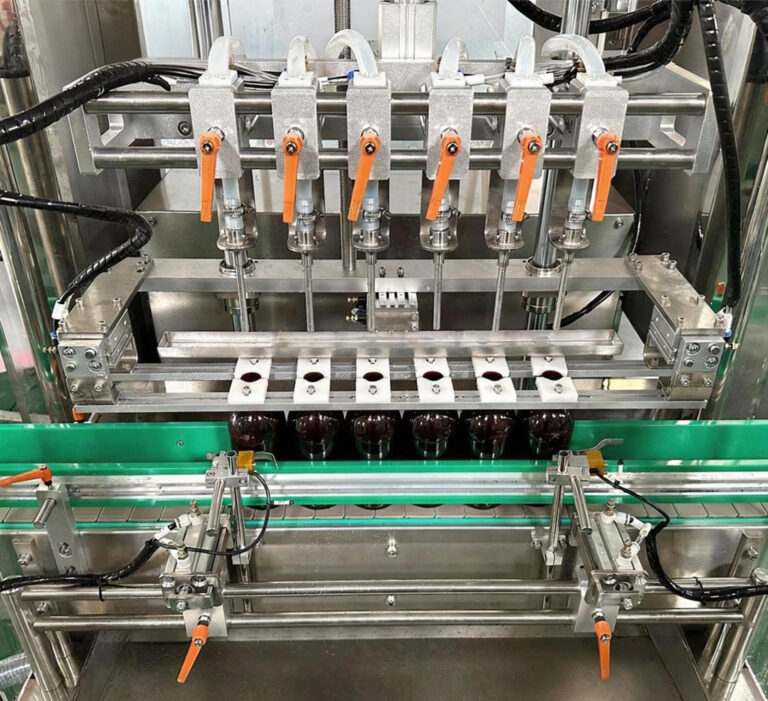
Filling machines are primarily used to dispense products into containers according to specified volumes. For example a piston filler suits viscous products(creams, honey, gels, sauces, and pastes). Gravity filling is commonly used for free-flowing liquids. Auger dosing supports powders, while measuring cup fillers handle uniform granules and similar dry products.
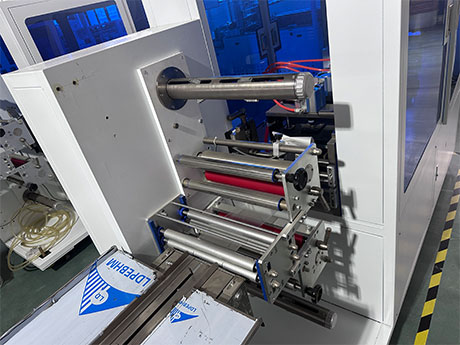
Packaging equipment may form and seal a pouch through VFFS or HFFS equipment, close premade pouches, apply shrink wrapping, or handle cartons and shipping cases. Cartoners, case erectors, case sealers, and strapping machines normally operate after the product has been filled and closed.
| Area | Filling Machines | Packaging Machines |
|---|---|---|
| Main task | Measure and dispense product into bottles, jars, pouches, vials, or other containers | Form, seal, wrap, group, carton, or protect finished products |
| Material handled | Liquids, pastes, powders, and granules | Film, premade pouches, cartons, cases, and shrink material |
| Common mechanisms | Piston fillers, gravity fillers, auger fillers, and measuring cup fillers | Heat-sealing jaws, film pullers, carton folders, shrink tunnels, and conveyors |
| Line position | Usually at the front of the packaging line | Usually after filling, at mid-line or end-of-line stages |
| Main result | Consistent product quantity with controlled waste | Secure, presentable, and transport-ready packaging |
For filling equipment, I focus on:
Product-contact parts may use SUS316 stainless steel or medical-grade silicone, while the machine casing can use SUS304 stainless steel. These materials support cleanability and resistance requirements for suitable food, chemical, pharmaceutical, and daily chemical applications.
For packaging equipment, the main checks are different:
A practical changeover may involve cleaning the filling path, flushing the product system, changing nozzles, replacing a film reel, adjusting guide rails, or calibrating carton handling parts. These tasks directly affect downtime and small-batch production efficiency.
A typical line follows this order:
For a small workshop, compact or integrated equipment can simplify material flow. GDHP guidance places many small production lines within approximately 50–100 m², depending on the machine configuration, storage needs, and automation level.
| Buying factor | Filling machine | Packaging machine |
|---|---|---|
| Primary concern | Product quantity and dosing consistency | Package security and presentation |
| Main changeover | Product cleaning, flushing, and nozzle adjustment | Film, pouch, guide rail, or carton adjustment |
| Key materials | SUS316 or medical-grade silicone contact parts | Film, pouches, cartons, cases, and shrink material |
| Typical waste risk | Overfilling, dripping, foaming, or inaccurate dosing | Poor seals, damaged film, unstable cartons, or rejected packs |
| Best first investment | When manual filling causes product loss or inconsistent volumes | When sealing, wrapping, cartoning, or case handling limits output |
The right choice depends on the actual bottleneck. I normally automate the stage causing the greatest waste, labour demand, or downtime rather than adding equipment only for a higher stated speed. A Factory Acceptance Test (FAT) before shipment helps verify filling performance, sealing results, changeovers, and handling with the planned product and packaging materials.
I began to think: product waste, inconsistent fill volumes, slow manual work, limited floor space, and the point where operators are becoming the bottleneck. The right choice depends on the product, package format, output target, and available workshop space.
A small production line commonly needs about 50-100 m2 when it includes material staging, filling, capping or sealing, labeling, packaging, operator access, and finished-goods handling.
For compact workshops, I plan the flow to avoid backtracking:
Keep raw materials, empty containers, packaging film, cartons, and finished goods in separate working areas. Operators also need clear walkways for cleaning, maintenance, and product changeovers.
Filling equipment must match how the product flows. Choosing a machine based only on container size or target speed often leads to poor accuracy, waste, foaming, or difficult cleaning.
| Product Type | Suitable Filling Method | Main Selection Factors |
|---|---|---|
| Thin liquids | Gravity or other liquid filling systems | Viscosity, foaming, temperature, bottle type |
| Thick liquids, creams, sauces, honey, gels | Piston filler | Product viscosity, nozzle size, heating needs |
| Powders | Auger powder filler | Powder flow, dust control, fill weight |
| Uniform granules | Volumetric or measuring cup filler | Granule consistency and target volume |
| Corrosive or sensitive liquids | Specialized liquid filler with suitable contact parts | Chemical compatibility and sealed handling |
For water, juice, oils, and other free-flowing liquids, gravity-based filling can be appropriate. Foaming products may need filling settings and nozzle design that reduce splashing and overflow.
For creams, pastes, sauces, honey, and similar viscous products, piston filling is commonly used. Heated or jacketed systems can support products that need temperature control to remain flowable.
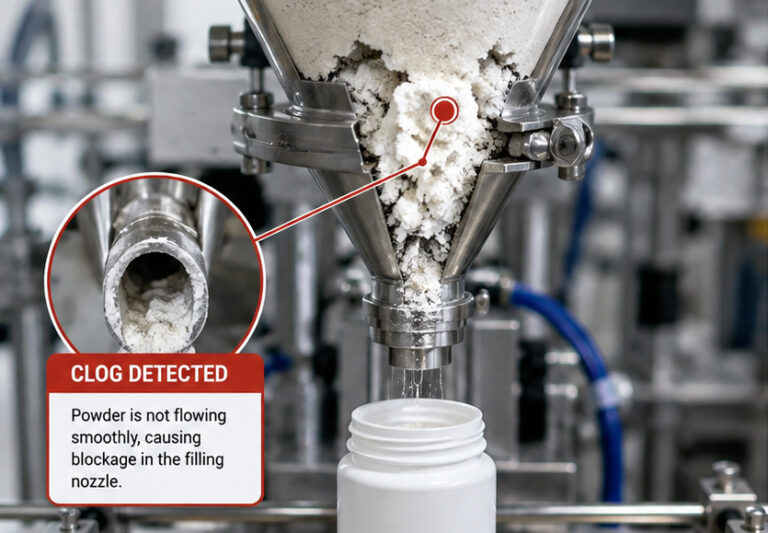
For powders, an auger filler provides controlled dosing for products such as flour, protein powder, and spices. Dust management matters because airborne powder can affect cleaning, operator comfort, and nearby equipment. Uniform granules, seeds, coffee beans, and similar materials can be handled with measuring cup or volumetric filling methods.
Special materials require more than a standard dosing setup.
SUS304 is commonly used for the machine frame and external casing. SUS316 stainless steel or medical-grade silicone may be used for product-contact parts where hygiene or chemical resistance is important.
Small businesses do not always need a full automatic line on day one. The practical decision is based on daily output, labor availability, product range, and the current bottleneck.
| Machine Type | Best Fit | Operating Benefit |
|---|---|---|
| Manual equipment | Very low-volume work | Lowest equipment commitment |
| Benchtop filling machinery | Small batches and limited space | Compact, simple operation |
| Semi-automatic liquid filler | Growing production with operator loading | Better dosing consistency and less manual effort |
| Fully automatic line | Stable, higher-volume production | Conveyor-based filling, sealing, labeling, and handling |
| Integrated system | Products requiring multiple connected steps | Reduces manual transfers between machines |
Benchtop filling machinery is useful for low-volume work, sample runs, and small-batch production lines. Semi-automatic liquid fillers can combine controlled dosing with operator-fed containers. Fully automatic systems use conveyors and connected handling equipment to move containers through filling, capping, sealing, labeling, and packaging steps.
I recommend automating the process that is limiting output or creating the most waste. A filling machine is not always the first purchase.
Review where production slows down:
The best investment is the one that removes the current constraint without creating a new one elsewhere in the line.
Capital cost is only one part of the decision. Labor savings, reduced product waste, changeover time, maintenance needs, and dependable output all affect return on investment.
Overall Equipment Effectiveness (OEE) is a practical way to evaluate equipment performance. It combines:
For a small business, reliable semi-automatic equipment with manageable changeovers can deliver stronger value than a larger automated line that exceeds current demand. Select capacity for realistic output, allow room for future growth, and account for cleaning access, maintenance support, training, and planned production changes.
If filling is the primary bottleneck, use our guide on how to choose a filling machine by product, container, capacity, automation level, and budget.
For price ranges, hidden project costs, and regional supplier comparisons, consult our filling machine cost guide.

I use integrated equipment when a small line needs fewer handoffs, a compact footprint, and consistent product handling. A monoblock machine combines filling and capping in one compact rotary unit, helping connect primary packaging steps in a controlled sequence.
Monoblock equipment can suit small-batch production of:
The machine choice depends on the container, product properties, required automation level, and available workshop space.
Form-Fill-Seal (FFS) equipment forms packaging film, doses the product, and heat-seals the pack in one system.
| FFS type | Typical use |
|---|---|
| VFFS | Powders, granules, and liquid pouches |
| HFFS | Shaped pouches, sachets, and specialty packs |
FFS can reduce separate handling between filling and sealing. However, film format, packaging material, machine complexity, and production volume should be reviewed before purchase.
A premade pouch packaging machine opens, fills, and seals prepared pouches. It can be practical when the business needs several pouch formats or more flexible packaging changes. The trade-off is that the pouches are purchased separately, while FFS equipment forms pouches from rollstock film.
I normally consider an integrated system when:
For varied small-batch work, standalone benchtop or semi-automatic machines may be easier to clean, adjust, and expand. For a more consistent production plan, a monoblock or FFS system can provide a more compact and connected process.
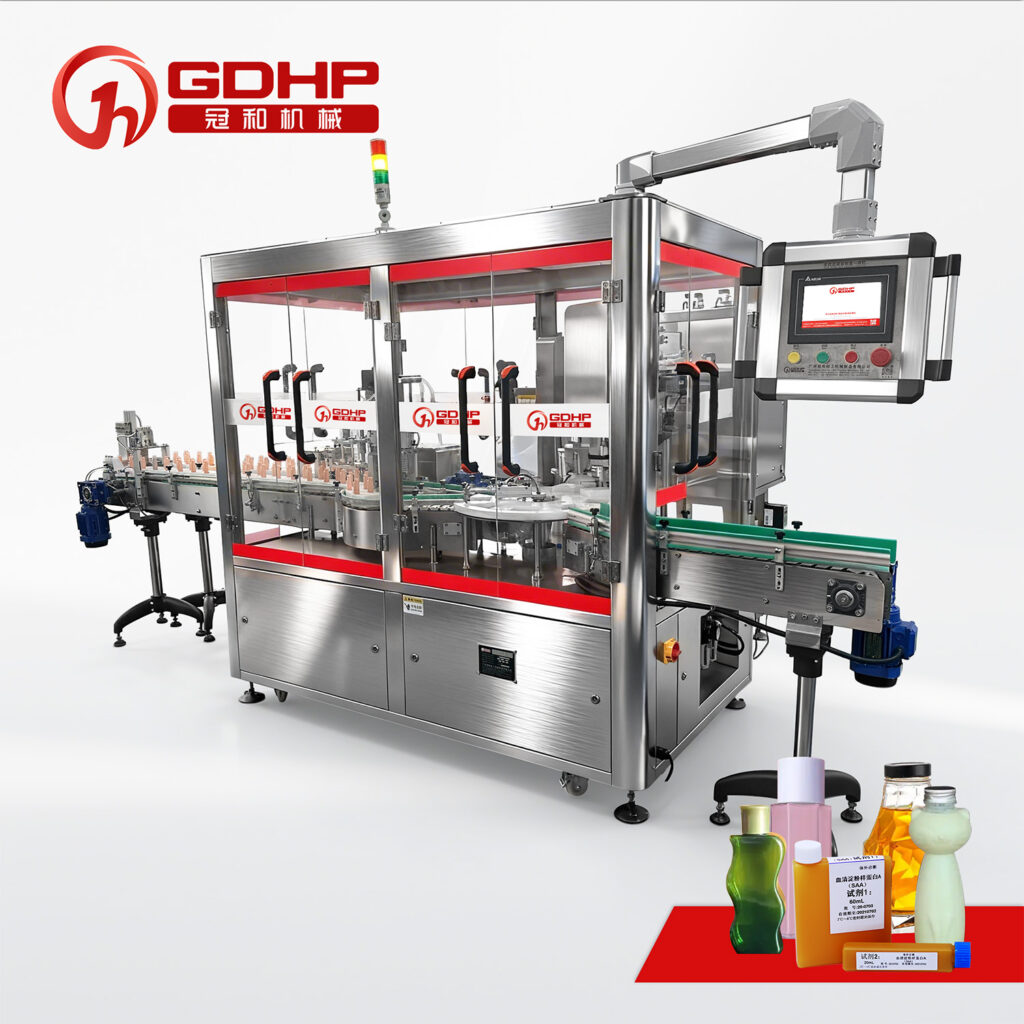
For a small business, the right choice between a filling machine and a packaging machine starts with real production data. GDHP review the product, package, workflow, and available space before setting machine capacity or automation level.
Record the operating conditions before selecting equipment.
| Item to Check | Why It Matters |
|---|---|
| Viscosity and density | Determines whether gravity, piston, auger, or volumetric cup dosing is suitable |
| Product temperature | Heated pastes and hot-fill products may need jacketed tanks and heat-resistant filling parts |
| Fill volume | Sets the required dosing range and container handling setup |
| Container dimensions | Affects nozzle position, guide rails, capping, labeling, and changeover parts |
| Packaging format | Defines whether the line uses bottles, jars, vials, pouches, cartons, or shipping cases |
| Product properties | Corrosive, volatile, flammable, or sensitive materials need appropriate contact parts and safety design |
For food, cosmetics, pharmaceuticals, and chemical products, use hygienic, cleanable product-contact materials. A SUS304 stainless steel machine frame provides a durable structure, while SUS316 stainless steel contact parts or food-grade silicone tubing can be appropriate where higher chemical resistance or hygienic handling is required.
Do not automate the wrong step. Check where operators lose the most time or where quality issues occur.
| Production Issue | Equipment Priority |
|---|---|
| Inconsistent fill volumes or product waste | Standalone filling machine |
| Slow manual pouch sealing or wrapping | Packaging machine or Form-Fill-Seal equipment |
| Delays between filling and capping | Integrated filling and capping system |
| Slow carton loading or shipping-case preparation | Cartoner, case erector, case sealer, or strapping machine |
| Repeated handling between stations | Compact integrated line or monoblock machine |
A standalone filler is usually the first priority when dosing is unstable. A standalone packer is more relevant when product filling is controlled but sealing, wrapping, cartoning, or case handling limits output.
Set capacity around realistic daily production, not an optimistic maximum. Include operator availability, cleaning time, product changeovers, and planned growth.
Overall Equipment Effectiveness, or OEE, is the practical measure of how much planned production time produces acceptable output. Frequent stoppages, long changeovers, leakage, or poor sealing reduce OEE even when a machine has a high rated speed.
Small production lines commonly need about 50-100 m2, depending on product flow, equipment type, storage, and operator access. The machine footprint alone is not enough.
Confirm space for:
A clear material flow helps prevent cross-traffic. Raw materials should enter near mixing or filling, while finished cases should move toward storage or dispatch without returning through the production area.
GDHP requires a Factory Acceptance Test (FAT) prior to final payment and shipment. FAT can be completed online or at the factory and should use the actual materials planned for production whenever possible.
| FAT Check | What to Confirm |
|---|---|
| Product dosing | Fill consistency, product flow, drip control, and waste |
| Containers and caps | Bottle handling, alignment, filling position, and capping fit |
| Pouches and film | Forming, sealing, film tracking, and package appearance |
| Cartons and cases | Folding, loading, sealing, and transport protection |
| Changeovers | Adjustment time for different containers, pouches, or cartons |
| Reject handling | How the line manages misaligned, unsealed, or nonconforming packs |
| Operating speed | Stable output under normal production conditions |
A factory acceptance test checklist converts speed, accuracy, safety, and changeover promises into measurable shipment criteria.
FAT gives operators a practical view of the machine setup before it reaches the workshop. It also confirms that filling, sealing, and handling equipment work together with the selected product and packaging materials.
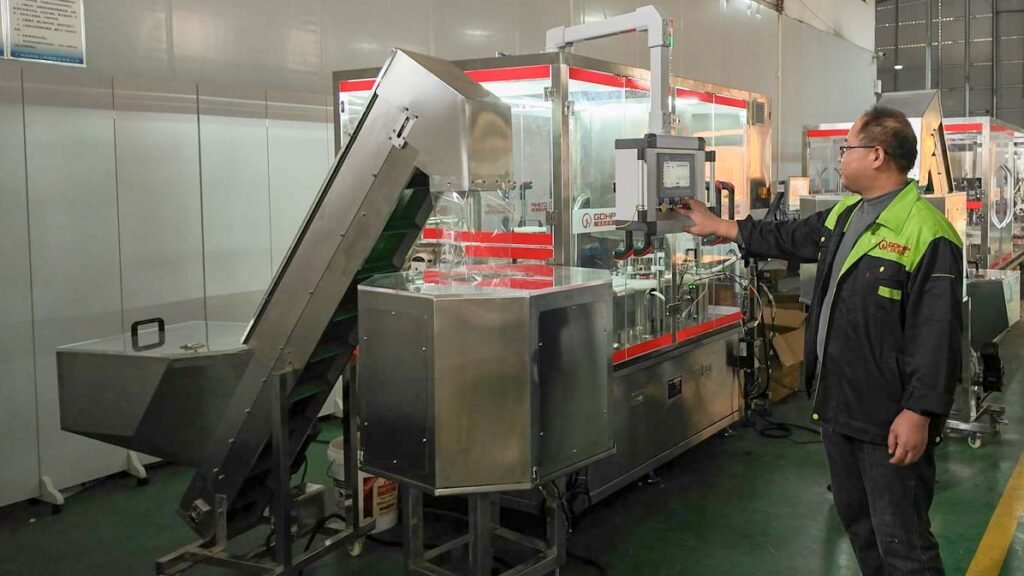
Review the machine specification before installation. The required standard depends on the product, market, and operating environment.
A complete implementation plan should include a 1-year warranty, installation and commissioning support, training, spare-parts planning, and lifetime technical support. This keeps a filling machine or packaging machine productive after startup, not only during acceptance testing.
VFFS machines form film into vertical pouches, add the product, and seal the package. They suit many powder, granule, and liquid pouch applications. HFFS machines form and seal packages horizontally and can handle shaped pouches, sachets, and specialty packs. Both systems combine product dosing with pouch forming and heat sealing.
I start with the main production bottleneck. If manual dosing causes waste, inconsistent volumes, or slow output, a filling machine should come first. If filling is stable but sealing, wrapping, cartoning, or case handling is slow, packaging equipment may provide the better return.
The problem usually indicates the required machine type:
For sanitary and chemical applications, I look for a SUS304 stainless steel casing and SUS316 stainless steel or medical-grade silicone for product-contact parts. These materials support cleanability and material compatibility. Tempered glass panels can also be used for protected machine visibility.
SUS316 contact parts are suited to applications where corrosion resistance and hygienic product contact are important. SUS304 is commonly used for the machine casing and structural sections. The final material selection should reflect the product, cleaning method, industry requirements, and applicable standards such as cGMP, CE, FDA, EHEDG, or 3-A.
The required space depends on the filler, capper, sealer, labeling equipment, operator access, material staging, and finished-goods storage. GDHP indicates approximately 50–100 m² for small production lines. A layout should also leave room for cleaning, maintenance, walkways, and safe material movement.
A 20–30 m² workspace may suit selected benchtop or semi-automatic equipment, but the actual layout must be confirmed from machine dimensions and operator access. A 50–100 m² area provides more practical room for a small production line with filling, capping, sealing, labeling, and related handling equipment.
The dosing method should match the product:
Heating or insulated systems may be required for some thick or temperature-sensitive pastes. Corrosive or hazardous liquids require appropriate contact materials and sealed or explosion-proof engineering.
A Factory Acceptance Test, or FAT, allows the equipment to be checked online or offline before final payment and shipment. I use it to verify the agreed machine functions, operating sequence, safety features, and handling requirements. This helps identify technical issues before installation and supports a smoother commissioning process.