The right hot filling machine starts with the product itself. Temperature loss, poor flow control, and incorrect nozzle design can cause unstable filling, product waste, or inconsistent output. We assess the product temperature, viscosity, and particulate content before selecting the filling configuration.
Maintain Filling Temperature
For many hot-fill applications, the product must remain within 80°C-95°C from the heating tank through the filling nozzle. The system should maintain a stable thermal path through insulated product lines and high-temperature-resistant filling components.
| Requirement | What to Check |
|---|
| Filling temperature | Stable control within the required 80°C-95°C range |
| Line stops | Continuous recirculation to avoid temperature drop |
| Temperature stability | Temperature recirculation valves to return product safely during pauses |
| Upstream preparation | Heating jacketed mixing tanks and insulated transfer lines |
Match Filling Design to Product Flow
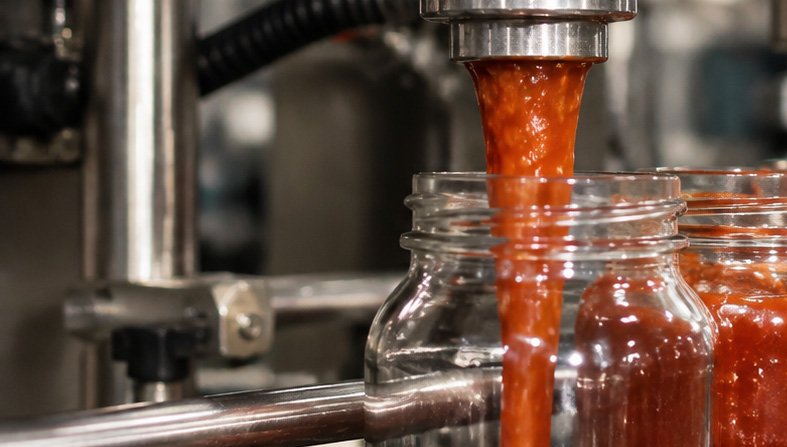
Juices and teas usually flow easily, while sauces, jams, pulp products, and chunky products require wider product passages and more controlled dosing. Product viscosity and particulate handling directly affect the filling valve, nozzle, and transfer system design.
| Product Type | Recommended Hot Filling Machine Features |
|---|
| Juices and teas | Smooth-flow passages and stable temperature control |
| Sauces and pastes | Controlled cut-off valves and filling systems suited to higher viscosity |
| Jams and pulp products | Large-orifice passages for suspended solids |
| Chunky products | Product-contact paths sized to reduce blockage and product damage |
Use the Right Nozzle and Tank Configuration
We specify anti-drip filling nozzles to reduce stringing and product loss after each fill. Cut-off valves provide cleaner filling control, while large-orifice passages support products containing pulp, particulates, or larger suspended solids.
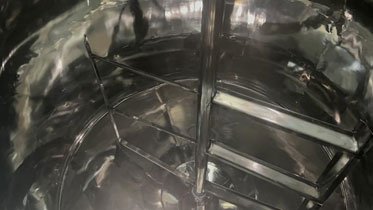
For hot products requiring mixing or holding before filling, heating jacketed mixing tanks help maintain process temperature. Thermal insulation around tanks and upstream piping reduces heat loss before the product reaches the hot filling machine.
For a high-viscosity cosmetic example, see our precision hot-filling case study for premium shoe creams.
For cosmetic formulation context before setting melt temperature, viscosity, and dosing parameters, compare solid and liquid perfume formulation differences.