Piston vs Flow Meter vs Net-Weight Filling for Sauces: Which Dosing Principle Fits?
Compare piston, flow-meter, and net-weight sauce filling by viscosity, particulates, hot-fill conditions, accuracy needs, speed, and sanitation.
September 3, 2026


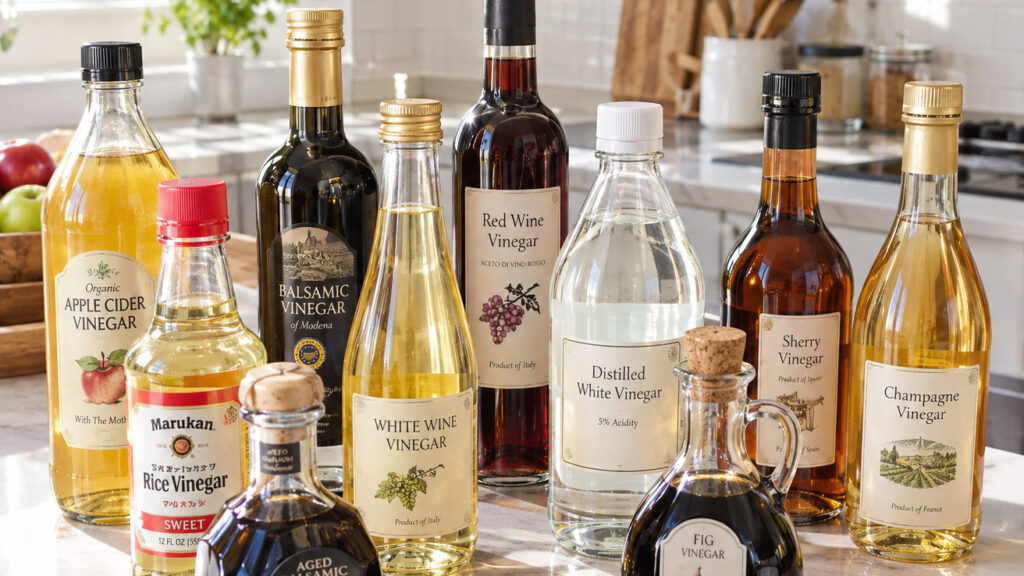
Vinegar does several familiar jobs: it gives dressings their tang, adds acidity to pickles, and helps remove the chalky scale left by hard water. But the vinegar sold for cooking, the vinegar blended into a drink, and a stronger agricultural product can behave quite differently on a bottling line.
If you are planning that line, the everyday details deserve attention. A nozzle that drips leaves wet bottle necks. Sediment can block a valve. A capper that falls behind can hold up the whole shift, even when the filler runs well.
Here is a practical look at what vinegar is used for and what a vinegar filling machine needs to do. We will start with the products you might be making, then work through materials, filling methods, cleaning, and output—with numbers where they help you make a decision.
In food production, vinegar brings more than a sour taste. It balances the richness of salad dressings, adds sharpness to ketchup and hot sauce, and supplies acidity to pickled vegetables and relishes. White vinegar suits products where a strong color or additional fruit flavor would be unwelcome; cider and wine vinegars bring more of their own character.
For a useful reference point, the National Center for Home Food Preservation recommends 5% acidity for white distilled or cider vinegar in its home-pickling guidance. A commercial recipe needs its own approved process, but the basic lesson is easy to follow: use vinegar of known acidity and keep the intended vinegar-to-food ratio consistent.
That matters when buying equipment, too. A machine bottling plain vinegar has a different job from one filling a thick dressing or a sauce containing vegetable pieces. The word “vinegar” on the ingredient list tells you less about the right filler than the finished product does.
White vinegar is useful for the stubborn white deposits that ordinary wiping leaves behind. Its acid helps dissolve mineral buildup, which is why it is used for descaling kettles, showerheads, and faucet aerators.
Common cleaning uses include:
Choose clear white vinegar for cleaning so you are not adding color or sticky residue. Avoid marble, limestone, and other acid-sensitive finishes, and use a degreaser for heavy oil buildup. For appliances, follow the maker’s descaling directions.
If you manufacture a vinegar-based cleaner, added detergent can make it foam more than plain vinegar. That gives the filler a clear job: control the flow and leave enough time for bubbles to settle before capping.
Stronger vinegar formulations are also used in some contact herbicides. They act on the plant tissue they touch, so plant age and coverage matter. In USDA research reported in 2002, 5% and 10% solutions killed the tested weeds during their first two weeks of growth, while older plants needed higher concentrations.
For bottling, the important difference is acid concentration. A 20% formulation has four times the acid concentration of a 5% product on the same percentage basis. Give it a separate material and handling specification, including the product’s safety data sheet, rather than copying the setup for culinary vinegar. The agricultural product’s approved label governs its use.
Apple cider vinegar is packaged in small shots and blended with fruit juice, honey, or botanicals for drinks. A clear blend may flow easily; a sweeter blend can leave more residue during changeovers.
Unfiltered vinegar adds another detail: the “mother,” the cellulose-rich material formed during fermentation. If your product includes it, you want it to reach the bottle without collecting inside a valve. You also want the first and last bottles in a batch to carry a consistent share of sediment. Gentle mixing and an open product path become more useful than simply adding filling speed.
Acidity tells you how much acid the product contains; pH tells you how acidic its conditions are. They describe different things. The acidity on a vinegar specification is commonly measured by titration—a test that neutralizes the acid in a sample—while pH is measured separately.
If 5% acidity is reported as 5 g of acetic-acid equivalent per 100 mL, that equals 50 g/L. Send the certificate’s reporting basis, pH, and filling temperature to the equipment supplier so the material choice starts with your product’s chemistry.
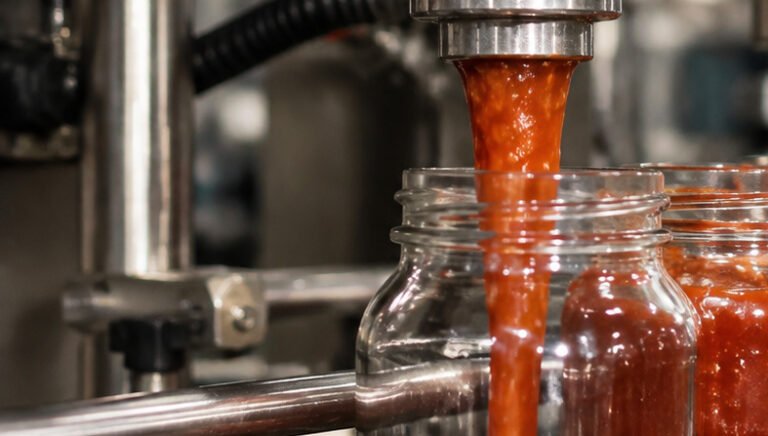
Clear vinegar pours easily, which helps filling speed but also makes splashing and drips easy to create. A fast jet hitting an empty bottle can wet the neck before the bottle is full. Starting gently, increasing flow once liquid covers the bottom, and slowing near the target can give a cleaner fill.
A syrupy balsamic product or honey blend may need a different pump and a longer filling cycle. Measure its viscosity at the temperature you will actually use. A cold sample and a warm production batch may flow very differently.
Foam takes up space without adding much liquid. If a foaming bottle is capped too soon, you can end up with a wet closure or an inconsistent dose. A nozzle that follows the rising liquid level reduces the falling distance and helps limit air entering the product.
Mother and sediment need room to pass. Check the smallest opening in the valves and nozzle tips as well as the pipe diameter. One narrow valve can become the blockage point in an otherwise generous product path.

For a welded vinegar filling machine, 316L stainless steel is a sensible starting specification for product-contact parts. The British Stainless Steel Association favors 316L for acetic-acid processing equipment, while also identifying many handling and storage applications where 304 is suitable.
So there is no need to assume that every 304 part will fail. What deserves closer attention is the combination of acid, temperature, chlorides, and repeated cleaning. The “L” in 316L means low carbon, which helps with corrosion resistance around welds. Smooth, properly finished welds also make the product path easier to clean.
Ask for a material list covering the tank, pipes, valves, nozzles, and pump. PTFE and PVDF, two chemically resistant plastics, can be useful for selected liners and fittings within their temperature and mechanical limits.
A good stainless-steel pipe still leaks if its gasket swells or hardens. PTFE is commonly considered for gasket and valve-seat applications. EPDM and FKM are rubber families used where an elastic seal is needed; the exact compound determines which product and cleaning chemicals it can handle.
Have the seal supplier confirm the compound against both the vinegar and the cleaning cycle. Include hoses and pump seals. That small detail is easier to settle before installation than during a production stop.
For clear, free-flowing culinary vinegar, start by comparing gravity and flow-meter filling. For large containers, weight filling is another practical option. Use the product and package to narrow the choice:
| Your product or package | Filling method to consider | Why it fits |
|---|---|---|
| Clear white vinegar in retail bottles | Gravity filling | A straightforward way to handle thin liquid. A timed system needs a stable tank level because liquid pressure affects the dose. |
| Conductive vinegar with controlled air and solids | Electromagnetic flow-meter filling | Measures volume as the liquid passes through the meter. Confirm the meter’s conductivity requirement and keep its tube full. |
| A product where direct mass measurement is useful | Coriolis flow-meter filling | Measures mass through vibrating tubes. For a volume label, account for product density. |
| Rigid glass bottles where an even visible fill line matters | Low-vacuum or level filling | Can give a consistent presentation. Check bottle strength and net quantity: equal heights can hide volume differences between bottles. |
| Bulk vinegar in drums or large jugs | Net-weight filling | Weighs the added product directly. Stable weighing and a controlled final flow help reach the target. |
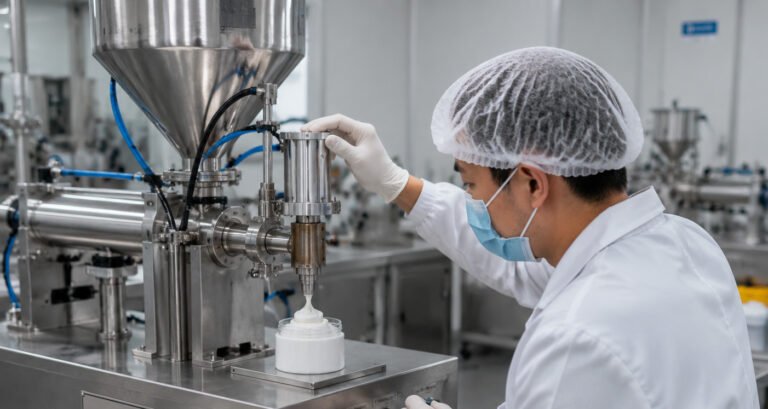
For vinegar with mother, add a solids trial before choosing. For thick blends, compare a suitable pump-based filler as well. Test the product at the agreed speed.
Small overfills look harmless one bottle at a time. Across a full production run, they add up: an average 2 mL extra in 100,000 bottles uses another 200 L of vinegar. That simple calculation is why accurate filling matters even for an inexpensive product.
To put a percentage into perspective, an illustrative target of ±0.5% on a 500 mL bottle is ±2.5 mL. Ask the supplier to show the finished-bottle results at the quoted speed, including each filling head and bottles filled after a restart. A meter specification alone does not show the effects of valve closing and liquid dripping from the nozzle.
Keep the average fill at or above the declared quantity, with the margin needed for process variation. That average requirement is also stated in OIML R 87:2016 on prepackaged quantities; check the full requirements for your destination market. If you verify volume by weighing, use the vinegar’s measured density rather than treating it as water.
A dry neck makes the next steps easier: the cap seats cleanly, a foil liner has a clean sealing surface, and less liquid reaches the bottle exterior. Bottom-up filling and a controlled speed profile help prevent splashout. A positive shut-off valve close to the nozzle outlet helps control the drip after filling stops.
Use the real bottle during the trial: a nozzle that works in a wide-neck jar may splash in a narrow-neck bottle. Check shut-off-tip clearance for mother-containing vinegar.
After a batch of honey-and-vinegar drinks, you want the next batch to start without yesterday’s sticky residue. Clean-in-place (CIP) helps by circulating cleaning solutions through the product path without a full teardown.
A useful cleaning sequence removes bulk residue, rinses, circulates the selected cleaner, and rinses again before the required hygiene treatment. The design should drain well and allow inspection of the places most likely to hold residue: valve seats, nozzle tips, and any branches in the piping.
Steam-in-place (SIP) uses steam to sterilize a suitably designed system. Include it when the product process requires steam sterilization; for other vinegar lines, focus on completing the required cleaning and hygiene routine.
Glass is a familiar choice for specialty and premium vinegar. PET offers a clear, lighter retail bottle. HDPE is a practical option for larger jugs and bulk packs. Choose a bottle grade, cap, and liner approved for the product and filling temperature.
Then check how the package behaves on the machine. Lightweight plastic needs gentle gripping; glass needs stable transfer and protection from impacts. If you sell several bottle shapes, include all of them in the quotation so the change parts and adjustment time are clear from the start.
A cap that feels tight can still leak. The seal depends on the liner or other sealing features meeting the bottle rim properly. Too little torque leaves a loose closure; too much can distort the cap or plastic neck. Start with the closure supplier’s torque range and check it on the actual bottle.
Induction sealing is useful when you want a bonded foil barrier and visible tamper evidence. It needs the right liner, a clean bottle rim, and correct cap seating. Include leak checks after handling and temperature exposure, so you learn about a weak seal before the product reaches a customer’s shelf.
Spills are much easier to manage when they drain away instead of collecting around motors and bearings. Choose exposed materials for the vinegar and cleaning chemicals, and keep sensitive electrical parts away from routine splash zones. Where filling creates mist or significant vapor, provide suitable extraction.
One specification needs careful reading: IP65 covers dust and water ingress; it does not certify acid resistance. NEMA’s enclosure guidance gives Type 4X an additional level of corrosion protection, but it is a separate rating. Check the enclosure’s materials as well as the number on its label.
If labels slide or peel after filling, look at the bottle surface before changing the labeler. Plain vinegar leaves moisture; a sweetened blend can leave a sticky film. Remove the residue first, then dry the bottle. An air knife helps with water, while a sticky film may need a cleaning step.
Use washdown-compatible conveyors with accessible drainage. Clean bottle handling, capping, and labeling belong in the same production trial as filling.
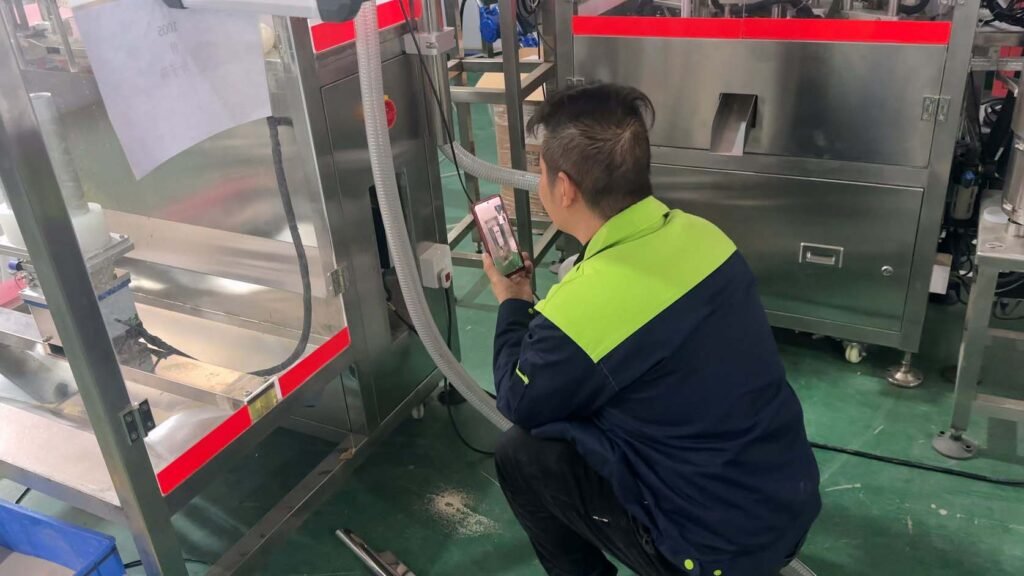
If you change bottles and products frequently, a linear line is a useful starting point: its separate stations provide access and room for changes. For long runs of a standardized bottle, compare a rotary monoblock, which combines operations around continuous bottle handling.
Start with the number of saleable bottles you need by the end of the shift. For example, suppose you need 8,000 bottles in four hours and allow a planning factor of 85% for stops and rejects within that window. You would need roughly 2,353 bottles/hour of nominal capacity: 8,000 ÷ (4 × 0.85). These are example assumptions; use your own schedule and leave separate time for cleaning or changeovers outside that window.
Next, check the slower stations. GDHP’s published bulk-liquid configuration lists a filling station at 300–500 drums/hour and a capping station at 150 drums/hour. These are published station specifications. With one capper at that listed rate, the line cannot continuously turn out more than 150 closed drums/hour before losses.
Ask for the output of the complete line in acceptable, closed packages per hour. That is the number you can use to plan a shipment.
Factory acceptance testing (FAT) is your chance to check the agreed machine before dispatch. Bring representative vinegar, bottles, and caps into the trial wherever practical. Water can demonstrate basic operation, but your product shows the foam, sediment, and residue that matter in production.
The trial should answer four useful questions:
Put the agreed results and warranty conditions in writing, including the product concentration, temperatures, and cleaning chemicals covered. It makes the handover clearer for both the equipment supplier and the people who will run the line.
Start with a gravity or suitable metered system that has open passages and gentle product handling. Test the actual mother through the valves and nozzles, and check sediment distribution across the batch. If solids collect or block the path, change that design before trying to raise the speed.
Use it when your package needs a compatible foil barrier and tamper evidence. Some closure systems meet the packaging requirement without it. Make the choice with your bottle and closure supplier, then verify the finished seal.
Start with a product sample, acidity and pH, bottle and cap samples, fill volume, and the number of finished bottles you need per shift. Add the filling temperature, any mother or particles, and your cleaning routine. If you run several formats, send those too. That gives the discussion a useful starting point: how to bottle your vinegar cleanly, consistently, and on schedule.