Blood Collection Tube: Types, Advantages & Machinery Solutions
The professional engineer's guide to blood collection tubes. Learn about different types of blood collection tubes, and discover the essential…
April 7, 2026

Selecting the right container geometry is the critical first step in configuring an efficient, high-speed packaging line. From retail shelves to industrial laundry operations, the package format dictates the filling mechanics, capping torque parameters (the turning force applied to tighten the cap), and line conveyance stability.
Rigid bottles and large-format jerry cans remain the benchmark for retail and institutional liquid detergents.
Spouted pouches and stand-up Doypacks (flexible packs with a base that opens out so they can stand upright) can reduce empty-pack weight for concentrated refills. Compare the complete package, including its spout and cap, at the same detergent capacity.
For U.S. environmental marketing, the Federal Trade Commission’s Green Guides summary (2012) says weight-reduction claims should identify both the amount of reduction and the basis for comparison. It also cautions against unqualified claims such as “green” or “eco-friendly.” For a refill pack, state the measured packaging-weight comparison and check local collection and recycling options before making a recyclability claim.
Single-dose laundry capsules require robust secondary containment to protect the delicate water-soluble polyvinyl alcohol (PVA) film from ambient moisture while meeting strict child-safety regulations.
For liquid consumer laundry detergents in soluble single-use packs placed on the EU market, Commission Regulation (EU) No 1297/2014, Annex, section 3.3 specifies opaque or obscure outer packaging, a visible “Keep out of reach of children” statement, and an easily reclosable, self-standing container. The closure must impede young children’s access through coordinated use of both hands and remain functional after repeated opening and closing. These requirements concern this specific product format; they do not certify every detergent bottle, tub, or zipper.
Institutional and commercial laundry operations rely on high-volume liquid and powder containment designed for
aggressive transit conditions.
| Container Format | Illustrative Pack Sizes (not machine limits) | Primary Market Segment | Key Handling Requirement |
|---|---|---|---|
| Rigid Bottles & Jugs | 500 mL – 5 L | Retail Liquid Detergents | Handle orientation & anti-drip drain-back capping |
| Spouted Pouches | 250 mL – 3 L | Eco Refills & Concentrates | Precise spout indexing & hermetic seal verification |
| CR Pod Tubs & Pouches | 15 – 80 Count | Retail Unit-Dose Capsules | Moisture-proof barrier & child-resistant closure integrity |
| Heavy-Duty Pails & Drums | 18 L – 1,000 L | Commercial & Industrial (I&I) | Subsurface dive-in filling & heavy-payload palletizing |
Selecting the right packaging substrate for laundry detergents comes down to chemical stability. Surfactants (ingredients that help water wet surfaces and lift soil), alkalinity, and fragrances can affect packaging compatibility, depending on the formulation and storage conditions. We work closely with chemical formulators and bottle molders to match container resins and barrier films with aggressive detergent chemistry to assess the risks of container collapse, leaking, and fragrance loss.

| Material | Primary Strength | Common Detergent Applications |
|---|---|---|
| HDPE | Grade-dependent ESCR (resistance to cracking under stress and chemical exposure) | Heavy-duty liquid bottles & jugs |
| PET | Crystal clarity & oxygen barrier | Premium liquids & single-dose tubs |
| PVA / PVOH Film | Fast water solubility | Unit-dose laundry capsules/pods |
| Multi-Layer Foil | Barrier performance dependent on the laminate and seals | Spouted refill pouches & sachets |
Detergent exposure combined with mechanical stress can cause susceptible polyethylene bottles to crack, particularly around stressed seams or corners. We engineer our packaging recommendations around high-stress-crack-resistant resins:
High ESCR Ratings: Specialized blow-molding HDPE grades resist surfactant-induced stress cracking around bottom pinch-offs and handle seams.
Drop and Impact Strength: High molecular weight HDPE withstands pallet stacking pressure and drop impacts during transit.
PCR Compatibility: Post-consumer recycled (PCR) resin (plastic recovered after consumer use) requires grade-specific testing. Specify the recycled content, wall distribution, and acceptable stress-crack and top-load performance rather than assuming a universal blend limit.
ASTM D1693-21, Standard Test Method for Environmental Stress-Cracking of Ethylene Plastics, identifies detergents and other surface-active agents as environments in which stressed ethylene plastics may crack. Its published guidance also says the result depends strongly on applied stress and the specimen’s thermal history, and is not intended for direct engineering application. Use the test to compare resin samples under stated conditions, then test the finished bottle with your detergent, closure, storage conditions, and transport loads; a resin result alone does not establish package shelf life.
For transparent and translucent liquid detergents, PET provides an aesthetic presentation without sacrificing
chemical protection:
Optical Clarity: Delivers glass-like shelf appeal, highlighting colored and pearlized detergent
formulations.
Gas & Moisture Barrier: Limits oxygen and moisture transmission to a degree that depends on the grade and wall design; confirm enzyme activity and color stability through formulation-specific shelf-life testing.
Rigidity & Top-Load Strength: High tensile strength allows lightweight bottle wall designs that
hold up under capping torque and vertical pallet loads.
Unit-dose pods rely on precisely calibrated polyvinyl alcohol membranes that balance chemical stability with rapid
wash-cycle dissolution:
Controlled Water Solubility: Select a film grade for the intended wash temperature and cycle, and verify dissolution with the actual detergent. Film grade, storage humidity, and washing conditions affect the result.
Low-Water Formula Stability: Match the film to the concentrate’s water activity (how available its water is to interact with the film) and other ingredients; total water percentage alone does not establish compatibility.
Tensile Elasticity: Provides high elasticity during vacuum thermoforming on automated pod-making
machinery.
The same 2014 EU regulation, Annex, section 3.3.3 requires the soluble packaging to retain its contents for at least 30 seconds in water at 20 °C and resist a compressive force of at least 300 N (newtons, a unit of force) under standard test conditions. These are safety requirements for the specified single-use laundry packs, not promises about dissolution time in a washing machine. This is why “dissolves within seconds under all conditions” is not an adequate film specification.
Flexible refill pouches require composite barrier structures to prevent volatile perfume escape and structural
delamination:
PET/AL/PE (Foil Structure): Combines polyester (PET), aluminum foil (AL), and polyethylene (PE) for light and gas barrier protection. Pinholes, flex damage, and seals still affect the finished pack’s performance.
PET/NY/PE (Nylon Structure): Uses nylon (NY, also called polyamide) as a toughness layer. Specify puncture resistance and test the filled pouch at its intended capacity.
Inner PE Sealing Layer: Provides the heat-sealing surface. Confirm detergent compatibility and test seam strength after filling and storage; a laminate name alone cannot guarantee a leak-free pouch.
Running a high-yield detergent bottling line requires machinery that handles high viscosity, aggressive foaming,
and surfactant chemistry without missing a beat. We engineer our packaging systems to limit avoidable stops and messy dripping, and deliver repeatable dosing accuracy across rigid bottles, jerry cans, and flexible
pouches.

For thick laundry detergents, heavy gel concentrates, and fabric softeners, volumetric piston fillers deliver
dependable dosing power.
Positive-Displacement Power: Heavy-duty pneumatic or servo-driven cylinders draw and push
high-viscosity fluids with strict volumetric consistency.
Accuracy Across Viscosity Swings: The piston stroke sets the nominal volume, but temperature-related changes in viscosity, trapped air, valve timing, and seal condition can still affect the delivered fill. Check samples across the expected operating range.
Wear-Resistant Build: Hard-chromed or ceramic-coated cylinders paired with chemical-resistant seals
ensure continuous operation under heavy production loads.
When a facility runs multiple SKUs (distinct product and pack variants), scents, and formulations on one line, servo-controlled flowmeter fillers
provide maximum operational flexibility.
Digital Recipe Settings: Operators switch container sizes and target volumes through the HMI (human-machine interface, or operator touchscreen). Bottle guides, nozzles, and capping parts may still need adjustment.
High-Precision Dosing: Electromagnetic flowmeters measure the volume flow of electrically conductive liquids; Coriolis flowmeters measure mass flow. Correct meter selection and calibration help control product giveaway (filling more than the declared amount).
Streamlined Cleaning: Assess whether the valve manifold and product path can drain and be cleaned effectively. Clean-in-Place (CIP, cleaning internal equipment surfaces without routine disassembly) requires a validated cleaning procedure, not just an automated rinse.
| Feature | Piston Filling Systems | Servo Flowmeter Systems |
|---|---|---|
| Best Fluid Match | High-viscosity gels, heavy concentrates | Thin liquids to medium-viscosity detergents |
| Changeover Speed | Manual/semi-automated mechanical adjustment | Digital dose settings; physical pack adjustments may remain |
| Maintenance Profile | Routine piston seal and cylinder inspection | Minimal moving parts in fluid contact zone |
| Dosing Accuracy | High volumetric repeatability | Dynamic mass/volume flow precision |
Liquid detergents generate heavy foam during rapid liquid displacement. Uncontrolled foam causes false volume
cutoffs, wet bottle necks, and costly line cleanup.
Submerged Bottom-Up Filling: Servo-driven dive-in nozzles descend near the container base without touching it and elevate
synchronously with the rising liquid level, keeping the nozzle tip submerged beneath the liquid surface to prevent
aeration.
Pneumatic Suck-Back Valves: Integrated positive shut-off nozzles pull residual droplets back into
the nozzle orifice at cycle completion, helping limit residue on container shoulders and conveyor beds.
In one GDHP servo-piston filling project specification, the design called for slow–fast–slow filling: start slowly, increase speed after the product covers the filling head, then slow down near the end of the dose. The same specification allowed a diving head that rises during filling or a head positioned at the bottle mouth. This is a useful design approach to evaluate for foaming detergents; confirm the motion and speed profile with your formulation and bottle rather than treating it as a measured production result.
A container is only as dependable as its closure. We pair our liquid detergent filling machines with robust capping
systems selected for the closure and distribution conditions.
Synchronized Rotary Cappers: Continuous-motion pick-and-place capping heads apply precise,
repeatable application torque for trigger pumps, push-pull caps, and heavy screw closures.
Hermetic Induction Sealing: High-frequency induction foil sealers bond a chemical-resistant liner
to the container mouth, providing a seal whose integrity and tamper evidence must be checked on the actual pack.
To support the growing demand for lightweight refill packaging, we integrate dedicated pouch systems:
Horizontal Form-Fill-Seal (HFFS): Forms pouches directly from rollstock film, inserts dispensing
spouts, fills liquid detergent, and heat-seals seams in one continuous operation.
Rotary Premade Pouch Fillers: Pick, open, fill, and seal pre-formed stand-up pouches and gusseted
refill packs with strict oxygen and moisture barrier integrity.
Downstream performance is vital to maintaining target bottles-per-minute (BPM) output.
Multi-Panel Labeling: Front-and-back and wrap-around pressure-sensitive labelers apply clear or
paper labels accurately on flat, oval, or tapered bottle geometries.
Automated Case Packing: Drop-packers, robotic pick-and-place cell units, and case sealers group
finished detergent jugs into corrugated cartons, seamlessly feeding automatic palletizing cells.
Selecting the right equipment for a detergent bottling line comes down to matching machine engineering with your
chemical profile and plant throughput goals. When we design and specify automated liquid detergent filling machines,
we evaluate the following technical factors to prevent foaming bottlenecks, product degradation, and unscheduled
downtime.
| Engineering Factor | Specification to Confirm | Operational Impact |
|---|---|---|
| Product Contact Metallurgy | SUS316 Stainless Steel | Check resistance to the actual formulation, temperature, and cleaning chemicals |
| Gasket & Seal Materials | PTFE / Viton (FKM) | Resists chemical degradation, swelling, and leaks over long run cycles |
| Dosing Control System | Magnetic / Coriolis Flowmeter or Servo Piston | Agree the fill tolerance and verify it with the actual product and pack |
| Throughput Target | Required bottles per minute (BPM), at the specified fill size | Synchronizes un-scrambler, filler, capper, and labeler speeds |
| Sanitation Architecture | Automated Clean-in-Place (CIP) | Reduces changeover wash cycle time without manual teardown |
Liquid laundry detergents range from free-flowing refill liquids to highly viscous, non-Newtonian gel concentrates (products whose apparent viscosity changes with the rate of shearing).
Handling these formulas requires precise fluid dynamics:
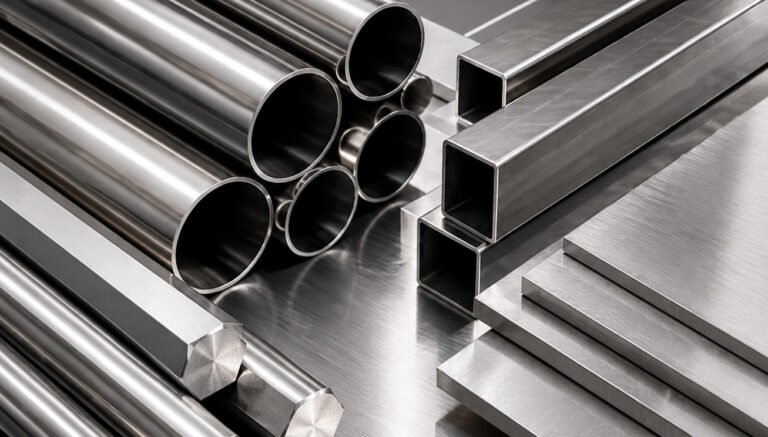
Select product-contact materials against the complete detergent and cleaning chemistry. SUS316 stainless steel (a molybdenum-containing stainless grade) can offer better pitting resistance than SUS304 in some environments, but neither grade is universally suitable for all chloride levels, bleach formulations, or temperatures.
Maintaining overall equipment effectiveness (OEE, a measure combining availability, performance, and quality) requires balanced cycle times across every station. A bottle jam at the capper
immediately halts the filler if buffer capacities are miscalculated:
Managing multiple detergent SKUs—such as standard detergents, fabric softeners, and bleach additives—requires rapid
sanitization and container adjustments:
At GDHP, we engineer complete, high-efficiency packaging lines tailored to the unique rheological and chemical
demands of modern laundry care products. From thick surfactant concentrates to high-foaming eco-friendly formulas,
the proposed system should match the product, closure, cleaning requirements, and agreed output target.

Handling aggressive surfactants and viscous laundry gels requires purpose-built fluid paths. We build our liquid
detergent filling machines with robust, chemically resistant contact materials to support service life and limit contamination risks.
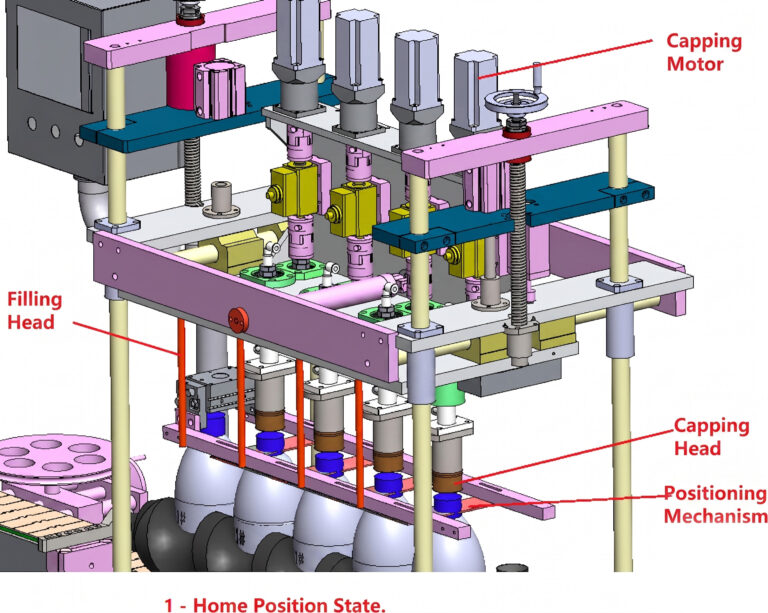
For a concrete equipment option, GDHP’s four-head tracking filling machine for laundry detergent uses filling heads that move with the bottles along the conveyor (tracking filling). Its published specification lists a 200–5,000 mL filling range and approximately 60–80 bottles per minute for non-aerated liquids. That speed is a supplier specification with a stated product condition, not an established output for foaming laundry detergent; confirm fill size, viscosity, foam behavior, and bottle-neck clearance in a product trial.
Product giveaway cuts directly into operating margins. We combine advanced dosing engineering with active drip
control to keep every container clean and accurately filled.
| Dosing Technology | Best Suited For | Key Engineering Benefit |
|---|---|---|
| Servo Piston Fillers | High-viscosity gels, heavy concentrates | High mechanical drive force with repeatable volumetric accuracy |
| Electromagnetic Flowmeters | Conductive liquid detergents, fast recipe changes | Electrodes and a lined measuring tube; suitability depends on liquid conductivity |
| Mass (Coriolis) Flowmeters | Non-conductive formulations, variable densities | Direct mass measurement; validate performance with entrained air and temperature changes |
Select a positive shut-off nozzle or suck-back cutoff (briefly drawing residual liquid back from the nozzle tip) to suit the product. Check the bottle neck after repeated fills, since dripping and stringing depend on the formula and nozzle settings.
We supply fully synchronized, end-to-end packaging automation that maximizes Overall Equipment Effectiveness (OEE)
and reduces line labor requirements.
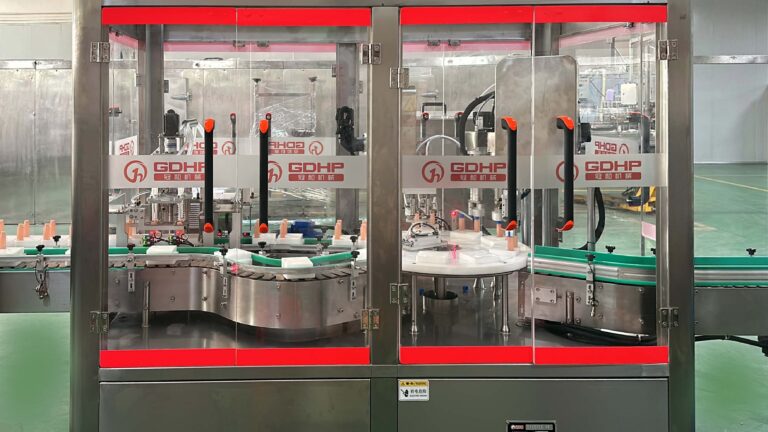
GDHP’s four-head laundry detergent filling production line provides an example of how these stations can be combined: the published configuration describes piston filling, bottle-position detection, capping, and round-bottle or double-side labeling options. Bottle detection (a sensor confirming that a container is in place) supports a no-bottle, no-fill control. Use this configuration as a starting point, then confirm which feeder, cap-handling, labeling, and end-of-line modules are included for your bottle; it is not evidence of a particular customer’s achieved performance.
Surfactant-rich detergents whip into foam the second liquid cascades through open air. Our liquid detergent filling
machines use servo-controlled dive-in nozzles that descend to the container base before liquid starts flowing.
Detergent exposure and mechanical stress can cause susceptible HDPE bottles to crack, especially around stressed seams or corners. A suitable ESCR grade helps address this risk, but bottle design, molding conditions, recycled content, and storage loads also matter. Compare resin data under the same stated test conditions and confirm performance on filled, capped bottles, as explained in the ASTM discussion above.
A suitably configured machine may handle both, but the usable range depends on its pump, valves, nozzles, and product feed. Supply viscosity in mPa·s (millipascal-seconds; numerically equivalent to cP, centipoise), together with the measurement temperature and method, and request trials at both ends of the range.
Parcel shipping can expose packs to vibration, drops, and pressure changes. Electromagnetic induction cap sealing (using an electromagnetic field to heat a compatible foil liner) can add a barrier, but requires a matching bottle finish, liner, and closure. Validate the complete filled pack under the intended distribution conditions rather than assuming zero leakage:
Integrating PCR resin into packaging cuts environmental footprints but introduces structural challenges:
Yes, the space-saving aspect is significant. By integrating bottle feeding, filling, stoppering, and capping into a single, compact base, it completely eliminates the need for the long connecting conveyor belts required between separate, standalone machines. This makes it an ideal solution for tight cleanrooms, laboratory environments, or optimizing smaller factory layouts.
GDHP modern monoblocks are controlled by advanced PLCs (like Delta or Siemens) and are equipped with multiple fiber-optic sensors. Standard safety features include a “no bottle, no fill” protocol, “no cap detection with alarm shutdown,” and “crooked cap” detection to prevent material waste and ensure every product leaving the line is perfectly sealed.
The primary engineering trade-off is that because all stations are physically integrated, a mechanical fault in one area—such as a jammed cap—will temporarily halt the entire machine. This centralized maintenance risk requires swift troubleshooting. However, the distinct advantage is that your operators only have one central touch screen interface to manage and diagnose, rather than trying to coordinate the speeds and errors of three completely separate machines.