VFFS vs HFFS: How to Choose the Form Fill Seal Machine (2026 Practical Guide)
VFFS vs HFFS: production modes and applicable scopes, how to choose form fill seal machine guide and common Mistakes by…
April 21, 2026

Learn about the four uses of self-heating meals, the working principle behind using calcium oxide for heating, and the manufacturing process for these products.
Self-heating meals are widely used in military logistics, emergency response, and outdoor recreation because they provide hot food without external heat sources. That is the power of a self heating meal or self heating can. Driven by an exothermic chemical reaction (calcium oxide heating pad or a magnesium-iron alloy). This innovative active food packaging solution provides hot sustenance on demand.
As a top manufacturer in food automation, we have seen global demand soar in several key markets. Here is exactly where these ready-to-eat meals (MRE) are making the biggest impact today.
| Application | Typical Users | Key Benefits | Common Scenarios |
|---|---|---|---|
| Military & Tactical Operations | Military personnel, special forces | Flameless heating prevents smoke and fire exposure, helping maintain operational security while providing hot meals in harsh environments. | Field rations, combat missions, cold-weather deployments |
| Emergency Preparedness & Disaster Relief | First responders, humanitarian organizations, disaster victims | Provides hot meals without electricity or gas, ensuring reliable nutrition during emergencies and infrastructure failures. | Earthquakes, hurricanes, floods, power outages |
| Outdoor Recreation & Adventure Sports | Campers, hikers, mountaineers, backpackers | Eliminates the need for portable stoves and fuel, reducing pack weight while delivering hot food in all weather conditions. | Camping, trekking, climbing, fishing, overlanding |
| FMCG & Retail Convenience | Office workers, commuters, truck drivers, travelers | Offers a fast, convenient hot meal anytime and anywhere, supporting modern lifestyles with diverse ready-to-eat menu options. | Convenience stores, supermarkets, travel, daily meals |
In combat zones or covert missions, open flames and smoke are dangerous giveaways. The military relies heavily on the flameless military ration heater to warm field rations safely. Tactical Advantage: Warfighters get hot nutrition without revealing their positions. Operational Readiness: Lightweight and reliable in extreme sub-zero environments.
When natural disasters (hurricanes, earthquakes, or power grid failures) strike infrastructure collapses instantly. At this time, electricity and gas supplies may be unavailable. You can quickly obtain energy using self-heating food. First Responders: Emergency crews require quick energy to sustain prolonged rescue operations. Humanitarian Aid: Agencies distribute self-heating food packs to affected populations who lack access to clean water or cooking gas.
From high-altitude mountaineers to deep-woods campers. Outdoor enthusiasts are swapping heavy portable stoves for the convenience of self-heating technology. By replacing traditional cooking gear with self-heating meals, you significantly lighten our packs and reduce cooking time. This allows us to settle down and truly savor the scenery, soaking in the beautiful views while fueling up with a steaming camping hot meal. Weight Efficiency: Eliminates the need to pack fuel canisters and heavy cookware. All-Weather Performance: Works in heavy rain, high winds, or freezing temperatures where traditional matches and lighters fail.
The modern workforce is busier than ever. The global retail market has adopted self-heating convenience food as a premium, time-saving lifestyle product. I get off work and don’t feel like cooking dinner and often eat self-heating meals(such as beef and potato pasta or Chinese-style rice sets). It allows me to have more time to rest. On-the-Go Convenience: Perfect for long-haul truck drivers, late-night office workers, and commuters. Diverse Menus: From hot hotpots to specialty coffees, brands utilize multi-compartment packaging to deliver premium dining experiences anywhere, anytime.
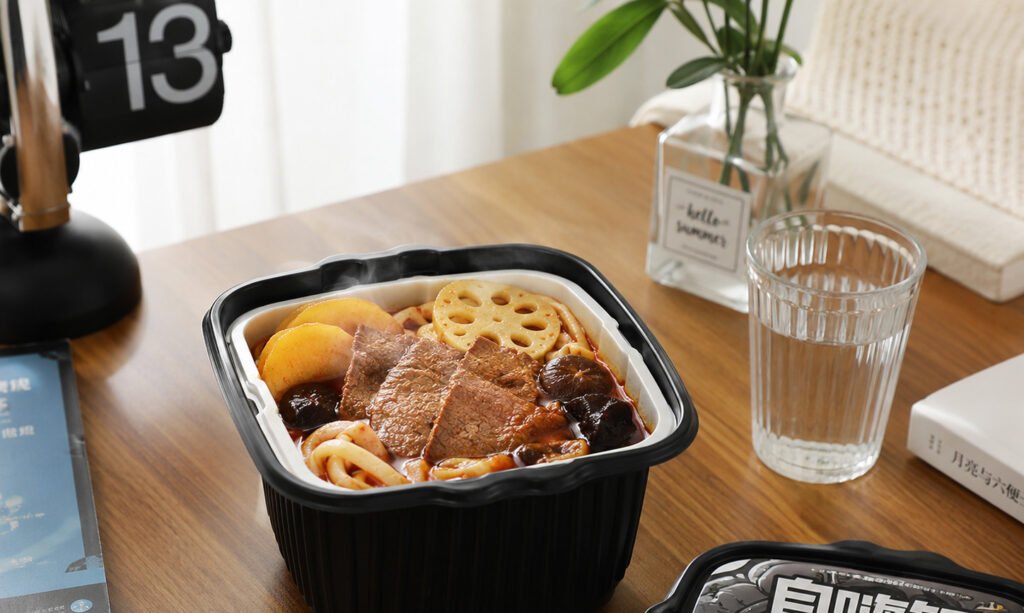
Ever wonder how a self-heating meal warms up without a microwave or a campfire? It all comes down to clever packaging engineering and smart chemistry. Our production lines manage these specialised components safely and accurately. This ensures every meal heats up when needed.
The secret to a self heating can or chemical heating pad is a controlled exothermic chemical reaction. The heating pack utilizes a calcium oxide pad or a magnesium-iron alloy internally. This is often called a flameless ration heater. The moment water comes into contact with these elements, it triggers a rapid release of intense thermal energy.
Instant Heat: According to the Handbook of Metallurgical Thermodynamic Data, the hydration of calcium oxide is a highly exothermic reaction capable of raising temperatures to approximately 100°C within seconds under suitable conditions.
Steam Transfer: Safe, controlled steam quickly transfers heat directly to the pre-cooked food.
Precise Packaging: Because these dry chemical compounds are highly reactive to moisture, we integrate specialized chemical industry solutions into our filling setups to dose and seal the raw materials perfectly.
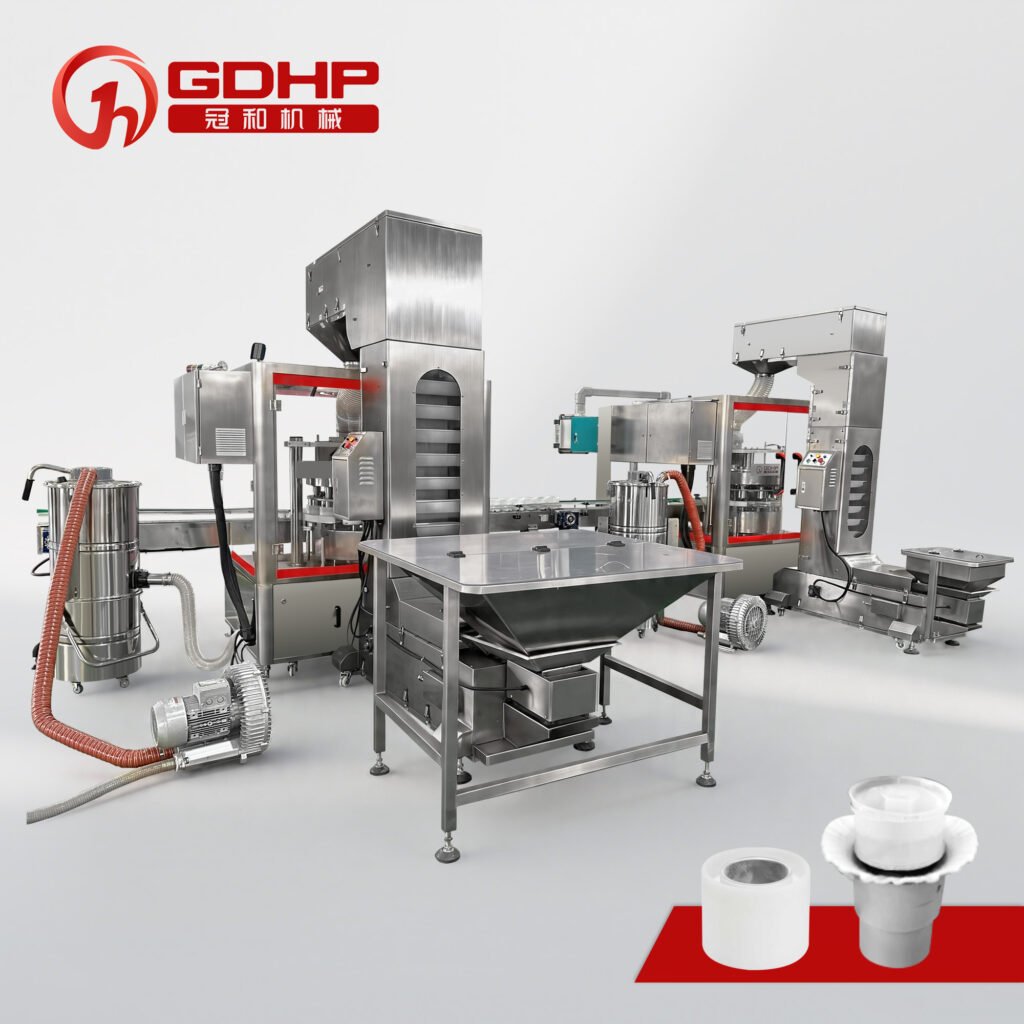
A fully automated granule production line can manufacture heating elements. First, lime or calcium oxide is transported to a filling machine using vacuum and elevating conveyors; this effectively prevents 99% of dust leakage, achieving a low-carbon, eco-friendly, and enclosed transfer process. Next, a rotary volumetric cup filling machine dispenses the material, enabling precise quantitative filling—our automatic filling system handles 55–75g with a ±3g margin of error, or 1.5–3g with a ±1g margin—thereby accurately controlling the duration of heat generation. Finally, the heating elements undergo capping or sealing to complete the production process. The GDHP rotary volumetric cup filling machine offers additional features:
Safety is our absolute priority in active food packaging solutions. The food and the chemical heating element never actually touch. Design multi-compartment packaging. This creates a strong barrier between the catalyst and the edible part. The outer structural layer also acts as a thermal shield, directing all the heat inward to the food while keeping the outside container safe to hold.
Manufacturing a reliable self heating meal or self heating can requires absolute precision. Because these products combine active chemical heating components with perishable food, our manufacturing process balances strict hygiene with automated packaging machinery. Here is exactly how we produce high-quality self-heating foods from start to finish.
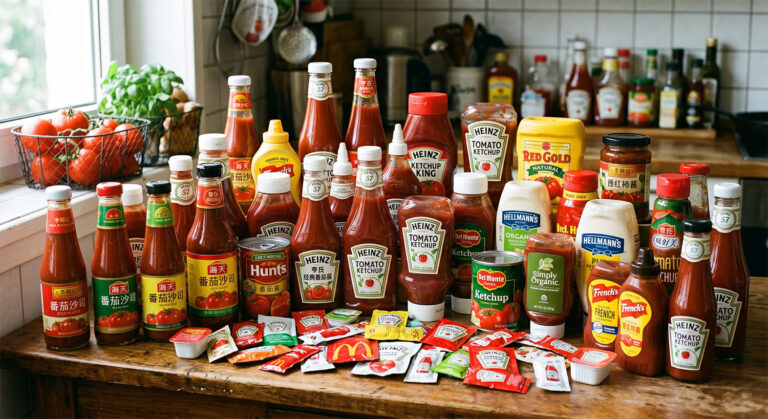
For another practical food-line example connecting product behavior, package format, filling, sealing, and automation, see our ketchup packaging guide.
The main focus for self-heating meals is preparing high-quality ingredients. Food bases, sauces, and proteins are all prepared in strict compliance with U.S. food safety regulations. Some of these rules include a zero-tolerance policy for Salmonella, Listeria, and E. coli O157:H7. Pesticide residues are limited to a range of 0.01 ppm to 100 ppm, and mycotoxin limits are strictly enforced (with a cap of 20 ppb for aflatoxins and 50 ppb for patulin). The chemical heating elements used in self-heating food are also manufactured in advance. For example, the heating materials include calcium oxide (CaO) heat packs and magnesium-iron alloy heating powders. These heating elements must be produced and sealed in a climate-controlled environment with a relative humidity of no more than 40%. This prevents moisture in the air from triggering the exothermic reaction ahead of time, ensuring safety and stability during transportation and storage.
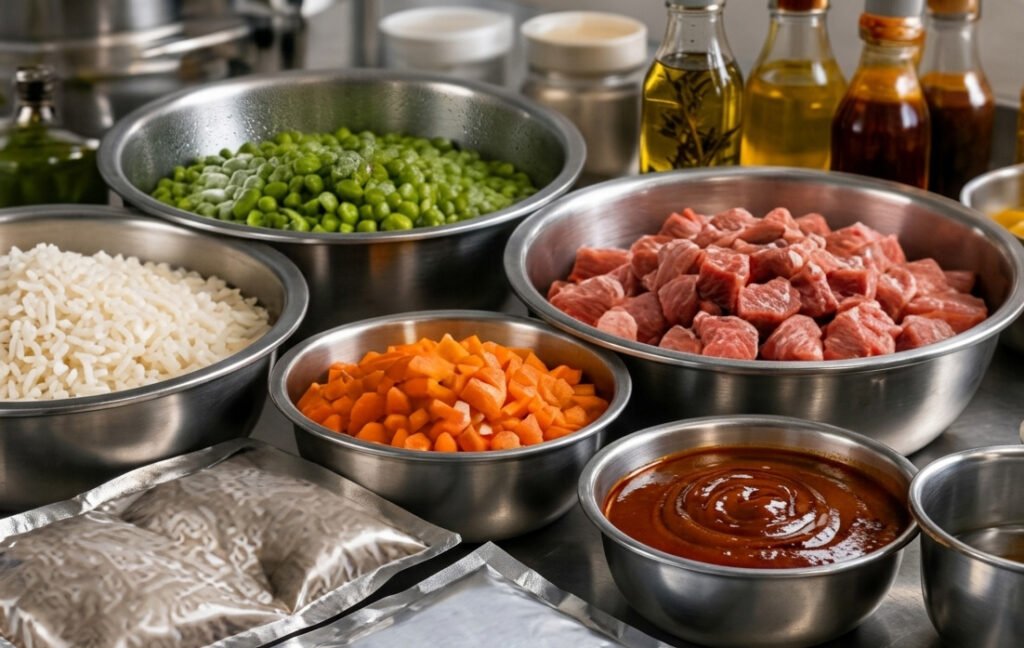
Next, the pre-processed food moves into the automated filling stage. For liquid or semi-fluid foods such as curry sauces, beef gravies, and soups, the production line typically uses a hot-filling process. Filling is completed at regulated temperatures: pasteurization at 185–212°F and high-temperature sterilization at 240–249°F. Utilizing high-temperature sterilization reduces microbial contamination by 99%, meeting rigorous food sanitation and safety standards while extending the product’s shelf life (currently, the longest-lasting self-heating meals can be preserved for up to 30 years). Generally, modern servo-controlled filling machines can precisely control the weight of each food portion, usually keeping errors within ±1 gram. In all cases, this guarantees uniform product specifications and prevents any breakdown of food particles. This process preserves the food’s original texture and appearance, significantly boosting production efficiency and product consistency.
Once the food filling is complete, the products immediately enter high-speed sealing machinery, which includes automatic can seamers, tray sealers, or flexible pouch sealing machines. To further enhance food preservation, the packaging process typically utilizes vacuum sealing, nitrogen flushing, and high-barrier packaging. These technologies effectively lower the oxygen content inside the packaging (with the residual air rate in vacuum sealers usually dropping below 1%). This slows down food oxidation and suppresses the growth of bacteria and molds (such as aflatoxins and penicillin), significantly extending shelf life. For self-heating foods, it is also crucial to ensure complete isolation between the food packaging and the heating pack. The food containers and the heating elements are sealed separately, directly preventing any contact between the chemicals and the food. This further reduces the risk of cross-contamination and elevates the overall safety of the product.
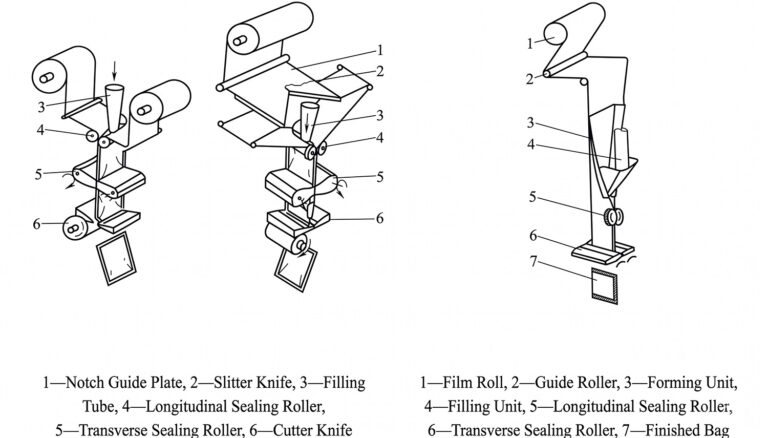
Modern self-heating meals usually feature a multi-compartment structure to integrate the food, safety features, and heating functions. At this stage, the production line utilizes Form-Fill-Seal (FFS) technology to automatically manufacture the packaging. The FFS system continuously forms the packaging material, fills it with food, and heat-seals it in one seamless operation, greatly reducing manual handling, increasing production efficiency, and ensuring high-quality seals. Following this, the various components of the self-heating meal are automatically assembled, including:
Food trays
Heating packs
Water pouring zones
Insulated outer bags
Utensils
Wet wipes
Seasoning packets
Instruction manuals, etc. The heating elements are usually placed at the bottom of the packaging or in an independent interlayer. They fit snugly against the food container to maximize heat transfer efficiency while avoiding direct contact with the food, ensuring a safe and reliable heating process.
Finally, before leaving the factory, every single self-heating meal passes through an automated quality inspection system to ensure it meets food safety and packaging standards. The inspection checklist typically includes:
X-ray foreign object detection, used to identify metal, glass, stones, and other contaminants;
Metal detectors to check for iron, stainless steel, and non-ferrous metal contamination;
Inline checkweighers, verifying that the weight of both the food and the heating pack meets the standard;
Seal integrity testing, ensuring that the packaging has no leaks;
Automatic vision inspection, checking that the packaging print, labeling, and production dates are accurate.
By utilizing smart inspection equipment, factories can effectively reduce human misjudgments, increase the product pass rate, and achieve full-process quality traceability. Finally, automated case packing systems box, palletize, and stretch-wrap the approved products. They then enter the warehousing and logistics pipeline to be shipped to global markets.
Building a reliable self-heating food production line comes with unique automation hurdles. Because active food packaging solutions combine food products with chemical heating elements, standard packaging systems cannot handle the job. We engineer specialized machinery to solve these specific manufacturing bottlenecks.
The process begins with sourcing and preparing high-quality ingredients. Food bases, sauces, and proteins are prepared under strict hygienic conditions. At this stage, the chemical heating elements, like calcium oxide heating pads or magnesium-based powders, are prepared. They are sealed in a dry, climate-controlled space to stop moisture from activating them too soon.
Food safety is non-negotiable when dealing with ready-to-eat meals (MRE). Our equipment is built using food-grade SUS316 stainless steel contact parts to prevent contamination and withstand rigorous washdown procedures. We design cGMP compliant equipment to help you meet international standards. This equipment ensures clean and sterile operations.
A self-heating meal relies on complex, multi-compartment packaging. You have to manage the food pouch, the water bag, and the flameless ration heater all within a single footprint. Standard off-the-shelf machinery simply won’t fit. We design a custom automation line layout tailored to your specific container geometry. Our systems use form-fill-seal (FFS) technology. This means they accurately dose, place,and seal each component into the outer packaging. Best of all, this doesn’t slow down your throughput.
Yes, they are completely safe. The exothermic chemical reaction happens inside a separate, sealed heating pad—usually containing calcium oxide or magnesium iron alloy—meaning the chemicals never come into direct contact with the food. The multi-compartment packaging keeps the food completely isolated from the heating element, ensuring a hot, delicious meal with zero risk of chemical contamination.
Launching a commercial self-heating food production line requires specialized, highly automated equipment to handle both the food and the active food packaging solutions. Key machinery includes:
No, self-heating food has a built-in heating device that uses calcium oxide or magnesium-iron alloy as fuel. Simply add water to the heating device to produce a reaction and heat the food.
We design and build completely integrated, full automatic filling production lines tailored to your specific product requirements. From raw material dosing and precise hot fill packaging to hermetic can sealing and secondary packaging, our turnkey systems cover every step of the process.