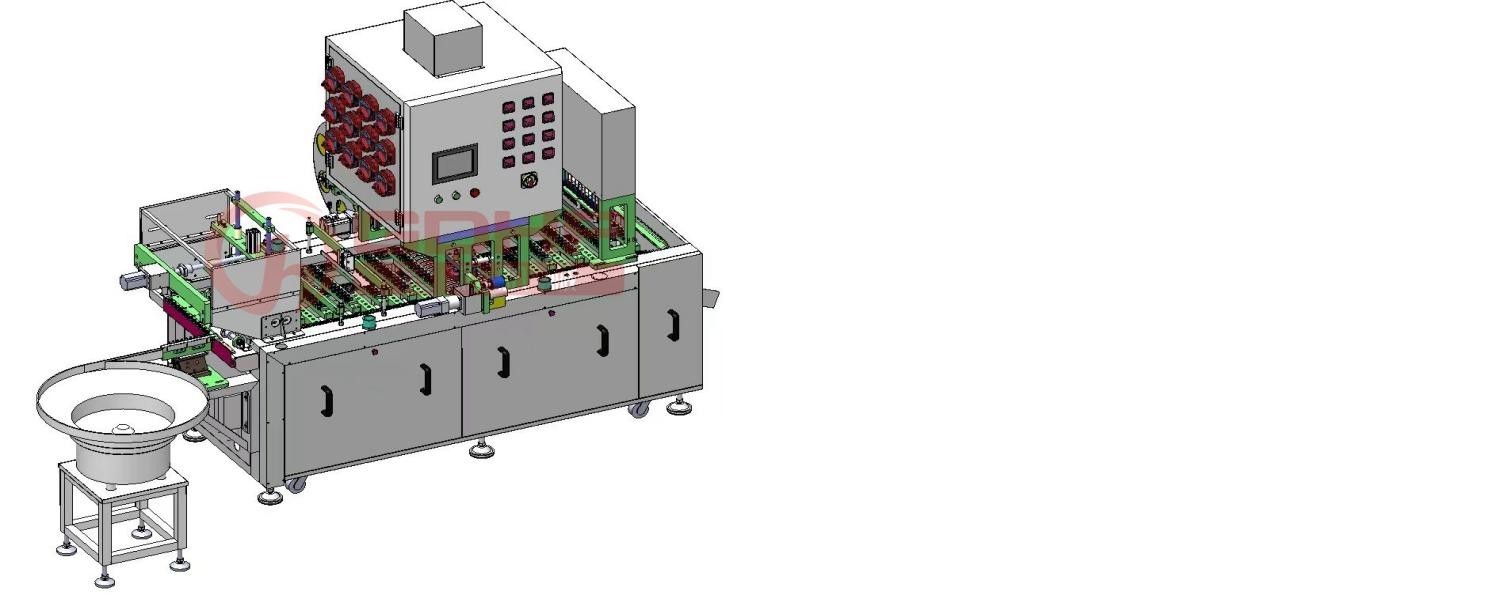
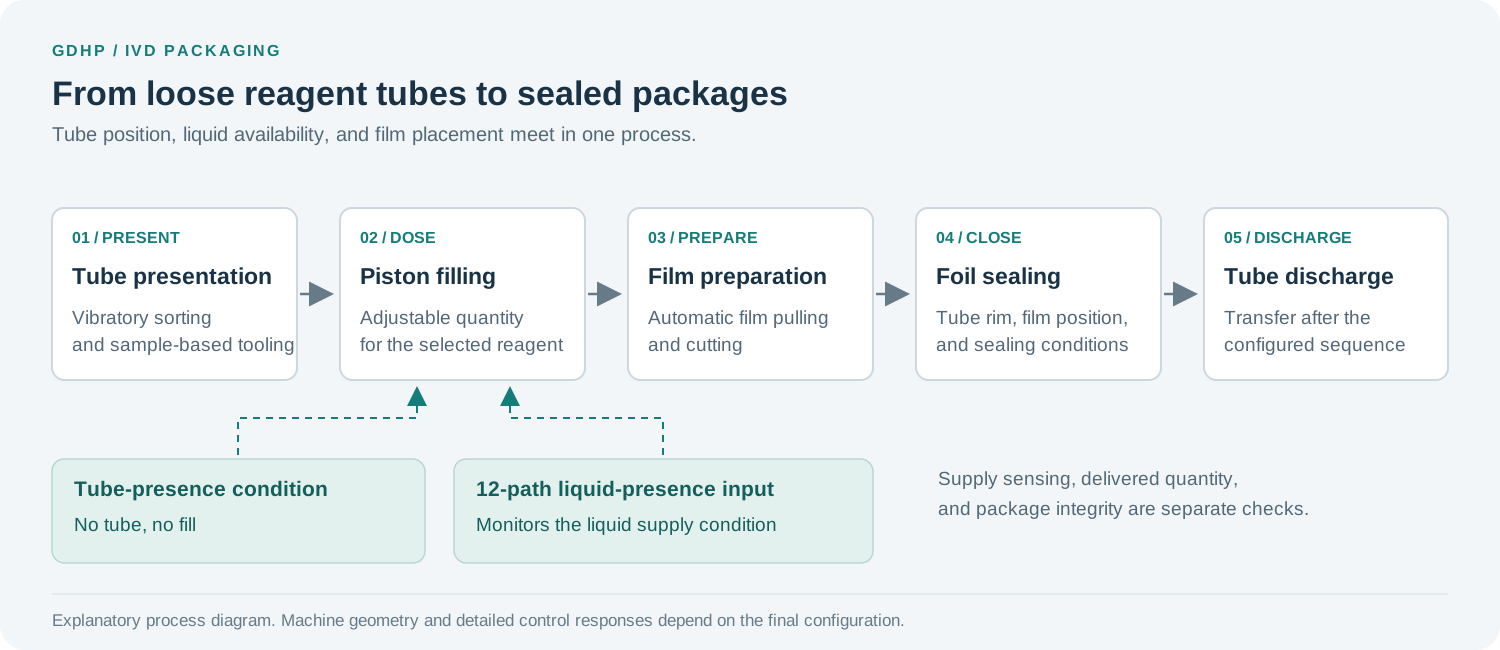
The operator loads loose tubes into the bowl, and the configured machine links sorting, dosing, film preparation, sealing, and discharge. That linked sequence is the central feature of the project.
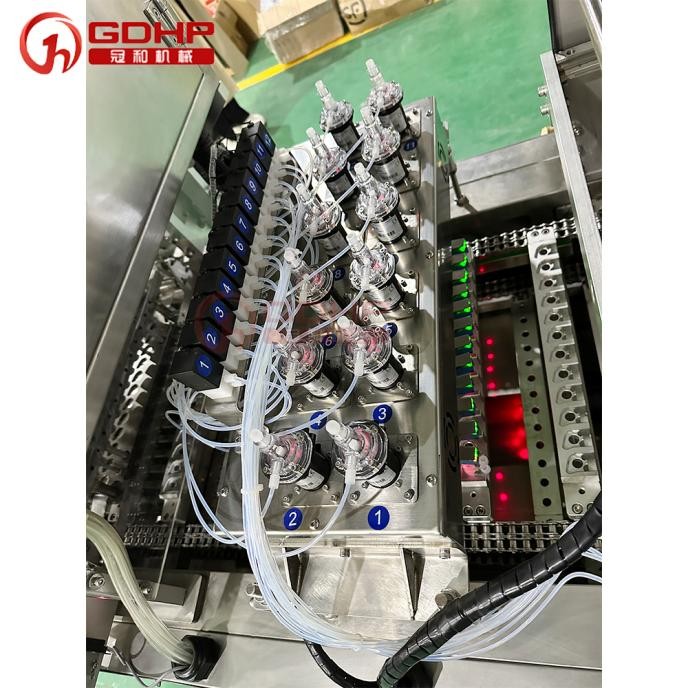
Its engineering value is clearest at the interfaces. The infeed establishes the tube position expected by the filler. The liquid-path checks address supply availability alongside tube presence. Film preparation then provides the cover that the sealing tool must place over the opening.
For a buyer considering a similar antigen reagent filling and foil sealing machine, these connections deserve attention alongside the pump specification. A discussion of the complete package reveals requirements that a filling-volume figure cannot capture: ear clearance, tube support, film registration, seal compatibility, and the distinction between sensing supply and measuring a finished dose.
Questions About Similar Reagent Tube Projects
Can one machine handle earless, single-ear, and double-ear tubes?
The platform in this project was described around a defined family of these shapes, with the infeed specified for one supplied format. Additional formats need their own review of feeding, tooling, and sealing requirements.
Why include liquid-presence detection if the machine already detects tubes?
Tube presence indicates that a container is available. Liquid-presence detection addresses whether the monitored supply path contains liquid. Neither signal independently establishes the quantity delivered into the tube.
What should be supplied for an engineering review?
Provide tube samples or drawings showing the body, rim, and ears; reagent properties and required dose; film samples and roll information; cleaning requirements; and the intended downstream packaging steps. These inputs allow the machine to be considered as a connected process.
Plan Your Tube Filling and Sealing Configuration
Start with the package you need to produce: the tube, the reagent, and the sealing film. Use those samples to define the infeed, dosing arrangement, supply monitoring, film preparation, and closure method. For double-ear reagent tubes, that shared package reference gives every station the same design starting point.