Solid vs. Liquid Perfume: How to Choose the Perfect One?
Solid vs. liquid perfume: Which is better? Discover the key differences in longevity, portability, and intensity to find your perfect…
May 22, 2026


Hello, I am a Senior Engineer at GDHP. With 23 years of technical expertise in the filling and packaging industry, we provide more than just equipment—we are dedicated to delivering high-stability, high-efficiency, and fully customized turnkey solutions for your business.
In the world of packaging automation, I often see clients torn between choosing an FFS (Form-Fill-Seal) packaging machine or a traditional Premade Pouch Packing Machine.
FFS stands for Form-Fill-Seal. In simple terms, it means one single machine handles three steps: making the bag, filling the product, and sealing it shut. While that sounds incredibly efficient, as an engineer, I have to be honest: there is no “perfect” machine—there is only the equipment that best matches your specific production needs.
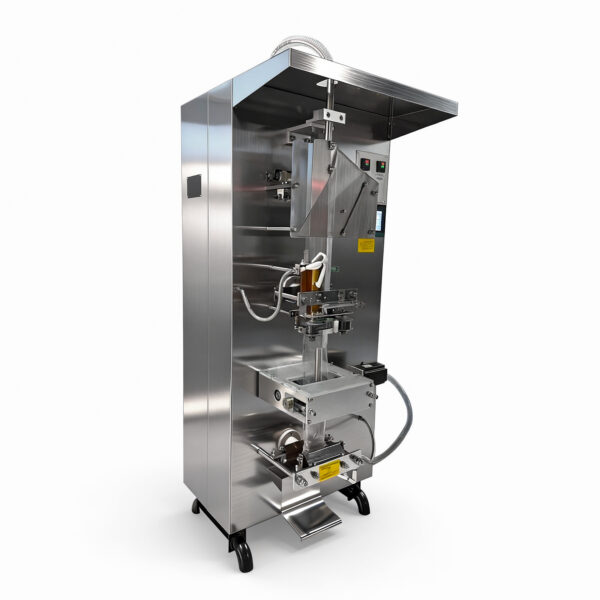
Many business owners are immediately impressed when they see the lightning-fast speeds of an FFS packaging machine. However, before you commit, we need to look closely at the product itself. Not every material is designed for this kind of continuous, high-speed rhythm.
If you asked me how to quickly determine if your product is a good candidate for FFS, I’d tell you to look at two things: material flowability and packaging standardization.
From a physical standpoint, if your product is granular (like rice or sugar), powdered (like flour or milk powder), or a free-flowing liquid, an FFS machine is almost certainly your best bet.
The equipment works by taking rollstock (film on a roll) and pulling it over a forming shoulder to fold it into a bag. If your product is extremely viscous (sticky) or has a highly irregular shape—think jagged hardware or long, bulky vegetables—it can easily “hang up” or jam inside the forming tube during the high-speed drop. This often leads to product trapped in the seal, which ruins the integrity of the package.
Furthermore, consistency is key. FFS equipment thrives on “high-volume, low-variety” production. If your operation requires changing between five or six different bag sizes every day, the downtime spent swapping out forming sets and recalibrating the machine will likely eat up all the efficiency gains you get from its speed.
To help with your decision-making, I’ve put together a compatibility table based on real-world engineering experience. This will help you quickly pre-screen whether your materials can work efficiently with an FFS packaging machine.
| Material Type | Suitability Level | Key Considerations | Recommended Solution |
|---|---|---|---|
| Standard Granules (Nuts, Rice) | Very High | Balancing weighing accuracy with discharge speed | Pair with a multi-head weigher to leverage the high-speed advantages of FFS systems. |
| Fine Powders (Coffee Powder, Pesticides) | High | Dust contamination at the seal point and dust suppression | Employ a screw feeding mechanism and install a dust extraction device. |
| Fluids/Sauces (Shampoo, Oils) | High | Stability of the pumping system and drip control | Pair with a servo-controlled plunger pump to ensure a clean seal |
| Irregular/Fragile Items (Oversized Chips, Live Goods) | Low-to-Medium | Risk of breakage caused by drop height | Requires customized cushioning mechanisms or consideration of pre-made pouch packaging equipment. |

This is the question every client asks me when setting up a new production line. While both machines get the job done, their underlying logic follows two completely different paths.
An FFS packaging machine uses rollstock (film on a roll)—the machine makes the bag and fills it at the same time. Think of it like buying a giant roll of fabric and sewing the clothes as you wear them. On the other hand, a Premade Pouch Machine (often called a Pick-Fill-Seal machine) uses bags that are already manufactured. The machine’s action is more like human hands: it picks up a bag, opens it, fills it, and seals it.
From an engineering perspective, the FFS structure is more compact. Because it eliminates complex bag-feeding and picking mechanisms, there are fewer mechanical wear points. However, it is more demanding regarding film quality—the film’s elasticity and coefficient of friction (COF) will directly impact how well the bag forms.
When it comes to cost, many people only look at the initial price tag. While a high-quality FFS machine is a significant investment, its long-term operating expenses (OpEx) are incredibly competitive.
Consumable Costs: Rollstock is typically 20% to 30% cheaper than premade bags. If you are running a large-scale operation producing millions of bags a year, the savings on material alone can pay for a new machine within a year.
Production Speed: At the same technical level, FFS speeds are generally 1.5x faster (or more) than premade pouch machines. This is because the movement is continuous or semi-continuous, without the pauses required for switching between multiple stations.
Flexibility: This is where the Premade Pouch Machine shines. If you want a “premium” look—such as zippers, stand-up pouches with special gussets, or complex foil stamping—or if you need to switch between many different bag styles, the premade machine offers more possibilities. While FFS machines can make stand-up pouches, changing sizes usually requires swapping out the forming shoulder, which requires technical skill and more downtime.
If your current pain point is “production can’t keep up with sales” and your packaging style is relatively consistent, don’t hesitate—go with an FFS packaging machine. It will help you build a highly efficient “cost moat” around your business.
Conversely, if your product is positioned as a premium item with intricate, beautiful packaging, or if you are a startup that needs to test different sizes and formats every day, a Premade Pouch Machine provides the flexibility you need. In these cases, FFS might be too rigid.
As a mechanical engineer, I’ve seen too many companies chase high speeds only to end up with an FFS machine that doesn’t play well with their specific film, resulting in a sky-high scrap rate (wasted film). If you aren’t sure how your material and product will perform on an FFS system, click it to consult with us. We can arrange a free material trial and let the data do the talking.
For granular products like nuts, rice, or candies, the core of equipment selection lies in accurate dosing and breakage prevention. Typically, we pair an FFS machine with a Multi-head Weigher.
The technical challenge here is: how do we ensure the material doesn’t bounce or break when dropping from a height of several decimeters? When designing a solution, we pay close attention to the inclination angle and surface coating of the discharge chute.
For fragile items like biscuits or freeze-dried products, I recommend adding buffer slides rather than letting them “free fall.” Often, when clients complain about crumbs in the seal, it’s not a sealer issue—it’s a timing issue where the product hasn’t fully reached the bottom of the bag before the jaws close.
For orientation-specific tradeoffs in product flow, film handling, footprint, and speed, compare VFFS and HFFS machines.
Powders (such as coffee, flour, or chemical powders) are among the toughest “opponents” for an FFS machine. The biggest enemy? Dust contamination in the sealing area.
If powder gets into the seal, no matter how much heat or pressure you apply, the bag will leak. To solve this, we use a submerged auger filler. Simply put, the feeding tube extends deep into the formed bag to minimize “dust clouds.” Additionally, anti-static bars are a must; otherwise, friction-induced static will cause fine particles to cling stubbornly to the film walls, ruining both the bag’s appearance and its airtight integrity.
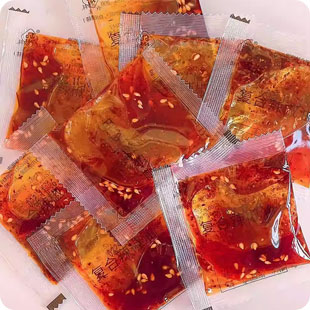
When handling liquids like shampoo or thick sauces (like hot pot base), the challenge for FFS machines is the clean cutoff. Imagine if a single drop of oil lands on the sealing area just as the jaws close—that entire bag becomes a defective product.
We usually pair the machine with servo-controlled piston pumps and install a “suck-back” mechanism. At the exact moment filling ends, the pump creates a tiny reverse pull to suck any residual liquid back into the nozzle. For high-viscosity sauces, we often use jacketed, heated piping to ensure the flow remains consistent.
For pharmaceutical products, the logic shifts toward cleanliness and compliance. The entire machine must be constructed from 316L stainless steel, and the design must be “sanitary,” meaning no dead zones to allow for easy CIP (Clean-in-Place) procedures.
Furthermore, these solutions must integrate coding systems and vision inspection systems. Any bag with an underweight reading or a blurry batch code must be automatically rejected from the line.
Many manufacturers promote an FFS machine that can run at 100 bags per minute, but this is often the “Dry Cycle Speed”—the mechanical limit when the machine is running without product or film.
In actual production, the material needs time to fall, and the seals need time to cool. Real-world output is typically only 60% to 80% of the theoretical value. As an engineer, I advise you to calculate your ROI based on stable speeds during material trials, rather than optimistic theoretical numbers. Don’t leave yourself zero margin for error.
For supplier due diligence after defining your specification, review our comparison of leading VFFS manufacturers in China.
FFS machines are very picky about the quality of the rollstock.
If the Coefficient of Friction (COF) is off, the film will slip or overstretch, causing the printed design to misalign (registration errors).
If the heat-seal window (the temperature range where the film melts perfectly) is too narrow, a temperature fluctuation of just a few degrees will result in either a weak seal or a burnt-through bag.
I’ve seen owners try to save a few cents on cheap film, only to lose thousands in downtime and wasted material. The cost of labor and scrap material far outweighs the savings on the film itself.
Some FFS machines are designed to be extremely compact. While this saves floor space, it can be a nightmare for maintenance. If an engineer can’t reach a heater because the frame is too tight, a 5-minute fix for a heating element could turn into a half-day teardown.
Always ask about the lifespan and cost of wear parts like sealing knives and suction cups. A well-engineered machine should allow an operator to replace basic wear parts in under 10 minutes.
This is my #1 piece of advice for every client: Don’t just watch a video. Don’t just look at a showroom demo. Send your actual product and your actual film to the factory for a live trial.
Powder humidity changes with the seasons, and plastic film thickness varies between batches. Only a continuous run of several hours will reveal if the machine suffers from servo motor overheating or blade misalignment under high pressure. This isn’t just about testing speed; it’s about testing reliability.
Engineer’s Advice: If you have doubts about your current packaging plan, or if you are struggling with leaks or product trapped in the seals, share your product specs with us. Our engineering team can provide a detailed Technical Feasibility Report to ensure your investment pays off from day one.
On the factory floor, I often hear people complaining that the upfront cost of an FFS (Form-Fill-Seal) machine is too high. It’s true—the initial price tag is higher than that of a simple semi-automatic filler. However, once you look at the numbers over a 12-month period, the math starts to look very different.
This is the FFS machine’s ultimate “secret weapon.” If you use a Premade Pouch Machine, you have to order finished bags from a supplier. Because those bags include the supplier’s labor, shipping volume, and profit margin, the price per unit is significantly higher.
Based on my calculations, for a standard 500g granular product bag, rollstock (film) is typically $0.01 to $0.03 cheaper per bag than an equivalent premade pouch. If your line produces 30,000 bags a day and runs 300 days a year, the material savings alone could reach $90,000 to $270,000 annually. Essentially, the machine pays for the “price gap” between itself and cheaper alternatives within the first year just through bag cost savings.
A traditional, manual, or semi-automatic packaging line might require three or four workers to handle bagging, weighing, sealing, and moving. A mature FFS production line requires only one operator to monitor the control panel and swap out rolls of film.
This high level of automation doesn’t just solve the headache of labor shortages; more importantly, it eliminates weighing errors and sealing defects caused by human fatigue. From an engineer’s perspective, reducing human intervention is the most effective way to eliminate “random failures” in the production process.
When you combine material savings, reduced labor costs, and the increased profit margins from higher output, most medium-to-large enterprises see a payback period (ROI) of about 1.5 years for an FFS machine. For 24/7 facilities, that period can even shrink to under 12 months.
While I am a big advocate for FFS technology, I have to stay objective. In certain specific scenarios, forcing an FFS solution can actually become a burden on your production rather than an asset.
If your plant operates on a “high-mix, low-volume” model—meaning you switch between a dozen different product specifications a day and only produce a few thousand bags of each—then an FFS machine is not for you. Every time you change the rollstock and forming shoulder, and recalibrate the sealing pressure, it takes an operator at least 30 to 60 minutes of downtime. In this situation, your OEE (Overall Equipment Effectiveness) will be frustratingly low.
Furthermore, if your packaging design is extremely complex—such as requiring integrated zippers, intricate stand-up gussets, or die-cut handles—FFS might be a struggle. While high-end FFS machines can handle these features, the mechanical complexity and scrap rates skyrocket. For “visual-first” packaging where premium aesthetics and a flawless finish are the top priorities, a Premade Pouch Machine is almost always the better choice.
To prevent you from getting lost in the technical weeds, I’ve put together a quick decision-making checklist from an engineer’s perspective. You can use this to cross-reference against your own production line’s requirements.
| Evaluation Criteria | Ideal Scenario (Opt for FFS) | Cautionary Scenario (Proceed with Care) |
|---|---|---|
| Product Variety | Single product type; single production run exceeds 8 hours | Diverse product range; frequent changeovers between specifications |
| Packaging Preferences | Prioritizing absolute minimization of per-bag packaging costs | Prioritizing complex bag designs and premium tactile finishes |
| Facility Space | Sufficient ceiling height; limited floor space availability | Low ceiling height; unable to accommodate multi-head weighers |
| Workforce Capabilities | Availability of technicians with basic mechanical and electrical knowledge | Composed solely of temporary staff; lacking equipment maintenance expertise |
| Future Strategy | Pursuing full-line automation and data connectivity | Maintaining the status quo; meeting only basic sealing requirements |
In the ongoing trade-off between stability and speed, my philosophy is always “stability first.” An FFS machine that claims 120 BPM (bags per minute) but suffers from daily downtime is far less valuable to your bottom line than a machine that runs a consistent, hassle-free 80 BPM. True net profit comes from uptime, not just theoretical top speeds.
If you are currently navigating the complexities of a packaging upgrade or want to know the realistic speed your product can achieve on an FFS packaging machine, don’t hesitate to reach out to our engineering team. We offer one-on-one consulting to help you design a custom equipment solution and steer clear of expensive selection pitfalls.
[Contact a Senior Engineer today for your customized FFS Packaging Proposal]
This is a common headache with powders. In a professional FFS setup, we solve this using “deep-plunge filling” and dust extraction units. Essentially, the filling nozzle goes deep into the bag before releasing the product, while a vacuum sucks away any floating dust simultaneously. If the dust is still stubborn, we can add a cleaning mechanism at the sealing jaws to ensure the “heat-zone” stays spotless for a perfect seal.
Yes, they can. Common single-use packaging—such as facial masks, trial-size shampoos, and wet wipes—is predominantly produced at high speeds using FFS (Form-Fill-Seal) machinery.
FFS machines can maintain extremely high hygiene standards during mass production and support various preservation technologies:
It comes down to “shelf appeal.” Pre-made pouch machines can handle complex bag types like zipper bags, stand-up pouches with shaped bottoms, and premium finishes that look great for high-end gifts. Also, pre-made machines are more flexible if you have small orders and need to switch bag styles and sizes multiple times a day.
I recommend the “80% Rule”: your actual, stable daily output is usually around 80% of the advertised “maximum speed.” Always ask the manufacturer: “Is this speed rated for a continuous 2-hour run with actual product and 100% seal integrity?” The best way to be sure is to bring your material to our factory for a live trial run to see how the equipment performs under real-world pressure.
As long as you don’t skip the basics, it’s actually very affordable. The primary wear parts are the cutting blades, heating elements, and suction cups—none of which are expensive. The real “cost” in maintenance is downtime. That’s why I always emphasize that when buying a machine, you shouldn’t just look at the price tag; look at the availability of spare parts and the speed of technical support. That is where you truly save money in the long run.
FFS machines are highly versatile and can handle almost all major product forms: