Top 5 Common Filling Machine Issues and Troubleshooting Tips
Ultimate guide to 5 common filling machine issues and troubleshooting tips to cut downtime boost accuracy and improve line efficiency
April 4, 2026

Is your production line keeping pace with the explosive boom in wet pet food?
High-speed hermetic sealing, zero contamination, and smart automation are no longer optional—they are the key to staying profitable.
Here, hermetic sealing means forming a closure that limits leakage and the entry of outside contaminants. In practice, that result depends on the can, lid, sealing compound, machine settings, and inspection method—not on machine speed alone.
Understanding the latest can sealer machine trends is critical if you want to scale output, slash labor costs, and protect product freshness.
In this guide, you will discover the exact machinery innovations, sustainability shifts, and smart manufacturing tech reshaping the market right now.
Let’s dive in.
Wet pet food processing environments are wet, greasy, and abrasive. Organic meat residues, animal fats, and corrosive washdown chemicals quickly destroy inferior machinery. Plant managers now specify stainless steel washdown sealer builds as the baseline requirement.
Washdown design covers more than a stainless-steel frame: drainage, access for cleaning, protected drives, seals, electrical enclosures, and chemical compatibility all affect whether the machine can be cleaned consistently.
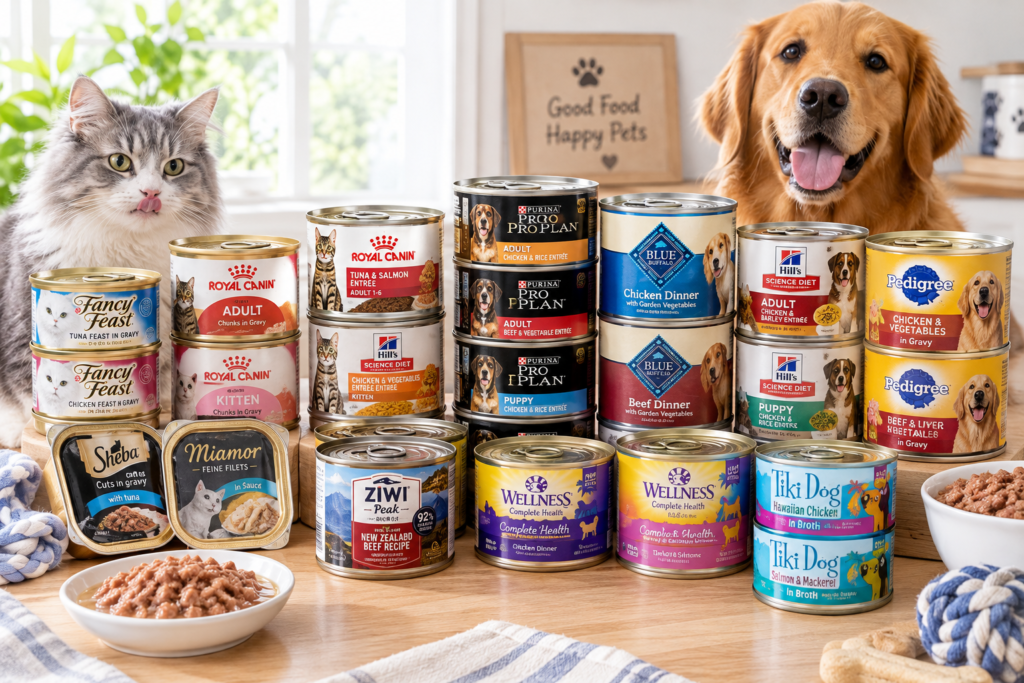
The wet pet food sector is undergoing a massive shift toward full automation. Rising consumer demand for premium pates, chunks in gravy, and specialty broths has forced processors to rethink plant floor efficiency. Manual operations and semi-automatic sealers can no longer keep up with modern production quotas or safety demands.
Today’s pet food canning equipment must operate reliably at sustained high speeds while maintaining absolute seal consistency. Investing in an advanced automatic can sealer machine for pet food packaging industry trends means targeting systems that cut waste, prevent contamination, and adapt seamlessly to shifting package designs.
A major bottleneck in wet pet food packaging lines is liquid and fat splash. High-speed piston fillers and viscous meat slurry pumps push product into open containers at blistering rates. If the seamer cannot synchronize down to the millisecond, line vibration causes spillage, under-filled cans, and soiled flanges.
The flange is the outward rim of the can body that is folded together with the lid edge during seaming. Product trapped in this fold can interfere with the metal interlock and sealing compound, which is why a clean rim matters.
Upstream dosing also affects flange cleanliness. Review how viscosity and particle size affect filling pumps, nozzles, and product paths when specifying equipment for meat slurries or chunky gravies.
Pet food cans undergo intense thermal processing inside pressurized retorts to achieve commercial sterility. An imperfect seam that looks acceptable before cooking will fail under high-temperature retort can sealing conditions, leading to micro-leaks, pathogen entry, and catastrophic recalls.
A retort is a pressure vessel used to apply a scheduled heat process to sealed containers. Commercial sterility means the validated process is designed to control microorganisms capable of growing in the product during normal storage; it does not mean that every microorganism has been eliminated. The seamer forms the closure, while the time-temperature process is established separately for the product and package.
| Seam Parameter | Retort Requirement | Failure Risk If Inaccurate |
|---|---|---|
| Overlap | Strict factory tolerance (>1.0 mm) | Seal blowouts during thermal depressurization |
| Seam Gap | Uniform radial compression | Micro-leakage of fats and bacterial contamination |
| Body Hook / Cover Hook | Interlocking mechanical fold | False seams, loose lids, compromised shelf stability |
Maintaining hermetic seal integrity requires double seaming machine technology capable of micron-level repeatability across millions of cycles.
A double seam interlocks the body hook (the folded can flange) with the cover hook (the folded lid curl) and compresses sealing compound inside the fold. Machine repeatability supports consistency, but finished seams still need visual and dimensional checks against the can and end supplier’s specifications.
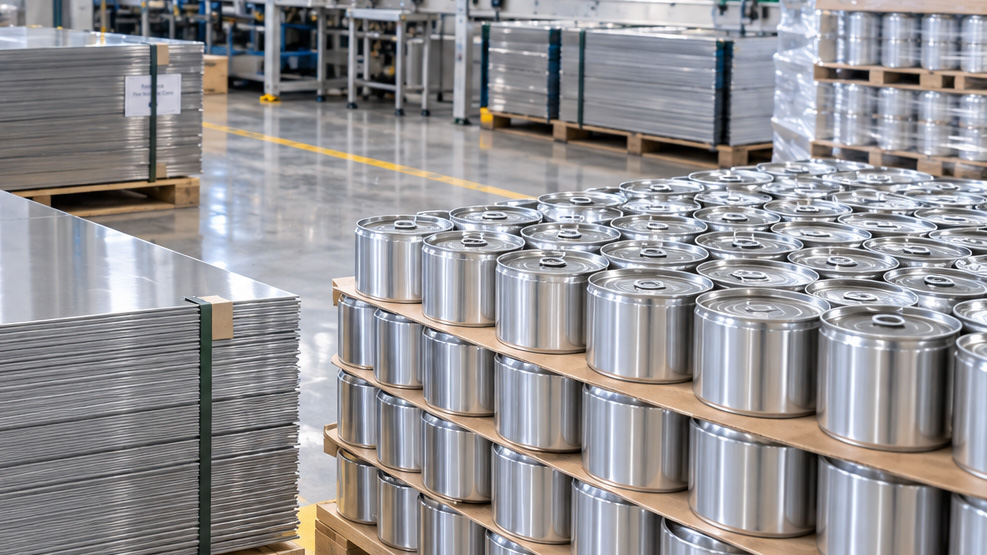
Packaging materials are evolving rapidly. Brand owners are cutting material costs and reducing environmental footprints by moving toward thinner-gauge tinplate, drawn aluminum cans, and delicate easy-open ends (EOE) or peel-off foil membranes.
A two-piece can has a body and base formed from one piece of metal plus a separate lid; a three-piece can has a separate body, bottom, and lid. An easy-open end (EOE) uses a scored lid and pull tab. Confirm tooling and settings for each can-and-lid combination rather than assuming that matching diameter means matching compatibility.
For wet pet food, an eco-friendly can is not defined by the metal body alone. The practical environmental result depends on the can material, recycled content, internal coating, easy-open end, label, sealing process, transport weight, and the collection system available after use. Steel and aluminium cans remain important because they provide strong protection against oxygen and light and can withstand retort processing (high-temperature pressure sterilization). The next stage of sustainable can design is therefore to reduce material use and production waste while keeping the pack safe, shelf-stable, and recoverable in the target market.
Metal cans give wet pet food a long-life barrier, predictable handling on high-speed filling and seaming lines, and reliable protection during heat processing. They also fit established metal recovery systems: steel can be separated with magnets, while aluminium can be recovered through non-ferrous sorting. These advantages do not make every can automatically sustainable. A heavy can, an unsuitable coating, a contaminated seam, or a market without convenient collection can reduce the real benefit. The correct comparison is the complete package system and its actual end-of-life route.
Can makers are reducing steel or aluminium use through thinner gauges, optimized bottoms and shoulders, lighter easy-open ends, and more efficient two-piece constructions. For pet food, lightweighting must be validated against filling, seaming, retort pressure, stacking, drop resistance, and transport vibration. A thinner can that causes dents, leaks, or a higher reject rate can create more environmental impact than it saves in metal. The design target should be the lowest material weight that still meets the can supplier’s dimensional and process specifications.
Pet food brands are asking suppliers for more recycled metal, but an environmental claim should identify the material scope and evidence. Confirm whether the percentage refers to the can body, the complete metal pack, post-consumer recycled material, or a broader mill input. Keep supplier declarations, chain-of-custody records, and food-contact documentation with the packaging specification. The 2023–24 Australian data provide a useful benchmark: post-consumer recycled content represented about 12% of metal packaging, showing progress while also indicating that virgin metal remains part of the supply mix.
The internal coating separates wet food from the metal and must resist acidity, salt, fat, heat, and retort pressure. The current direction is toward BPA-free or lower-migration coating systems, supported by migration testing and a supplier declaration for the actual pet-food formulation. The EU Commission Regulation (EU) 2024/3190 restricts BPA in food-contact materials. It entered into force on January 20, 2025; the main transition period ended on July 20, 2026, while certain listed canned-food and metal-packaging applications have longer transition arrangements. Exporters should confirm the exact category with their coating supplier and compliance adviser.
Easy-open ends improve convenience, but the lid, pull tab, label, ink, adhesive, and any plastic accessory should be reviewed as one recovery system. Use a lid and can combination that remains stable through seaming and retort, avoid unnecessary non-metal attachments, and select labels and adhesives that do not prevent identification or sorting. Clear material information also helps consumers place the empty can in the correct collection stream.
Packaging waste is only part of the environmental calculation. A leaking or under-seamed can can waste the food, the energy used for cooking and retort processing, and the transport resources used to deliver it. A sustainable canning line therefore needs clean flanges, correct first- and second-operation roller settings, controlled seam overlap, and documented visual and dimensional checks. Before purchasing equipment, compare the seamer with the can supplier’s approved seam specification and include retort validation, changeover checks, and routine seam tear-down inspections in the operating plan.
| Market | Latest useful figure | Scope and implication for pet food cans |
|---|---|---|
| European Union | 84% steel-packaging recycling rate in 2024 | Steel for Packaging Europe reports actual steel packaging entering recycling operations. It covers multiple steel-packaging uses, not pet food alone. The PPWR has applied across the EU since August 12, 2026, increasing the importance of recyclability, resource reduction, and documented packaging data. Steel for Packaging Europe · European Commission PPWR notice |
| United States | 44% estimated recycling rate for steel food cans using 2023 data | The CMI/RRS study separates food cans from non-food steel cans. EPA’s earlier 2018 steel-can estimate was 70.9%, but the year, category, and methodology differ, so the figures should not be compared as a trend line. CMI/RRS report · US EPA data |
| United Kingdom | 85.5% steel-packaging and 65.9% aluminium-packaging recycling rates in 2024 | Government data report 379,000 tonnes of steel packaging recycled from 444,000 tonnes arising, and 157,049 tonnes of aluminium packaging recycled from 238,000 tonnes. Packaging reporting and producer-responsibility records should cover the can, end, label, and secondary pack. UK Data.gov.uk |
| Japan | 94.4% steel-can recycling rate in FY2024 | The national steel-can association reports a long-running, high-rate collection system. The figure covers steel cans generally, so it is a market-level benchmark rather than a pet-food-only result. Japan Steel Can Recycling Association |
| Australia | 55% metal-packaging recovery rate and 12% post-consumer recycled content in 2023–24 | APCO reports 160,546 tonnes recovered from 289,329 tonnes placed on the market. Metal packaging had about 99% recycling potential, but actual recovery was much lower, showing why collection access and reprocessing capacity matter. APCO metal factsheet |
| China | No comparable nationwide pet-food-can recovery rate located in the reviewed public sources | GB 23350–2021, effective September 1, 2023, restricts excessive packaging for food and cosmetics. For pet food cans, the immediate design focus is reducing unnecessary outer packaging and empty space while maintaining protection and product safety. China National Standard GB 23350–2021 |
The country comparison shows why a single global claim such as “100% recyclable” is incomplete. Europe and Japan demonstrate that high steel-can recovery is possible when collection and sorting systems are established. The US data show the importance of separating food cans from the wider steel category. Australia shows the gap between theoretical recyclability and actual recovery, while China places strong emphasis on packaging reduction. A brand selling in several markets should therefore keep a market-by-market evidence file covering material composition, recycled content, coating compliance, packaging weight, collection instructions, and any producer-responsibility reporting.
The most credible eco-friendly can program combines a lighter, documented metal pack with a stable coating, a recyclable component set, a reliable double seam, and a real collection route. This approach reduces material and product loss while keeping the packaging suitable for the production line and the markets where the pet food is sold.
Meeting modern automatic can sealer machine trends comes down to smart mechanical engineering on the plant floor. As wet food recipes get heavier and line speeds climb, standard sealers quickly hit their limit. We build our equipment around four core design priorities that keep production running without seam failures or unexpected shutdowns.
Choosing between rotary and inline designs depends on your targeted cans-per-minute (CPM) and product viscosity. GDHP’s can sealing machine buying guide covers the related checks for automation level, can dimensions, seam quality, utilities, and ownership cost.
CPM is a rate, not a guaranteed saleable output. Compare the quoted rate with your actual can diameter, fill level, product behavior, changeover frequency, and normal stops before using it in a capacity calculation.
| Feature | Inline Seaming Systems | Rotary Multi-Head Systems |
|---|---|---|
| Throughput Range | 20 – 60 Cans/Min | 100 – 600+ Cans/Min |
| Product Slosh Risk | Moderate on watery gravies | Minimal due to continuous smooth motion |
| Changeover Time | 10 – 20 minutes | 30 – 45 minutes |
| Best Application | Batch runs, pilot plants, specialty cans | High-speed, non-stop wet pet food lines |
Pet food processing exposes metal to aggressive brine, animal fats, and steam washdowns. Ordinary carbon steel or untreated alloys pit and wear within months.
Oxygen in the headspace degrades vitamins, darkens meat color, and compromises can pressure during sterilization. Our next-generation double seaming setups integrate clean gas management directly at the seaming turret:
The headspace is the unfilled volume between the product and the lid. Nitrogen flushing reduces the air present before closing, while vacuum closing removes some headspace air; the required target depends on the recipe, container, and thermal process. Neither method corrects a poorly formed seam.
Running multiple pet food SKUs (stock-keeping units, or distinct product and pack-size variants)—from small 3-ounce aluminum gourmet tins to 13-ounce tinplate family cans—requires rapid line flexibility.
Operating a high-yield wet pet food packaging line requires seamless mechanical coordination from initial fill to final closure. In modern processing facilities, deploying an isolated seamer creates unnecessary transfer points, increases spillage risks, and leads to line jams. We build complete, integrated canning systems that align with current pet food packaging industry trends, ensuring consistent throughput, hermetic seal integrity, and zero product loss.
A turnkey line connects several operations under one defined scope, including mechanical interfaces, controls, utilities, and acceptance criteria. Define where the quoted scope starts and ends, and which steps remain manual for each SKU; for example, automatic can handling does not necessarily include automatic case packing.
Transferring open cans filled with wet meat loaf, chunks, or viscous gravies at high speeds often results in product slosh and lip contamination. Our synchronized monoblock systems eliminate this bottleneck by mechanically coupling the piston or rotary filler directly to the automatic can seamer.
A monoblock combines two or more operations in one machine frame. It can shorten the transfer path, but the result still depends on fill volume, viscosity, can geometry, and line speed. Ask what happens when the seamer stops: the filler should respond through agreed stop signals so open cans do not keep accumulating at the transfer point.
| Integration Aspect | Traditional Disconnected Conveyors | Synchronized Monoblock Systems |
|---|---|---|
| Can Transfer | Belt-to-belt transfer plates (spill-prone) | Continuous pocketed starwheel indexing |
| Speed Synchronization | Sensor-based start/stop buffering | Real-time multi-axis servo synchronization |
| Flange Contamination | Frequent (causes false seams) | Minimal to zero (clean double seaming) |
| Footprint | Extended conveyor runs required | Compact, unified sanitary frame |
The pet food sector has rapidly shifted toward single-serve portions, shallow-drawn aluminum cans, and peel-off foil membranes. These lightweight materials demand specialized handling to avoid container crushing during the seaming cycle. Confirm the closure construction: a foil membrane bonded to a rigid end ring is different from foil heat-sealed directly to a tray rim, and the sealing equipment must match that construction.
High-volume pet food plants run around the clock, requiring equipment that withstands non-stop physical stress, abrasive meat slurries, and rigorous cleaning chemicals.
In wet pet food processing, the seamer is usually where production lines either hit peak efficiency or grind to a halt. When we look at how plants run today, high reject rates and unscheduled downtime eat into margins fast. Investing in a modern can sealer machine for pet food packaging directly targets these plant-floor headaches, delivering measurable returns from the first shift.
ROI (return on investment) should be calculated from the plant’s actual baseline: saleable output, labor, rejects, maintenance, utilities, changeover loss, and downtime. A faster nameplate speed does not by itself prove a financial return.
Nothing kills profitability faster than seam defects discovered after retort processing. A single loose seam or cut-over can contaminate an entire sterilization batch, wasting thousands of pounds of high-value meat slurry.
A false seam occurs where the body hook and cover hook fail to interlock; a cut-over is a fracture at the top inside edge of the seam. These are physical closure defects, so an apparently flat lid is not enough to confirm that the seam is sound.
| Defect Type | Primary Cause | Automatic Seamer Solution |
|---|---|---|
| False Seam | Flange unhooked during first operation | Rigid, indexed can-to-lid centering |
| Seam Droop / Lip | Uneven roller pressure or excess seal compound | Pre-calibrated, micrometer-adjusted roller profiles |
| Cut-Over | Sharp chuck edge or excessive vertical force | Controlled baseplate pressure and matched chuck tooling |
Skilled plant labor is tough to find and harder to keep. Running semi-automatic or outdated closing stations requires constant operator intervention for lid feeding, height adjustments, and manual quality checks.
Frequent tooling swaps, corrosion from wet food gravies, and difficult sanitation cycles drive up the total cost of ownership (TCO: purchase cost plus operating, cleaning, maintenance, and downtime costs over a defined period). We focus on industrial-grade builds that stay running across non-stop multi-shift schedules.

Investing in an automatic can sealer requires matching line mechanics with the brutal realities of wet pet food production. Before committing capital, we run through a strict operational checklist to guarantee line balance, seam integrity, and sanitation compliance.
| Evaluation Area | Target Specification | Plant Floor Risk Factor |
|---|---|---|
| Speed Synchronization | Continuous pitch matching filler output (CPM) | Product slosh, line jamming, downstream starvation |
| Seam Precision | >55% actual overlap, strict cover/body hook specs | Micro-leaks, blown cans during retort sterilization |
| Sanitation Rating | IP65/IP69K washdown, full 304/316 stainless steel | Meat debris buildup, bacterial harborage, corrosion |
| Tooling & Wear Parts | Hardened stainless or coated rollers/chucks | Premature wear from abrasive meat salts, seam drift |
| Service & Support | Rapid-ship replacement parts and commissioning | Extended unplanned downtime during peak runs |
A high-speed wet pet food packaging line is only as reliable as its transfer points. When matching your automatic can seamer to upstream meat slurry and gravy fillers:
Pet food cans face extreme pressure swings inside steam retorts. A seal that looks acceptable at room temperature will fail under sterilization pressure if double-seam dimensions are loose.
Overlap is the engagement between the body hook and cover hook inside the double seam. The required overlap and hook dimensions vary by can and end design, so use the packaging supplier’s specification and the plant’s approved inspection method instead of treating one percentage as universal.
Meat packing involves fats, broths, and high-salinity gravies that corrode lower-grade metals. Sanitary construction cannot be an afterthought:
CIP (clean-in-place) cleans equipment without taking it apart. COP (clean-out-of-place) removes parts for cleaning at a separate station. A can seamer may need COP or partial disassembly, so confirm the documented cleaning method instead of assuming that every guarded machine is CIP-ready.
Unplanned downtime on an automated canning line quickly destroys margin. Plant managers need direct, reliable supplier backing: