Opens in a new tab

HOUSEHOLD CLEANING · FILLING SERIES

Household Cleaning Filling & Packaging Solutions

Configure filling, capping, labeling, boxing and tube sealing around your cleaning formula, package format and output goals—from laundry detergent and dish soap to antibacterial cleaning liquids.

Household cleaning production needs stable filling.

Formula behavior, package geometry, foaming and cleaning requirements directly affect line stability. Equipment should be selected around all four.

01

Fill consistency

Fill volumes, liquid levels and clean cut-off behavior should remain consistent across the planned batch and bottle formats.

02

Foam and drip control

Foaming, splashing and residue around the bottle neck make product-contact design, staged filling and draining important.

03

Bottle and closure handling

Bottles, caps, pumps and handled packs may require dedicated guides, sensors or format parts.

04

Cleaning chemistry

Foaming, stringing, air entrapment and corrosive or high-viscosity formulas influence the pump, nozzle and material choice.

PRODUCT PORTFOLIO

Household cleaning filling systems

Start with the cleaning formula and package format—not only the headline speed. The product examples below show how GDHP connects filling, capping, labeling, sealing and line integration around laundry detergent, dish soap, disinfectant and other household cleaning applications.

Laundry Detergent Filling Production Line
LAUNDRY DETERGENT LINE

4-Head Laundry Detergent Filling Production Line

An integrated bottle route for high-viscosity laundry detergent and similar liquids, combining automatic bottle feeding, piston filling, capping, labeling and boxing. Published filling targets are model-specific and should be confirmed with representative product, bottle and FAT trials.

  • ApplicationLaundry detergent
  • PackageBottles
  • Line scopeFeed, fill, cap & pack
  • ControlPLC / HMI
View laundry detergent line →
GRAVITY / TIMED-FLOW FILLER

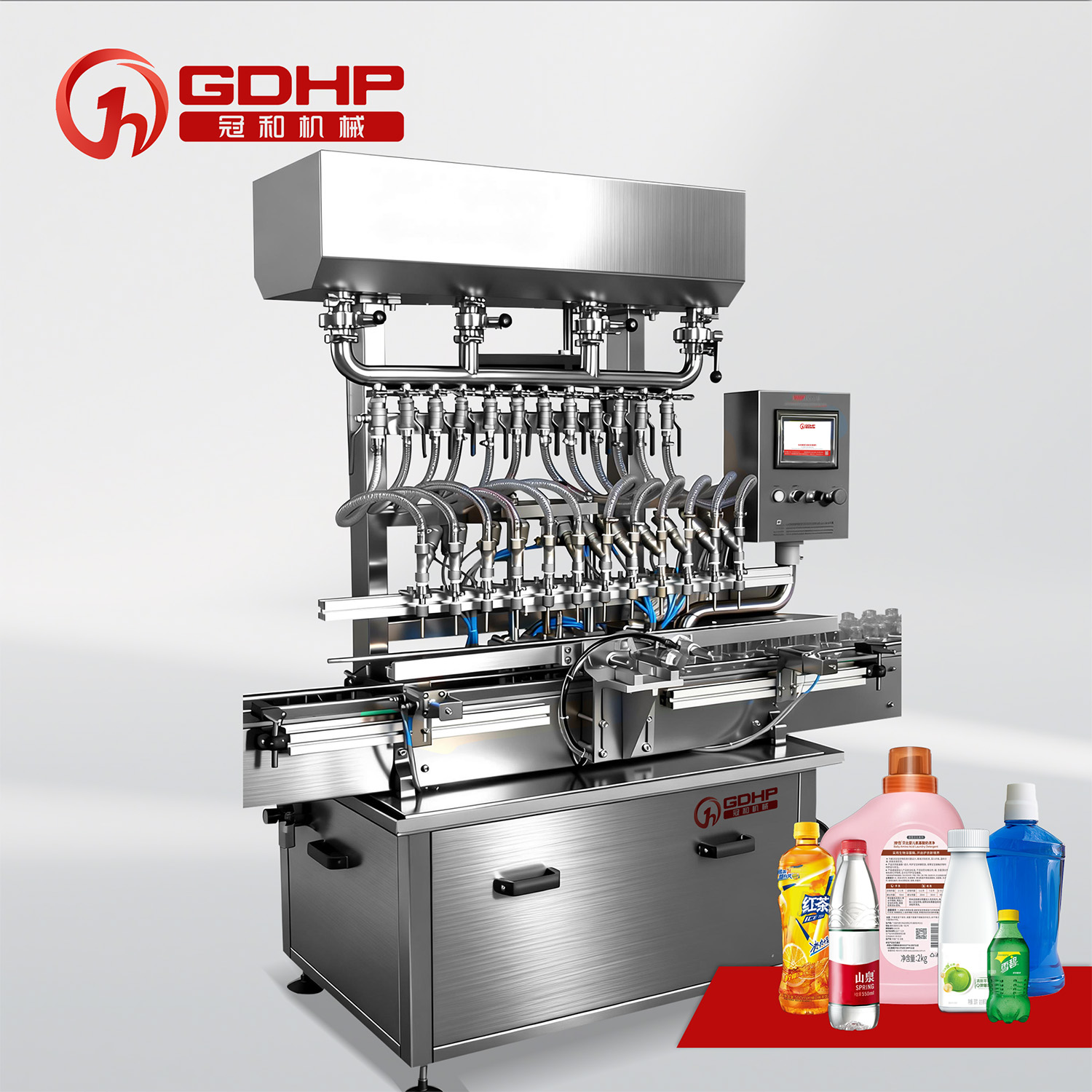
12-Nozzle Linear Gravity Filling Machine

A 12-nozzle linear self-flowing filler for thin, free-flowing cleaning liquids. It can be evaluated for suitable disinfectants, laundry detergents, body wash or antifreeze when the formula flow and foaming behavior fit this filling method.

  • Product typeThin cleaning liquids
  • PlatformBottles
  • Dosing12 nozzles
  • Use caseGravity / timed-flow
View 12-nozzle gravity filler →
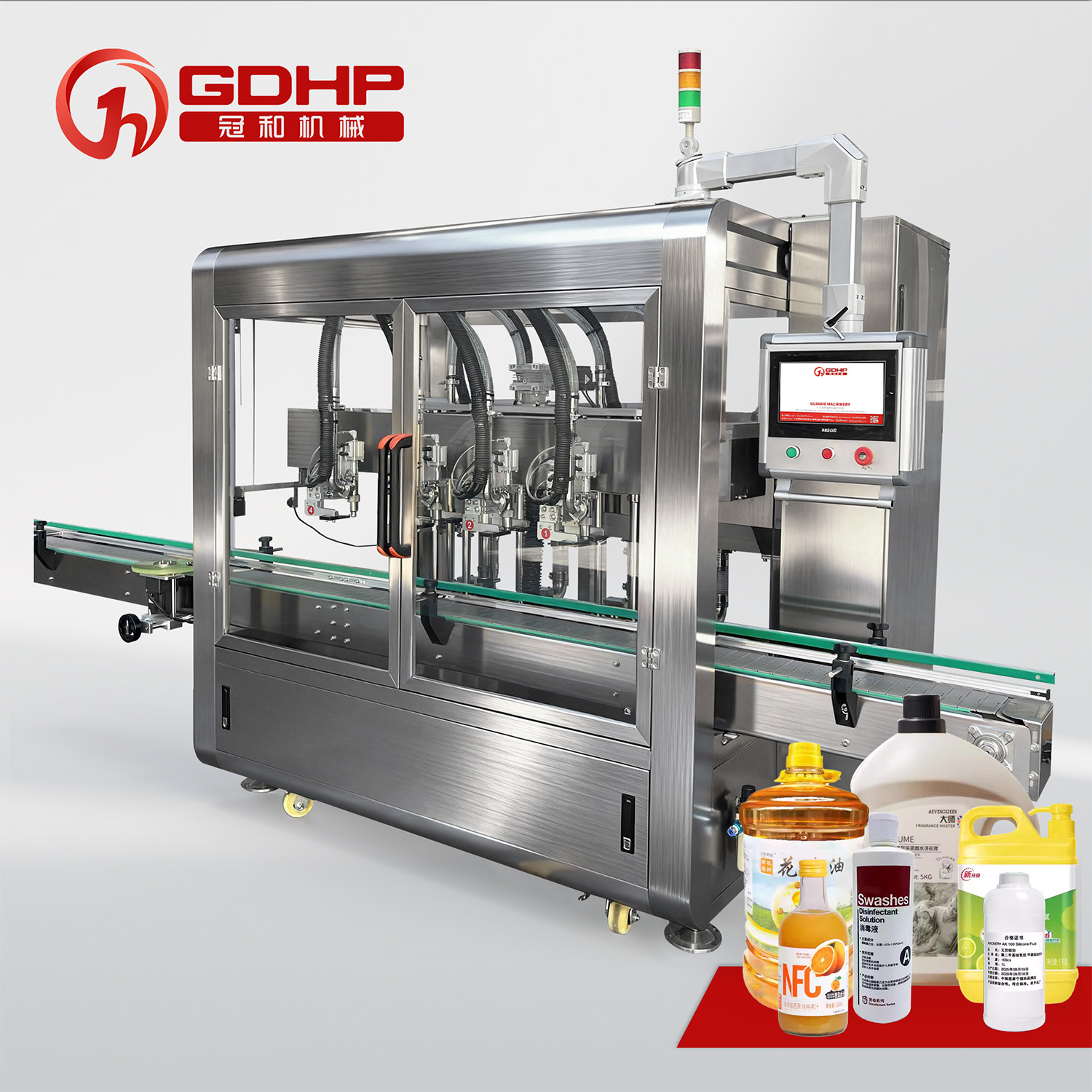
Fully Automatic 4-Head Tracking Filling Machine
TRACKING FILLER

Fully Automatic 4-Head Tracking Filling Machine

A continuous filling option for laundry detergent, body wash, antifreeze and antibacterial detergent. The filling heads travel with the bottles during dosing, supporting a non-stop process; metering and anti-foam or anti-drip settings should be selected after product and package trials.

  • FormulaDetergent & antibacterial liquids
  • ProcessBottles
  • Line noteTracking heads
  • Product fitSynchronized bottle filling
View tracking filler →
TUBE FILLING & SEALING

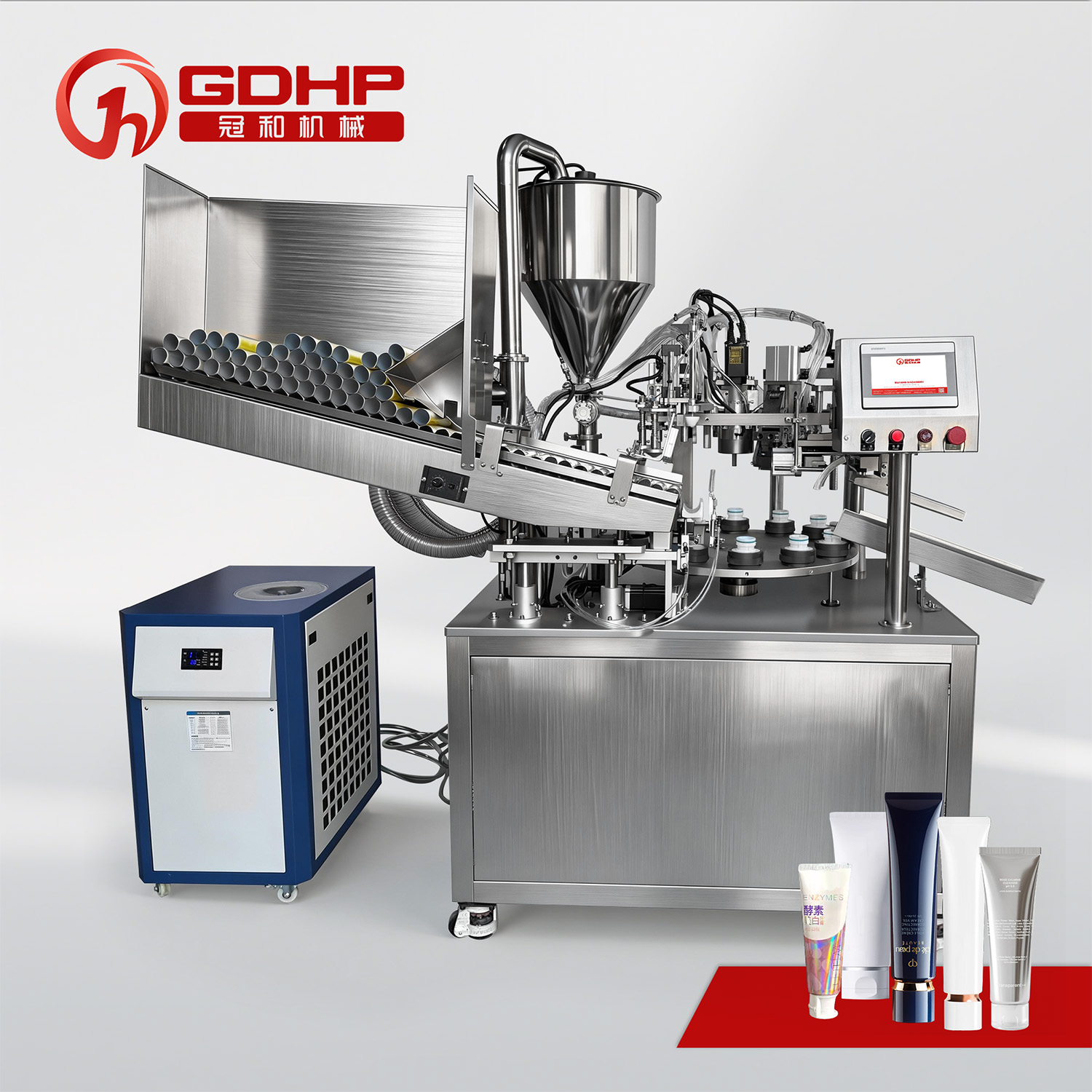
Tube Filling & Sealing Machine

An automatic tube route covering tube loading, filling, tail sealing, tail trimming and discharge. Use this option when a household cleaning product is designed for a soft tube; tube material, dimensions, seal method and formula compatibility require sample confirmation.

  • PackageTubes
  • ProcessFill & seal
  • Product fitSoft-tube products
  • ChangeoverTooling-specific
View tube filling machine →

Solution

Filling routes for household cleaning products

Our household cleaning filling and packaging solutions are configured around formula viscosity, foaming, package geometry, cleaning method and changeover frequency. We evaluate piston, tracking or gravity/timed-flow dosing with anti-drip functions where required, then coordinate capping, labeling, boxing and tube sealing around the selected format. Final configuration depends on representative product and package trials; published model figures are targets to confirm during FAT.
Discuss Your Cleaning Line
Peristaltic Pump for IVD Industry

Piston or tracking filling for thicker detergents

High-viscosity laundry detergents and similar products may require positive-displacement piston filling or synchronized tracking filling. Evaluate viscosity, foam, target volume, nozzle cut-off and bottle opening before selecting the final configuration.

Best fit: thicker detergents and similar liquids where controlled positive-displacement dosing and clean cut-off matter.

Key considerations: viscosity range, foam behavior, nozzle height and cut-off, product-contact materials, bottle opening, cleaning access and changeover sequence.

Gravity/timed-flow filling for suitable thin liquids

The 12-nozzle linear filler uses a self-flowing gravity/timed-flow principle. It is appropriate only when the liquid flows consistently under the selected conditions; confirm fill stability and foam behavior with the intended product.

Best fit: thin, free-flowing cleaning liquids whose flow and foaming behavior remain stable under the selected conditions.

Key considerations: liquid level and flow consistency, nozzle arrangement, air and foam management, anti-drip behavior, fill volume and cleaning/changeover plan.

Tube filling and sealing for soft-tube formats

When the package is a soft tube, the tube monoblock combines loading, filling, sealing, trimming and discharge. Sealing components and format tooling depend on tube material, diameter, length and product characteristics.

Best fit: household cleaning products designed for a soft tube after compatibility and sealing trials with the intended formula.

Key considerations: tube material and dimensions, seal method, filling volume, tail trimming, product compatibility, tooling and cleaning access.

Selection guide

Choose the line architecture around your formula and package

The right household cleaning line depends on viscosity, foaming, bottle stability, closure sequence, cleaning plan, required output and future format changes—not on one headline speed.

SMALL BATCH / PILOT

Compact or semi-automatic filler

Use when one product family, short batches or a compact bottle route are the priority.

  • One product family
  • Short batches or pilot runs
  • Compact bottle route
INTEGRATED PRODUCTION

Integrated filling line

Use when bottle feeding, filling, capping, labeling and boxing need a coordinated workflow.

  • Bottle feeding and transfer
  • Coordinated cap and label handling
  • Defined cleaning and changeover plan
END-TO-END OUTPUT

Turnkey filling line

Use when bottle feeding, cleaning, filling, capping, labeling, coding, inspection and boxing need coordinated interfaces.

  • Line-level balance
  • Upstream and downstream integration
  • Future formats and project planning

Typical process architecture

From empty package to finished cleaning product

A bottle or tube line may include all or only part of this sequence. The actual stations depend on the formula, package, closure, output, cleaning plan and downstream packing requirements.

01Bottle or tube loadingFeed and orient the selected container format
02Clean or pre-treatOptional container cleaning or pre-treatment when specified
03Piston, tracking or gravity/timed-flow dosingFill the selected bottle or tube format with controlled cut-off
04Place closureCap, pump or tube closure placement
05Seal & inspectCapping, tube sealing, leak checks and detection
06Label & boxLabel, code and discharge to boxing or downstream packing

From Formula Review to Production Support

01 Formula Analysis & Package Review

Share the product sample or representative liquid, target fill volume, bottle or tube, closure, label and box requirements, output, cleaning method and changeover plan.

02 Sample Trials & Factory Acceptance Testing (FAT)

Check filling behavior, foam, drip, container transfer, capping or sealing and labeling with representative materials whenever available. Published accuracy or throughput figures should be confirmed during FAT.

03 Line Configuration & Integration

Select the filling principle, number of heads, format parts, capping, labeling, boxing scope and interfaces with existing equipment.

04 Start-Up & After-Sales Support

Define installation, recipe setup, operator training, preventive maintenance, spare parts and technical support in the project scope.

Beginner to project-ready

How to specify a household cleaning filling line

What is a household cleaning filling machine?

A household cleaning filling machine meters a liquid cleaner into bottles or soft tubes and may integrate container feeding, filling, closure placement, capping, sealing, inspection, labeling, coding and downstream packing. The category does not determine one universal machine; the formula, container, closure, output, cleaning plan and validation approach do.

The word “cleaning” does not determine the pump, filling range or automation level. Those decisions come from viscosity, foaming, air entrapment, chemical compatibility, package geometry, production target and changeover strategy.

Start with formula behavior and product-contact compatibility

Document viscosity, flow behavior, foaming tendency, stringing, suspended particles, temperature, corrosiveness or solvent content, cleaning method and acceptable product-contact materials. Confirm dosing stability, priming loss, dripping, bubble control and changeover cleaning before finalizing pump and nozzle design.

For high-viscosity or strongly foaming detergents, also evaluate air removal, hopper or pipeline design, staged or bottom-up filling, nozzle cut-off, residue retention and cleaning access.

Bottle and closure geometry control line stability

Round bottles can often use conventional guides or bottle feeders. Pump packs, handled containers, asymmetric bottles and soft tubes may require dedicated nests, pucks or format tooling.

Send representative bottles, caps, pumps, tubes, liners and labels early. Dimensional tolerances and closure variation affect feeding, filling, capping, sealing, labeling and torque control.

Define fill consistency together with dose and speed

A percentage without its fill volume is not a complete acceptance criterion. Specify the target volume or weight, allowable deviation, test method, sampling plan, liquid conditions and required output. Confirm whether published speed refers to bottles per minute, bottles per hour or individual components, and whether it includes downstream operations.

Factory trials should use the intended cleaning formula or a representative test liquid together with the intended container and closure. Acceptance criteria should distinguish equipment design targets from results observed during FAT or site qualification.

Cleaning design, chemical compatibility and compliance

The equipment can be designed to support hygienic or controlled-environment production, but final chemical compatibility, product safety, regulatory and validation responsibilities depend on the complete installed process, documentation, utilities, operating procedures and manufacturer requirements.

Define the actual cleaning, disassembly, inspection, material compatibility and documentation requirements in the project specification rather than treating the machine alone as a compliance guarantee.

What to include in your cleaning line URS

  • Formula name and physical properties
  • Target and minimum/maximum fill volume or weight
  • Bottle, tube, cap, pump, liner, label and box samples
  • Required output, batch size and shift pattern
  • Fill consistency definition and test protocol
  • Feeding, cleaning, closure and sealing sequence
  • Product-contact and frame materials
  • Cleaning, rinsing and chemical-compatibility requirements
  • Reject, alarm and traceability logic
  • FAT, SAT, start-up and documentation scope
  • Available voltage, air, water and plant utilities
  • Line layout and future format interfaces

Frequently asked questions

Household cleaning filling line FAQ

Thicker or foaming detergents are commonly evaluated with piston or tracking filling. Thin, free-flowing formulas may suit the 12-nozzle gravity/timed-flow filler. Final selection requires product and bottle trials.

The 4-head line describes bottom-up or staged filling and anti-drip or suck-back options. Settings depend on viscosity, foaming, nozzle design and bottle geometry and should be verified with representative samples.

The linked product page describes an integrated route with automatic bottle feeding, filling, capping, labeling and boxing. Final station scope is defined for each project.

Tracking heads move with the bottles during filling for a continuous process. Gravity/timed-flow uses the liquid’s flow under controlled conditions and suits selected thin liquids. Confirm rheology, bottle opening, volume and output before choosing.

Multiple formats can be considered with suitable guides, format parts and recipes. The number of formats and changeover time depend on dimensions, tolerances, closures and target output.

It can be evaluated when the product uses a soft tube. Send the formula, tube material and dimensions for a compatibility and sealing trial; the machine is not a guarantee for every cleaning formula.

Build Your Custom Solution

Your information is secure - we respect your privacy and will only use these details to contact you.

Build Your Custom Solution