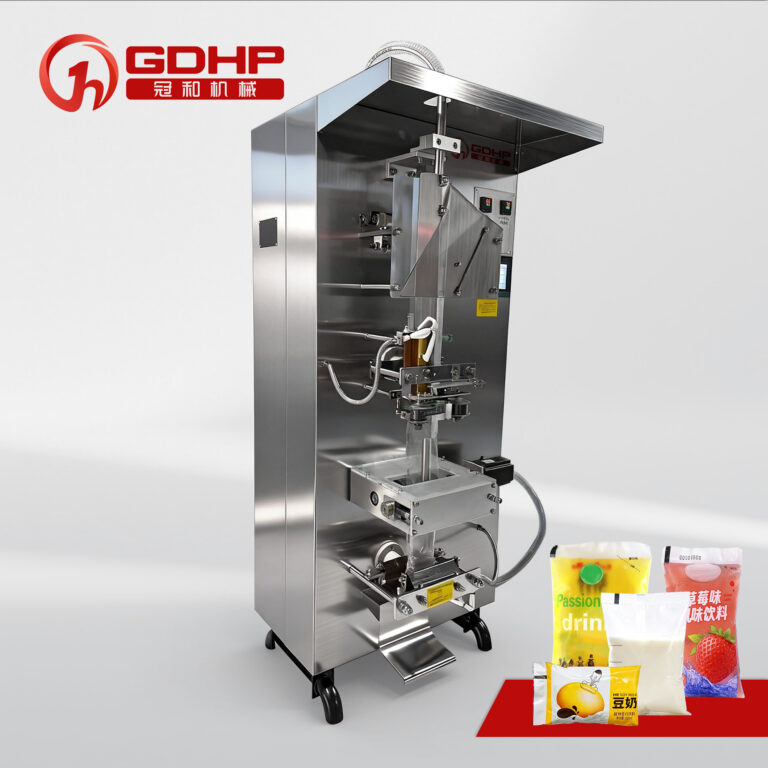
Best 10 Vertical Form Fill Seal Machine Manufacturers In China
Analyzes the top 10 vertical form fill seal machine manufacturer in China, their technical advantages, and how to choose the…
April 28, 2026


Hello, I am a Senior Engineer at GDHP. With 23 years of technical expertise in the filling and packaging industry, we provide more than just equipment—we are dedicated to delivering high-stability, high-efficiency, and fully customized turnkey solutions for your business.
Many people who are new to the industry or looking to upgrade their production lines often ask me: “What exactly is an FFS packaging machine? How is it different from a regular sealer?”
In short, FFS stands for Form-Fill-Seal. From my perspective as an engineer, it’s more than just a piece of equipment—it is a high-efficiency production system that transforms raw packaging materials directly into finished, retail-ready packages.
Traditional packaging methods usually require you to purchase pre-made bags. You then have to use manual labor or robotic arms to pick them up, open them, fill them, and seal them one by one. FFS technology completely replaces this tedious “buy bags first, fill them later” logic.
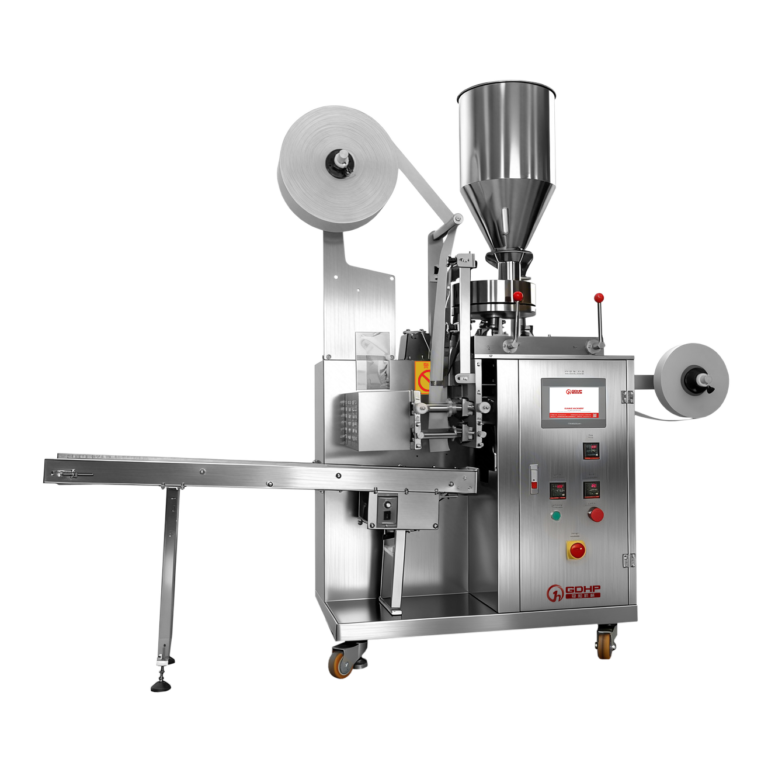
When you stand in front of an operating FFS machine, you’ll see a large roll of plastic film at the back, which we call “rollstock.” As this flat film passes through a series of guide rollers, it is folded, shaped, and sealed to “create” a bag right on the spot.
The magic happens in the timing: the moment the bottom of the bag is sealed and the top remains open, the product is precisely dosed and filled. Immediately after, the machine completes the final top seal and cuts the bag away from the roll.
This integrated logic means that the “birth” of the bag and the “filling” of the product happen simultaneously. I often joke with my clients that an FFS machine is like a professional filler who also happens to be a master tailor—it’s “sewing” the bag from scratch at the same time it’s packing the goods. This setup drastically reduces intermediate steps, making the entire packaging process incredibly compact and streamlined.
FFS (Form-Fill-Seal) packaging machines are widely used across the food, personal care, pharmaceutical, and industrial sectors. They are compatible with a wide range of product formats, including granules, powders, liquids, and solids.
For instance, in the food industry, they are used to pack potato chips, candy, coffee powder, rice, and frozen foods. For powdered products, they are ideal for milk powder, seasonings, and medical powders. In the liquid and semi-liquid space, they handle everything from juice and soy sauce to shampoo and honey.
Furthermore, for bulky or solid items like frozen meat, soap bars, and hardware parts—as well as specialized products like tablets, wet wipes, and laundry detergent—FFS equipment delivers high-efficiency automated packaging. Ultimately, if a product is suitable for flexible packaging that requires automatic bag forming, filling, and sealing, an FFS machine is likely the perfect solution.
In a real-world production environment, the most immediate benefits of integration are reducing secondary contamination and saving valuable floor space. Because the bags are formed “on the fly” inside the machine, they don’t need to be stored, shipped, or handled multiple times before being filled. This is a game-changer for industries with strict hygiene standards, such as food, beverage, and pharmaceuticals.
From a cost perspective, rollstock (the film roll) is typically much more affordable than pre-made bags. I once ran the numbers for a client: for the exact same packaging specifications, switching to rollstock reduced their material costs by 15% to 30% per 10,000 units.
While the initial investment (CAPEX) for integrated equipment is higher than a basic sealer, it is the inevitable choice for businesses looking to scale. If you are chasing higher output, better conversion rates, and healthier profit margins, this is where you want to be.
(If you are planning to introduce an FFS packaging machine into your production line, our engineering team can help you evaluate the most suitable solution based on your product, bag size, and production capacity.)
Contact us to get a free FFS packaging solution.
To understand why an FFS packaging machine runs so reliably, we need to look under the hood. It’s not just a collection of parts; it’s a perfect marriage of physics, mechanics, and precision control.
Everything starts at the back of the machine on the unwind shaft (or roll mandrel). This shaft is typically equipped with a tension control system. If the tension isn’t consistent, the film will “wander” (misalign), leading to crooked seals. I’ve seen many low-end machines where the film jerks or pulls unevenly, causing the material to stretch or deform.
High-quality FFS machines use electromagnetic brakes or servo motors to maintain constant web tension. This ensures the film glides into the next stage as smooth and flat as a mirror.
This is the “heart” of the machine—what we often call the “elephant-ear” forming shoulder. This is where the flat film undergoes its physical transformation.
Imagine the film sliding down a specially designed funnel, automatically wrapping itself into a cylindrical tube. The precision of the forming collar’s design determines how “clean” your bag looks. If the curves of this “funnel” aren’t mathematically perfect, you’ll get wrinkles or creases in the folds, which inevitably lead to leaks or compromised seals.
Once the film is wrapped into a tube, it goes through two critical sealing phases: First, the machine “welds” the overlapping edges of the tube vertically, creating a continuous cylinder (the “longitudinal seal”). Next comes the cross-seal. This closes the bottom of the tube to create the bag’s base.
The table below briefly compares the differences between these two key sealing actions:
| Sealing Type | Sealing Location | Key Technical Points | Engineer's Observations |
|---|---|---|---|
| Vertical Seal | Long seam on the back of the pouch | Continuous heating and pressure balance | Excessive temperature damages the film, while insufficient temperature results in a weak seal. |
| Horizontal Seal | Top and bottom edges of the pouch | Synchronized instantaneous high heat and cutting | The alignment precision of the sealing blade determines whether the pouch leaks powder or air. |
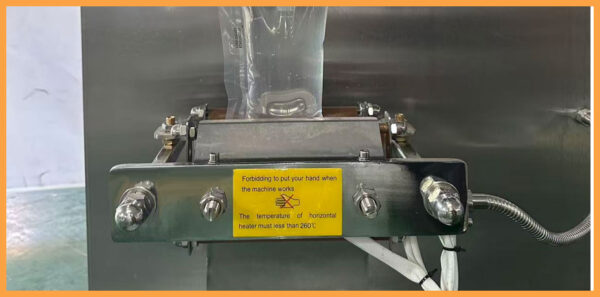
Once the bottom of the bag is sealed, the material must drop into the bag with millisecond-level precision. This is the moment where the stability of an FFS packaging machine is truly put to the test.
Filling isn’t just about “dumping stuff in.” Positioned above the FFS machine, there is usually an electronic multi-head weigher, an auger filler, or a piston pump. Through the PLC (Programmable Logic Controller), the machine communicates with the dosing system: “The bag bottom is sealed; you are clear to discharge.”
If you are packing powders, we have to manage dust control; if you are dealing with granules, we must prevent product breakage. This synchronization is more than just an electrical signal—it’s a physical rhythm. If the dosing system is even half a beat slow, the material ends up caught in the cross-seal, resulting in a bag that isn’t airtight.
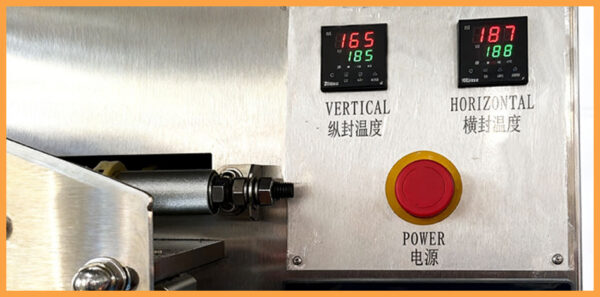
As an engineer, one of my biggest headaches is “product entrapment” (or “clamping”). This happens when the sealing jaws (horizontal seal bars) close before the material has completely settled at the bottom of the bag.
To solve this, we incorporate “shaker functions” or “settling logic” into the design, using physical vibration to help the product settle rapidly. Furthermore, many high-end machines utilize photoelectric sensors to scan the seal area. If an obstruction is detected, the machine will trigger an automatic alarm and shutdown, preventing the production of waste and ensuring every package out of the door is perfect.
On the factory floor, decision-makers aren’t just looking for a machine that looks good—they want to know how much money it saves and how much product it moves. As an engineer responsible for equipment selection and maintenance, I know that the core value of a solid FFS (Form-Fill-Seal) system lies in its role as an efficiency amplifier for the entire production line.
After witnessing countless transitions from semi-automatic to fully automated packaging, I’ve identified two critical ROI (Return on Investment) drivers: labor liberation and quality consistency.
When you are ready to match product, film, format, output, and ROI, use our FFS packaging machine selection guide.
Traditional pre-made pouch lines often require manual labor at the “front end” to load bags and at the “back end” to check seals. Even with a dedicated pick-fill-seal (PFS) machine, there is still a need for manual bag handling or magazine loading. FFS technology, however, achieves a true “roll-in, bag-out” workflow.
Based on my field data, a standard FFS machine typically runs at 40 to 80 bags per minute (BPM), with high-performance models easily exceeding 100 BPM. Most importantly, this high-intensity output requires only one operator to monitor parameters and swap out film rolls. In an era of rising labor costs, this level of automation means your Labor Cost per Unit drops exponentially.
In the food and chemical industries, the seal is the product’s lifeline. The advantage of FFS is that the sealing happens while the film is at its freshest and cleanest. Pre-made bags can accumulate dust or suffer physical deformation during storage and shipping, which directly compromises the final seal.
FFS machines utilize constant temperature control or impulse heating for the cross-sealing mechanism. When I’m on-site for commissioning, I always tell operators: “Don’t just look at whether it’s closed; look at the seal pattern.” Because of its continuous mechanical rhythm, an FFS system provides extremely stable pressure. This stability typically keeps the package failure rate below 0.1%, which is a decisive factor in extending shelf life and reducing costly returns.
A traditional packaging line can be a “conveyor nightmare”—stretching dozens of meters to connect bottle unscramblers, fillers, cappers, and labelers. In contrast, a Vertical Form-Fill-Seal (VFFS) machine often occupies less than 4 square meters (approx. 43 sq. ft.).
The logic here is to “find efficiency in vertical space.” By mounting the weighing system directly above the packaging unit, the product drops naturally via gravity, eliminating the need for complex intermediate conveyors.
I once helped a food company upgrade their old equipment to an FFS system. We managed to increase their production capacity by 2.5 times within the exact same floor plan—without spending an extra cent on rent. This improvement in floor space productivity is a direct boost to a company’s market competitiveness.
If you want to improve production speed, reduce labor cost, and ensure stable sealing quality, an FFS packaging system may be the right solution.
Our company provides complete FFS packaging lines, including weighing systems, filling units, and customized bag forming solutions.
The primary cost savings come from two areas:
Material Costs: Using rollstock is typically 15% to 30% cheaper than buying pre-made bags for the same volume of units.
Labor Costs: Because the process is “roll-in, bag-out,” a single operator can monitor a machine producing 40 to 100+ bags per minute, significantly lowering the labor cost per unit compared to semi-automatic lines.
In traditional lines, empty pre-made bags can accumulate dust or suffer contamination during shipping and storage. With FFS technology, the bag is formed “on the fly” inside the machine. This minimizes human contact and environmental exposure, drastically reducing the risk of secondary contamination before the product is sealed.
Product entrapment (or “clamping”) occurs when the product hasn’t fully settled at the bottom of the bag before the sealing jaws close, leading to a weak or leaky seal. High-quality FFS machines prevent this through:
Yes. Specifically, Vertical Form-Fill-Seal (VFFS) machines are designed to save floor space by utilizing vertical height. A typical unit occupies less than 4 square meters (approx. 43 sq. ft.). By mounting the weighing system directly above the bagger, you eliminate the need for long, horizontal conveyor belts, often increasing production capacity without needing a larger facility.
GDHP is a leading manufacturer of FFS machines. One Machine Does It All Bag making → Filling → Sealing → Cutting, fully automatic. Adopting PLC touch screen control, parameter settings.(bag length, speed, capacity) are stored with one click, and single pole switching is fast.