Пять ключевых моментов, которые нужно знать до покупки машины для запайки консервов
Не покупайте машину для запайки банок, пока не прочитаете это! Освойте 5 важных секретов, чтобы повысить эффективность и сэкономить…
22 мая 2026

Линия упаковки соусной заправки может потребовать упаковку тонких винегретов, кремовых эмульсий или рецептов с видимыми травами и специями. Каждый продукт предъявляет разные требования к контейнеру, крышке и оборудованию для наполнения.
Если эти выборы сделаны по отдельности, упаковка, которая корректно выглядит на полке, все еще может быть трудной для наполнения, запечатывания, отправки или розлива. Протечки, окисление, спутанные узлы горлышка бутылки и медленные смены режимов — риски, которые следует оценивать, а не исходы, которые какой-либо один контейнер или машина сможет автоматически предотвратить.
Это руководство сохраняет фокус на исходных решениях: типы контейнеров (банка, пакет и т. п.), компромиссы по материалам, упаковочное оборудование и выбор линии. Используйте сравнения для составления итогового списка, затем подтвердите его реальной рецептурой, упаковкой и условиями производства.
Упаковка салатной заправки — это скоординированное сочетание контейнера, крышки, барьерных материалов и процесса наполнения и запечатывания, используемое для защиты, транспортировки и выдачи приправы. Тонкие винегреты, кремовые эмульсии и заправки, содержащие семена или травы, заметно отличаются по поведению текучести, чувствительности к сдвигу, требованиям к обработке частиц и устойчивости эмульсии, поэтому одна и та же конфигурация упаковки или машины не подходит для каждого рецепта.
На практическом уровне упаковка должна ограничивать нежелательное воздействие кислорода, света, влаги и внешнего загрязнения (бактериальное заражение, химическое загрязнение); позволять потребителям наливать, выдавливать, ложкой мерить порции продукта; и беспрепятственно работать в процессе наполнения, запечатки, маркировки и отправки.
Защита продукта: Масло, уксус, цитрусовые, красители и ароматизаторы (черный перец, чеснок, базилик и т. д.) по-разному реагируют на кислород, свет и контакт с упаковкой. Соответствуйте полную упаковку рецепту и предполагаемым условиям хранения, вместо того чтобы считать “кислотность” или “на основе масла” полным материаловым спецификацией.
Вязкость и обработка частиц: Жидкая заправка и густая формула с семенами или травами требуют разных отверстий для выдачи и путей наполнения. Отверстие в горлышке контейнера (узкое горлышко, выдавливание, широкогорлая, и т. п.) имеет значение для потребителя, в то время как самый узкий проход в наполнителе — для линии производства.
Гигиеническое удержание и выдача: Совместимая крышка и чистая поверхность запечатывания помогают защитить отверстие и снизить утечки. Расходной канал для выдачи, клапан с откидной крышкой, винтовая крышка или уплотнение для пакета должны соответствовать конкретной заправке, чтобы она votersily текла или выжималась чисто без засоров или чрезмерных капель.
Оборудование конфигурации должно соответствовать химическим и механическим потребностям рецепта и его предпочтениям бутылка для соуса, стеклянная банка, пакет или мешок. Выбранная тара влияет не только на внешний вид: она также определяет, как продукты подаются, удерживаются, индексируются, заполняются, укупориваются и маркируются на конвейере.
Будучи профессиональным производителем máquinas для наполнения, мы строим автоматические линии вокруг практических требований к различным стилям упаковки. Соусы для салатов значительно различаются по вязкости и содержанию масла, что означает, что правильная тара для заправки должна балансировать отображение бренда, стабильность продукта и чистое дозирование.
Кнурки-выдавливатель являются обычным вариантом для кремовых заправок, таких как ранч, Цезарь и тисяча островов. Бутылки сверху вниз или перевернутые могут держать продукт возле клапана или распылителя для дозирования, в то время как стандартные эргономичные бутылки облегчают захват и контроль густого продукта. Для производства подтвердите, что бутылка может подаваться к заполнителю и крышкодержателю последовательно и что распылитель оставляет шейку достаточно чистой для закрытия.

Стеклянные и PET-бутылки с узким горлышком являются обычным выбором для наливающихся винегретов, итальянских заправок и масел с уксусом. Стекло обеспечивает прочную газо- и влагозащиту через корпус тары и обычно химически стабильно, но тяжелее и может разбиться при обращении или перевозке. PET обеспечивает видимость с меньшим весом (легко переносить) и меньшим риском разрушения. Для любого формата учитывайте крышку, уплотнитель, светочувствительность и предполагаемые условия хранения как часть готовой упаковки.
На линии заполнения шейка и открытие бутылки влияют на расстояние до сопла, резку и индексирование. Фасовщик с положительным перемещением может подойти для некоторых более густых или переменных продуктов; другие продукты могут обрабатываться другим методом дозирования. Погружающее сопло может помочь контролировать разбрызгивание или пенообразование в конкретной настройке.

Банки с широким горлышком облегчают ложку и могут рассматриваться для густых заправок с крупными включениями, таких как сыр с плесенью, овощи или травы. Более широкий вход облегчает потребительскую часть, но частицы все равно должны проходить через загрузочное бункер, насос, клапаны и сопло, не разрушаясь и не забивая. Оборудованы тяжелыми поршневыми дозаторами, которые переносят жидкости с высоким содержанием частиц, не разрушая твердые включения.

Пирамильные пакетики с носиком предлагают гибкую альтернативу жестким бутылкам для наливающихся заправок, пополнений или выбранных форматов питания общепита. Используют значительно меньше пластика, чем жесткие бутылки, запираются плоско перед заполнением и полностью опустошаются, чтобы снизить пищевые отходы. Пакет может уменьшать потребление материала или объем перевозок в некоторых конструкциях, интегрированные носики обеспечивают надежную повторную герметизацию и легкое наливание.
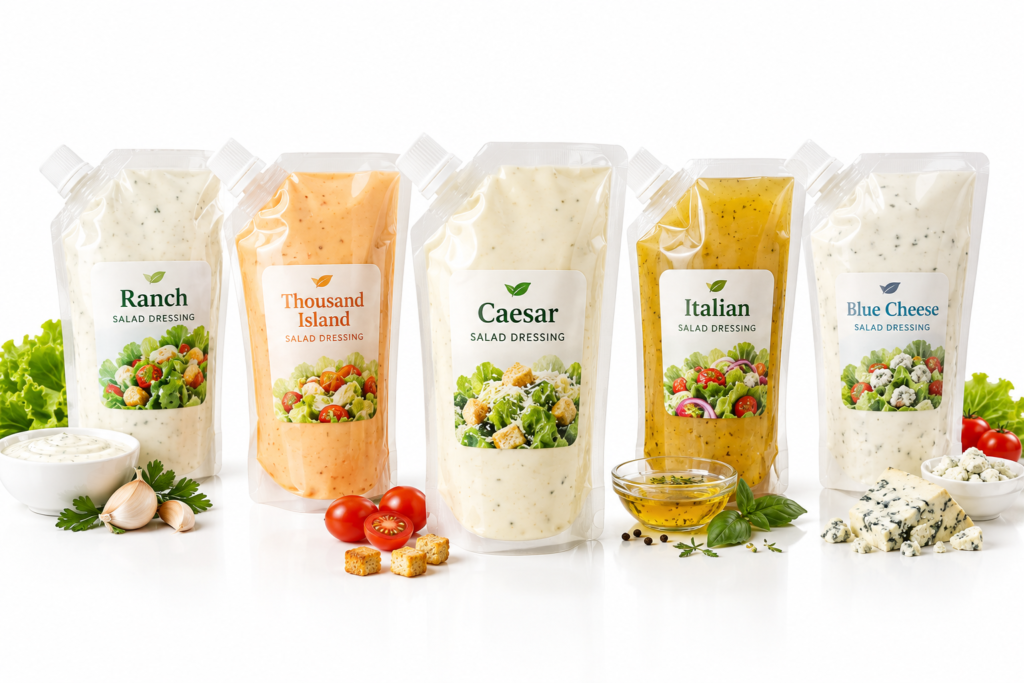
Пакетики и стик-паки обеспечивают порционные требования для быстрого обслуживания, заказов на вынос и наборов блюд. (Действительно, тенденции показывают одиноразовые пакетики с заправками для салатов и образцы паков возрастают спрос и интерес.) Многослойная пленка может использоваться для ограничения воздействия света и кислорода. Герметичные 3-сторонние или 4-сторонние плоские фольгированные или пленочные пакетики объемом от 15 мл до 50 мл заправки. Заправка должна дозироваться чисто, а область запечатывания пленки должна оставаться незагруженной продуктом. Вертикальная линия формовки-наполнения-упаковки (VFFS) может подойти для рулонных пакетиков, однако количество дорожек и достижимая выходная мощность зависят от конкретного продукта (майонез, заправка Цезарь и т. д.), пленки и окна запайки.

Матрица является отправной точкой для сравнения. Подтвердите совместимость, используя целевой рецепт, контейнер, закрывание и машину, а не рассматривая описание формата как окончательную спецификацию.
| Формат контейнера | Заправка для оценки | Стиль дозирования | Совместимость упаковочной линии | Основной компромисс |
|---|---|---|---|---|
| Пластиковая бутылочка с насадкой для выжимания (PET или HDPE) | Средняя и более густая консистенция, такая как ранч, Цезарь или тысяча островов | Сжимание, крышка-винт или клапанная крышка | Inline or rotary filling with a compatible capper | Lightweight and resistant to breakage; bottle stiffness and opening must suit the product |
| Glass salad dressing bottle | Pourable vinaigrettes and oil-and-vinegar blends | Free pour, flow restrictor, or screw cap | Filler and indexing system selected for the bottle and dosing need | Strong container-body barrier and premium presentation; heavier and breakable |
| Wide-mouth jar (PET or glass) | Thick or particulate dressings intended to be spooned | Wide-access screw or lug-style closure | Product path and nozzle sized for the inclusions, with a matched capper | Easier product access; particles and the jar rim still require careful handling |
| Spouted stand-up pouch | Pourable dressings, refill packs, or selected dips | Крышка с всасывающим и повторно закрывающимся механизмом | Готовый пакет с наполнением и оборудование для закрывания fitment | Компактный гибкий формат; соединение фитмента и пленочные герметизации требуют проверки |
| Одноразовый пакет-саше или палочка | Порционные упаковки для наборов блюд и общественного питания | Наклейка с разрезом и прямой угол наливания | VFFS или другое оборудование для пакетов, совместимоe с пленкой и продуктом | Контроль порций; поток продукта и герметизация могут ограничивать производство |
Жесткие бутылки против гибких пакетов: Жесткая бутылка для соуса может поместиться на существующих конвейерах, сменной головке и оберточном оборудовании. Пакет с носиком требует специальной подачи, наполнения и обработки фитмента. Сопоставьте вложения в изменения линии с расходами на материал, хранение, перевозку и требуемую производительность полного пакета.
Стекло против squeeze-пластика: Стекло обеспечивает сильный барьер через своё тело, но при этом имеет больший вес при транспортировке, риск разбивания и воздействие света через прозрачное стекло остаются актуальными. Пластиковые бутылки PET и HDPE с носиком могут быть удобнее в обращении и дозировании, но их барьерная способность, совместимость и поведение при дозировании зависят от конкретной упаковки и формулы.
Головка горлышка и крышка: Narrow-neck bottles need enough nozzle clearance and clean threads or sealing lands before capping. Wide-mouth jars provide access for spooning but still require reliable cap application and a suitable liner or seal. In both cases, verify cap torque and leak performance with the actual components.
Material selection should consider oil and acid compatibility, oxygen and light protection, filling conditions, and consumer use. Vinegar, citrus, vegetable oils, and other ingredients do not affect every material in the same way. Test the finished package with the actual recipe and storage conditions rather than assuming the resin or glass type alone determines shelf life.
Glass is often considered for premium presentation and pourable vinaigrettes. The container body provides a strong barrier to gases and moisture and is generally chemically stable for food contact. It is not correct to treat the complete package as impermeable: the cap, liner, and closure process are also part of the barrier. Clear glass can transmit light, and the heavier tare weight increases shipping and handling demands.
PET provides clear product display with less weight and lower breakage risk than glass (PET is not easily damaged.). Gas barrier performance varies with the bottle’s design, color, wall construction, and any barrier layer; it should be checked against the storage period and recipe sensitivity. PET can be easily disposed of through globally standard consumer recycling channels.
HDPE can be used in squeeze bottle designs where an opaque package or durable handling is useful. The bottle’s shape and wall thickness determine its squeeze and recovery behavior. Highly resistant to fats, oils, and acids, ensuring no wall degradation or container stress cracking. Naturally translucent or opaque, protecting light-sensitive ingredients without secondary coatings.
Появляющиеся гибкие упаковки объединяют слои для обеспечению печати, механической прочности, барьерных свойств и тепловой сварки. PET/AL/PE и PET/EVOH/PE — примеры структур, которые можно обсудить с поставщиком упаковки, а не универсальные спецификации. Алюминиевая фольга может обеспечить прочный свето-и газобарьер; EVOH может обеспечивать барьер к кислороду в прозрачной структуре. Полная пленка, толщина слоя, запайка и фитмент определяют характеристики готового кошика/пакета.
Внутренний слой прилепления, часто основанный на полиэтилене, должен формировать надёжный запай при рабочих условиях линии. Он не устраняет утечки по шву сам по себе. При сравнении гибких структур запрашивайте данные о скорости передачи кислорода (OTR) и скорости передачи водяного пара (WVTR) с методикой тестирования, температурой, влажностью и толщиной. Эти измерения материалов не являются результатом срока годности заполненного пакета; оценивайте финально запечатанный пакет с повязкой.
| Материал | Ключевая прочность | Формат для оценки | Защита и ограничение |
|---|---|---|---|
| Стекло | Сильный барьер корпуса и химическая стабильность | Для бутылей и банок с носиком | Закрытие и воздействие света всё ещё важны; более тяжёлые и хрупкие |
| PET | Кристальность и меньший вес упаковки | Прозрачные розничные бутылки и банки | Барьер варьируется в зависимости от конструкции; уточняйте у продукта и крышки |
| HDPE | Надёжность и варианты непрозрачных дозаторов | Дозаторы типа 'нажми-выдавливай' | Compatibility and squeeze behavior depend on grade and design |
| Multi-layer film | Layered barrier, print, and seal functions | Саше, стик-паки и прозрачные пакеты с зазубринами | Performance depends on the complete structure and seal; recycling varies |
The container body is only one part of the seal. Induction foil liners can add a tamper-evident layer and help protect the opening when the liner, container finish, and induction process are compatible. They do not automatically guarantee shelf life or an airtight seal. Product on the neck, incorrect setup, or a mismatch between closure and container can compromise sealing.
Polypropylene caps are used in flip-top and screw-cap designs, but cap material alone does not establish compatibility with an oily or acidic dressing. Confirm the cap, liner, neck finish, torque, sealing method, and intended use together, then perform leakage and distribution checks. For additional context on lid and seal choices during transport, see our guide to упаковка соусов для онлайн-продаж.
For products sold in the EU, the Обзор материалов для контакта с пищевыми продуктами Европейской комиссии explains that materials placed on the EU market must comply with Regulation (EC) No 1935/2004, good manufacturing practice requirements, and applicable material-specific rules.
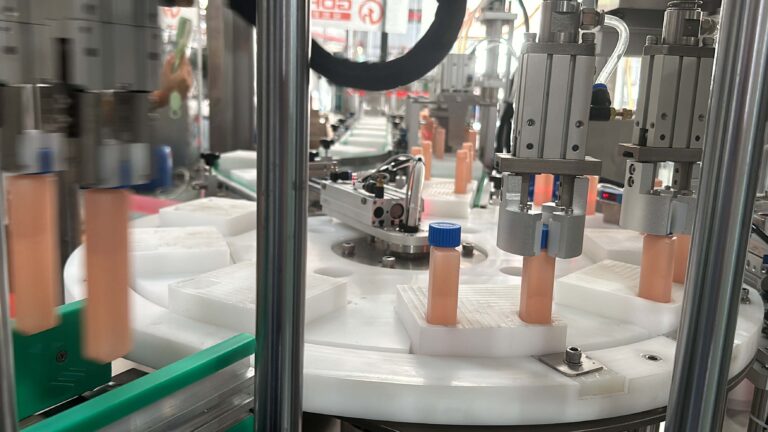
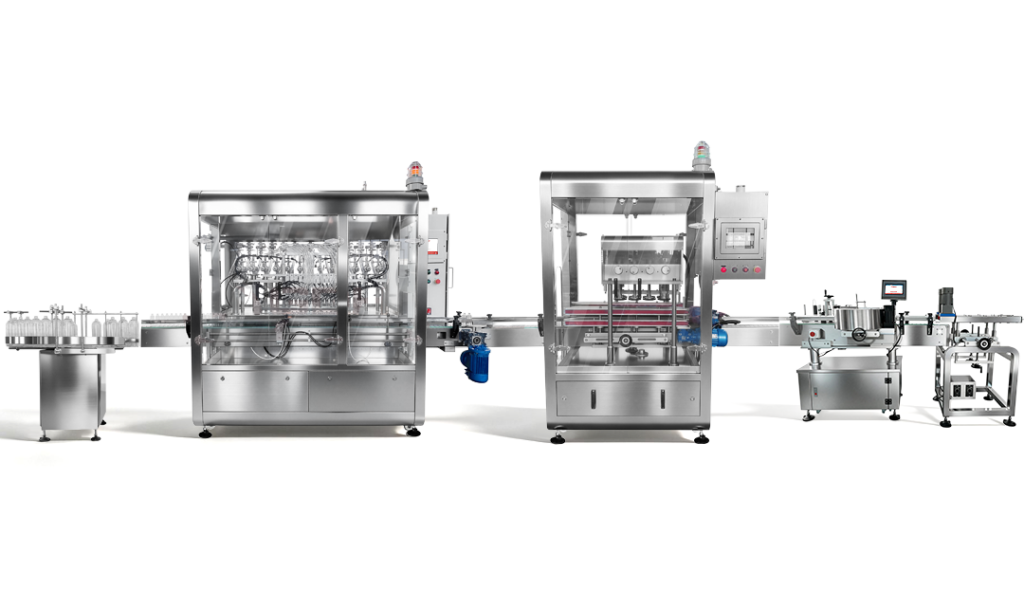
Automated machinery moves dressing from the batch process into market-ready bottles, jars, pouches, or sachets. The product’s viscosity, temperature, foam behavior, and inclusions affect dosing, while the package determines how it is presented, filled, capped, sealed, and labeled.
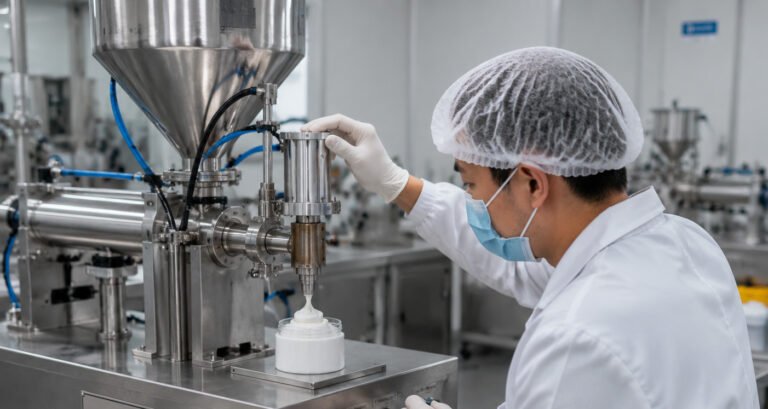
Piston filling systems are one option to evaluate for thick dressings and recipes containing seeds or herbs because positive displacement moves a defined volume through the product path. The valve, passage, and nozzle still need to accommodate the largest inclusion and preserve the product’s desired texture. Servo-driven controls (Precisely control the number of rotations of the gear) can make target adjustments and recipe changeovers easier.
Anti-drip and diving nozzles help reduce foam, splashing, strings, or neck contamination in selected applications. Choose the design and cutoff based on the container depth, product flow, and package opening. Define whether the target dose is measured by volume or mass and how it will be checked; the two are not interchangeable when product density or temperature changes.
Spindle or chuck cappers (twist-on or snap) can apply closures to compatible bottle or jar formats, but the useful cap torque depends on the container, closure, and liner. Induction sealing can be added where the package design and sealing process support it. Specify the cap and seal process together, keep the rim or neck free of product, and verify seal integrity during product-and-package trials.
Labeling equipment may apply front-and-back labels, wraparound labels, or shrink sleeves according to container shape and presentation needs. Label handling should be considered with the bottle orientation and downstream conveyor. Rotary premade-pouch systems can handle a pouch and fitment sequence, while multilane VFFS systems form sachets from rollstock.
Food-contact parts, seals, hoses, and pumps should be compatible with the dressing and the plant’s cleaning chemistry and temperature. Contact parts built from SUS316L stainless steel resist the acidic nature of vinegar and citrus bases.
Clean-in-place (CIP) can be useful when the machine is designed for it and the cleaning procedure is verified for the actual product and soil. Integrated Clean-in-Place (CIP) systems allow thorough washdowns between shifts, keeping downtime low and production lines running at consistent output speeds.
Выбор упаковки продолжает развиваться, но новый формат или материал не обязательно лучше подходит. Оцените каждый вариант с точки зрения защиты продукта, удобства потребителя, операционных требований и систем утилизации, доступных на целевом рынке.
Инвертированные бутылки-насадки с dispensing клапанами, пакетики с носиком и пакетики порционной фасовки решают разные случаи использования. Клапан может помочь держать чистой область крышки, когда заправка и клапан совместимы; пакет с носиком может поддерживать налив или дозаправку; а фасовочные пакеты обеспечивают фиксированные порции для обслуживания пищи.
cURL Too many subrequests by single Worker invocation. To configure this limit, refer to https://developers.cloudflare.com/workers/wrangler/configuration/#limits.
cURL Too many subrequests by single Worker invocation. To configure this limit, refer to https://developers.cloudflare.com/workers/wrangler/configuration/#limits.
cURL Too many subrequests by single Worker invocation. To configure this limit, refer to https://developers.cloudflare.com/workers/wrangler/configuration/#limits.
cURL Too many subrequests by single Worker invocation. To configure this limit, refer to https://developers.cloudflare.com/workers/wrangler/configuration/#limits
cURL Too many subrequests by single Worker invocation. To configure this limit, refer to https://developers.cloudflare.com/workers/wrangler/configuration/#limits
| Профиль заправки | Тип контейнера | Рекомендованная система дозирования | Крышка / способ запайки |
|---|---|---|---|
| Чистые винегреты | Стеклянная / PET бутылка для соуса салата | Заполняющее устройство с сервоприводом для ныряющего сопла | Муфта с резьбой + индукционное запечатывание |
| Кремовый ранч/цезарь | Squeeze bottle / Inverted bottle | Поршневой насос с пневмозащёлкой закрытия | Flip-top dispensing cap |
| Particulate Dressings (Italian) | Wide-mouth glass or PET jar | Rotary-valve piston filler | Lug cap or screw cap |
| Portion-Control Servings | Multi-layer barrier sachet / pouch | Multilane liquid filler or rotary pouch machine | Heat seal / fitment capper |
Your target output dictates your level of line automation:
Selecting a salad dressing package means balancing recipe behavior, material and closure performance, consumer use, market requirements, and operational fit. A glass pour bottle, squeeze bottle, jar, pouch, or portion pack may each be appropriate under different conditions. Shelf life and production performance should be confirmed for the finished product-package-machine combination.
Viscosity management: Select a dosing method and product path that handle the dressing at its actual filling temperature, including any particles, without unacceptable foam, blockage, or texture change.
Hygienic operation: Specify compatible product-contact materials and a cleaning method that can be verified for the equipment and recipe. Do not use stainless-steel grade or the presence of CIP as a substitute for reviewing the full product path.
Line flexibility: Plan for bottle geometries, closure types, pouch formats, change parts, and cleaning between SKUs. A modular line can support changeovers only when the product path and downstream handling are designed for the formats involved.
For a machine proposal, prepare the recipe or representative product sample, viscosity or flow information at filling temperature, particle dimensions, container and closure samples, target dose, destination markets, cleaning method, and required output. GDHP’s линейка наполнителей and our practical filling machine selection guide are useful next steps when reviewing equipment options.