
Pharma Packaging: How to Optimize Precision Filling for Pharma

Hello, I am a Senior Engineer at GDHP. With 23 years of technical expertise in the filling and packaging industry, we provide more than just equipment—we are dedicated to delivering high-stability, high-efficiency, and fully customized turnkey solutions for your business.
Table of Contents
In the high-stakes world of pharmaceutical manufacturing, the margin for error is non-existent. Unlike the beverage or chemical industries, where a minor spill or a slightly underfilled container might be an operational annoyance, the medical sector treats precision as a matter of patient safety and regulatory compliance. The production line is the artery of the pharmaceutical business, and the filling machine is its heart.
Recently, we encountered a compelling case study involving a manufacturer of pharmaceutical solutions. Their requirements were specific, their constraints were rigid, and their expectations for sterility were absolute. They needed to move from a semi-automated process to a fully integrated line for 500ml bottles, a volume that presents unique challenges in terms of fluid dynamics and handling stability.
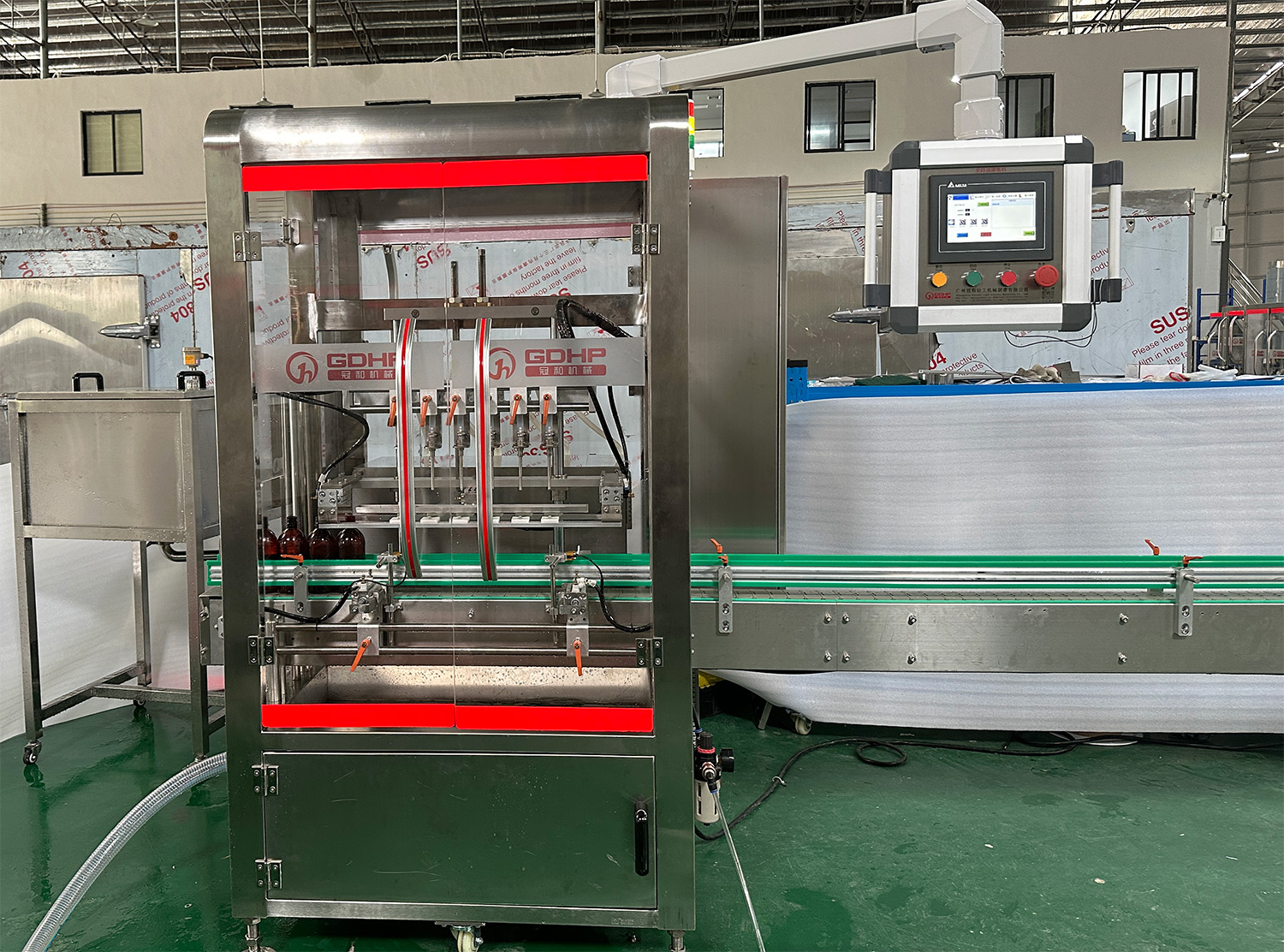
This article explores the journey of engineering a solution centered around the GHALF-6 Fully Automatic Six-Head Peristaltic Pump (Servo) Filling Machine. We will dissect the technical challenges posed by the customer’s facility—specifically a critical conveyor integration issue—and analyze how advanced peristaltic technology is redefining sterility in the Medical and Pharmaceutical sectors.
The Anatomy of the Challenge: Beyond Standard Specifications
When the client approached us, their specification sheet seemed straightforward at first glance, but a closer examination revealed the complexities inherent in retrofitting modern machinery into existing production footprints.
The Vessel and The Volume
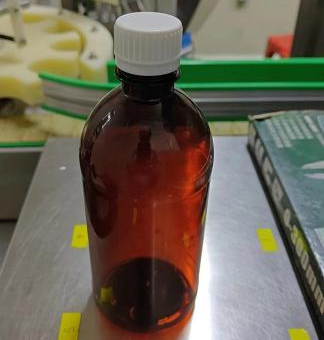
The target product was a medical solution packaged in a 500ml bottle.
- Diameter: 70mm
- Height: 180mm
This aspect ratio (height-to-width) creates a center of gravity issue. At 180mm tall with a relatively narrow 70mm base, the empty bottles are prone to tipping if subjected to jerky conveyor movements or sudden acceleration. Furthermore, filling 500ml of liquid requires a machine capable of high-volume throughput without compromising speed. The client’s target was 1000 bottles per hour.
While 1000 bottles per hour is considered mid-range speed in the broader packaging industry, achieving this with 500ml vessels requires a significant flow rate. If the flow is too fast, turbulence creates foam, leading to inaccurate levels and potential contamination of the bottle’s neck. If the flow is too slow, the production target is missed.
The Spatial Constraint: The 150mm Puzzle
The most intriguing engineering challenge was not the filling itself, but the integration. The client’s facility layout dictated a strict “left-in, right-out” operating direction. More critically, the distance from the bottle unscrambler (the machine that stands the bottles up) to the filling machine’s conveyor belt was fixed at exactly 150mm.
In the world of industrial automation, 150mm is a “dead zone.” It is too short for a standard intermediate conveyor but too wide to simply push bottles across without a transition plate, especially for unstable 180mm tall bottles. If a bottle tips in this gap, it triggers a domino effect, jamming the line and forcing a shutdown. This required a seamless mechanical handshake between the unscrambler and the GHALF-6 Fully Automatic Six-Head Peristaltic Pump (Servo) Filling Machine.
The Engineering Response: The GHALF-6 Architecture
See how these engineering principles were applied in an IVD filling and capping case study for irregular reagent bottles.
To address the stability of the tall bottles and the strict hygiene requirements of the Pharmaceutical industry, the decision was made to deploy the GHALF-6. This machine is not merely a pump; it is an integration of electromechanical precision and pneumatic reliability.
The choice of the GHALF-6 was driven by three core pillars:
- Peristaltic Technology for sterility and cross-contamination prevention.
- Servo-Driven Control for managing the flow dynamics of large 500ml fills.
- Component Reliability using Tier-1 global suppliers to ensure uptime.
Why Peristaltic Pumps are the Gold Standard in Medicine
In traditional piston filling, the product interacts with mechanical parts—pistons, O-rings, and valves. Over time, these parts wear, generating particulate matter that is unacceptable in Medical applications. Furthermore, cleaning a piston system requires dismantling the entire assembly, a time-consuming process known as Changeover.
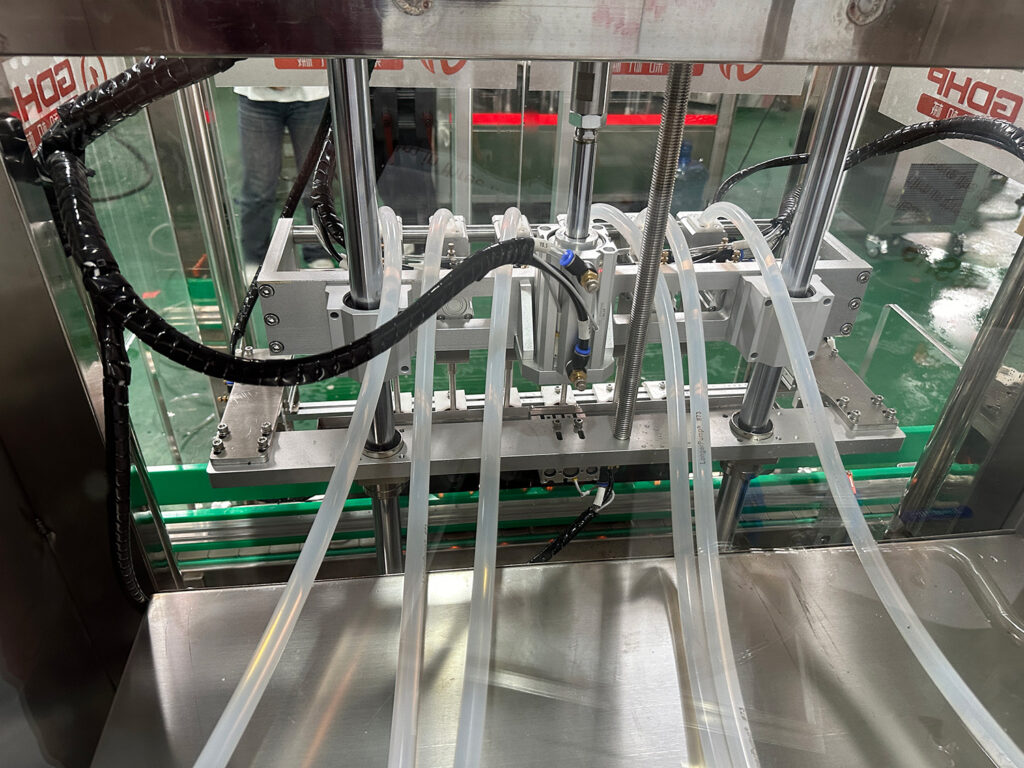
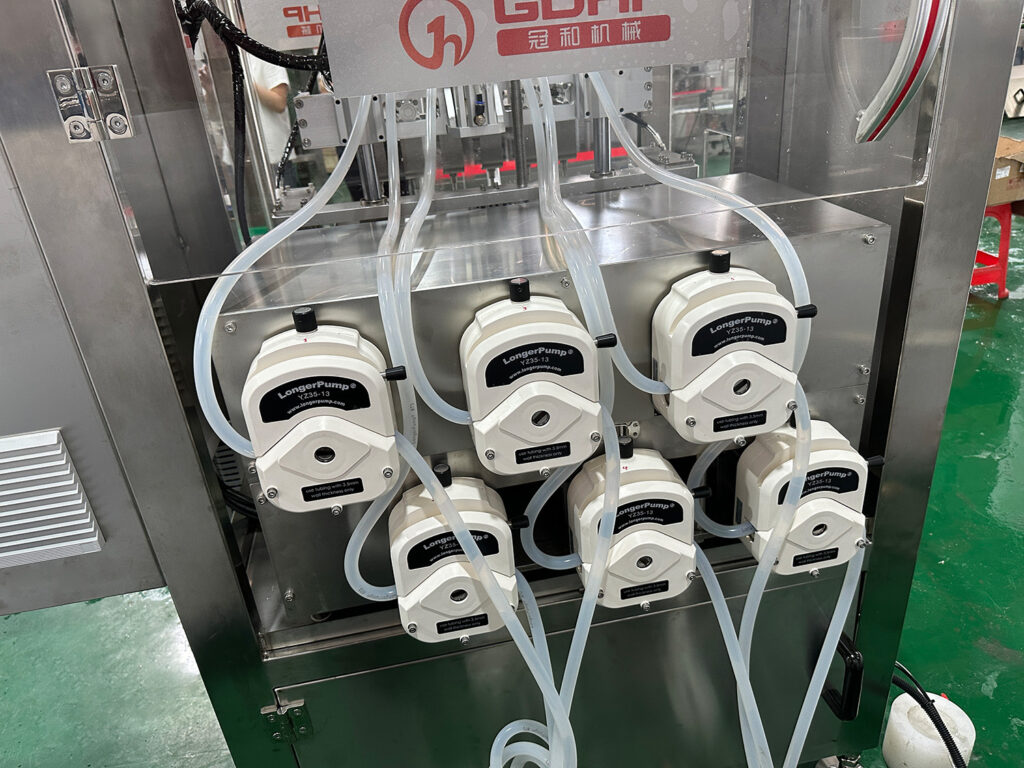
The GHALF-6 utilizes a peristaltic approach. Here, the fluid is contained entirely within a medical-grade tube. The mechanical elements of the pump never touch the product. The pump rollers compress the tube to push the fluid forward.
The advantages in this specific case were threefold:
- Sterility: The pharmaceutical solution only touches the tubing and the filling nozzle.
- Changeover: Switching to a different product is as simple as swapping the tubing. There is no risk of cross-contamination from the previous batch.
- Quantitative Precision: By combining the peristaltic action with servo motors, the machine can calibrate the fill volume by calculating the exact rotation angle of the pump, rather than relying on time or weight alone.
Addressing the Production Flow: Stability and Integration
The “left-in, right-out” configuration is standard, but the 150mm gap required a custom transition solution. To bridge the distance between the unscrambler and the filling conveyor, we utilized a synchronized side-grip belt transfer system or a custom-machined transition plate with a powered star wheel, depending on the final on-site adjustment.
However, the primary solution lay in the synchronization of the GHALF-6’s main conveyor. By integrating the conveyor control into the central PLC, we ensured that the speed matched the unscrambler’s output perfectly.
The No-Bottle-No-Fill Logic
With tall, 180mm bottles, stability is paramount. The GHALF-6 employs high-precision optical sensors (from Keyence or similar tier providers) to detect bottle presence. The “No-Bottle-No-Fill” logic is critical here.
If the 150mm gap causes a momentary delay and a bottle is missing, the machine must instantly recognize the gap. If the filling heads were to activate without a bottle, 500ml of expensive pharmaceutical solution would flood the conveyor, potentially damaging the mechanics and requiring a massive cleanup. The sensor integration ensures that the servo motors only engage when a bottle is positively verified in position.
Deep Dive into Component Architecture: The “E-E-A-T” of Machinery
In professional equipment manufacturing, Trustworthiness (the ‘T’ in E-E-A-T) is built on the provenance of components. A machine is only as reliable as its weakest relay or valve. The GHALF-6 distinguishes itself by rejecting generic, white-label components in favor of a pedigree supply chain.
The Electrical Nervous System: Delta, Keyence, and Schneider
The control architecture is the brain of the operation. For this 1000bph line, we utilize a combination of Delta, Keyence, and Schneider Electric components.
- Schneider Electric (France): Used for contactors and circuit protection. In a factory environment, power fluctuations can occur. Schneider’s industrial controls are renowned for their durability and safety, preventing electrical fires or board burnouts.
- Keyence (Japan): Providing the sensing technology. Keyence sensors are industry-leading in their ability to detect transparent objects—such as clear glass or plastic bottles—which often confuse standard infrared sensors.
- Delta (Taiwan): Often utilized for the PLC (Programmable Logic Controller) and servo drives. Delta offers a robust balance of high-performance processing and user-friendly interface programming, essential for the custom logic needed to handle the servo pump curves.
The Pneumatic Muscle: Airtac
While electricity controls the logic, compressed air often does the heavy lifting (raising and lowering the nozzles, gating the bottles). The GHALF-6 employs Airtac pneumatic components. Based in Taiwan, Airtac provides a low-failure-rate alternative to more expensive European brands while maintaining significantly higher reliability than generic options. This ensures that the diving nozzles move smoothly and consistently, cycle after cycle.
Material Science: SUS304 vs. SUS316
In the Pharmaceutical industry, the material of construction is a regulatory issue.
- Main Body (SUS304): The frame and exterior panels are constructed from 304 stainless steel. This provides structural rigidity and resistance to general corrosion from cleaning agents used on the factory floor.
- Contact Parts (SUS316): Every component that touches the liquid—specifically the nozzles and connectors—is machined from SUS316 stainless steel. The addition of molybdenum in 316 steel vastly increases its resistance to chloride corrosion and chemical reactivity. This is non-negotiable for medical solutions, ensuring that no metallic ions leach into the drug product.
The Operational Experience: Precision through Peristaltic Servos
The core requirement of filling 500ml bottles at a rate of 1000 per hour implies a cycle time of roughly 3.6 seconds per bottle, assuming a continuous flow. However, in an indexing machine (where bottles stop to be filled), the actual fill time is much shorter, perhaps 2 to 2.5 seconds.
Pushing 500ml of fluid in 2 seconds creates significant pressure. This is where the “Servo” aspect of the GHALF-6 Fully Automatic Six-Head Peristaltic Pump (Servo) Filling Machine becomes the defining feature.
The Filling Curve
A standard motor runs at a constant speed. A servo motor can be programmed with a velocity curve.
- The Start: The pump starts slowly to avoid the “kick” of fluid splashing out of the bottle.
- The Bulk Fill: Once flow is established, the servo ramps up to maximum speed to deliver the majority of the 500ml volume quickly.
- The Finish: As the liquid level nears the neck (180mm height), the servo decelerates. This prevents foam from spilling over the top and ensures a precise meniscus level.
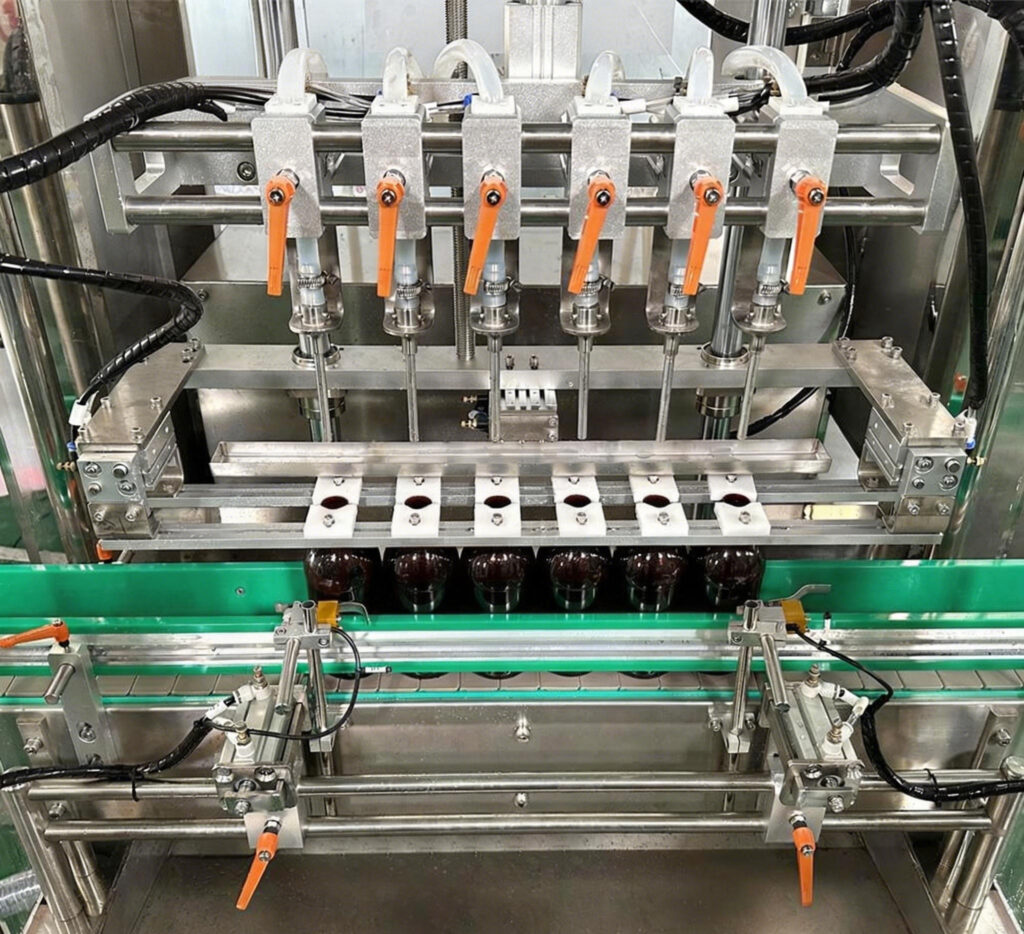
The Double Anti-Drip Mechanism
Dripping is the enemy of pharmaceutical packaging. A drop of solution on the outside of the bottle can cause labeling adhesive to fail or, worse, support bacterial growth on the container surface.
The GHALF-6 employs a dual-defense system:
- Vacuum Drawback: Because the pump is peristaltic and servo-driven, the motor can briefly reverse direction at the end of the cycle. This creates a slight suction (drawback) that pulls the fluid back up into the nozzle, breaking the surface tension string.
- Mechanical Drip Tray: A pneumatic tray extends underneath the nozzles immediately after filling and before the bottles move. If a rogue drop does fall, it lands in the tray, not on the conveyor or the bottle.
User-Centric Design: Maintenance and Usability
The client’s request for a machine with “simple operation and convenient maintenance” acknowledges a reality of modern manufacturing: skilled labor is scarce. Machines must be intuitive.
The PLC Interface
The machine features a touchscreen HMI (Human Machine Interface). Instead of manual handwheels to adjust fill volume, the operator simply types “500” into the volume field. The PLC calculates the necessary pump rotations. This digital recipe management allows the client to switch to 250ml or 1000ml bottles in the future by simply loading a saved profile.
Hygiene and Cleanability
The “C” in cGMP stands for “Current,” but practically it stands for “Clean.” The GHALF-6 is designed with no blind corners or crevices where liquid can pool. The stainless steel body is polished to make wipe-downs effective.
For the internal fluid path, the peristaltic design is superior. To clean the machine, the operator can simply pump a cleaning solution (CIP - Clean In Place) through the tubes, or fully replace the medical-grade silicone tubing in minutes. This is a stark contrast to piston fillers, which might require hours of disassembly to sterilize.
Conclusion: A Solution for the Future of Pharma
If you are comparing suppliers, use our review of leading IVD packaging machine manufacturers in China.
The manufacturing of pharmaceutical solutions is moving toward higher flexibility and stricter sterility. The client’s requirement for a 1000bph line for 500ml bottles presented specific challenges regarding stability and integration.
By implementing the GHALF-6 Fully Automatic Six-Head Peristaltic Pump (Servo) Filling Machine, we provided a solution that not only met the speed and volume requirements but also elevated the standard of hygiene through peristaltic technology. The careful selection of components from Delta, Keyence, and Schneider ensures that this investment is protected by long-term reliability.
Ultimately, this machine does more than fill bottles; it provides peace of mind. In the Medical and Pharmaceutical sectors, where the end-user is a patient, that reliability is the only metric that truly matters.
Detailed Analysis of Technical Implementation
To further understand the value proposition of the GHALF-6 in this specific context, we must look deeper into the mechanisms of action and the comparative advantages of the technologies employed.
The Physics of Filling: Handling 500ml Volumes
Filling a 500ml bottle is significantly different from filling a 10ml vial. The fluid dynamics change. In a small vial, surface tension dominates. In a 500ml bottle, gravity and turbulence dominate.
turbulence Management
When liquid enters a bottle at high speed, it hits the bottom and splashes upward. With a 180mm tall bottle, the nozzle typically dives into the bottle (bottom-up filling) to minimize the distance the liquid falls.
The GHALF-6 is equipped with a diving nozzle mechanism driven by Airtac pneumatic cylinders.
- Phase 1: Bottles enter the station.
- Phase 2: The nozzle bar descends, inserting the nozzles into the bottle necks.
- Phase 3: Filling begins. As the liquid level rises, the nozzles can be programmed to rise in synchronization, keeping the tip just above the liquid surface. This “subsurface” or “tracking” fill is crucial for foamy medical solutions.
Accuracy vs. Speed
The client required 1000 bottles per hour. With a six-head machine, this means the machine must complete roughly 166 cycles per hour, or roughly 2.7 cycles per minute. This is a comfortable pace for the GHALF-6, allowing it to operate well within its performance envelope. This “over-spec” capability is intentional. Running a machine at 70% of its maximum capacity significantly extends its lifespan compared to running a smaller machine at 100% capacity.
The Role of Peristaltic Pumps in Contamination Control
For tube types, additives, color coding, and packaging automation, review our blood collection tube production guide.
In the Pharmaceutical industry, the fear of “particulate generation” is constant. Metal-on-metal friction in gear pumps or piston pumps inevitably generates microscopic particles over time.
The Tubing as the Only Contact Surface
The peristaltic pump compresses a silicone tube. The rollers (usually made of stainless steel or robust polymer) roll over the outside of the tube.
- Benefit: The fluid never touches the pump mechanism.
- Validation: It is much easier to validate the sterility of a silicone tube (which can be autoclaved or used as a single-use consumable) than to validate the cleanliness of a complex metal piston chamber.
Calibration and Replenishment
One of the highlighted features of the GHALF-6 is “convenient automatic replenishment.” In the context of peristaltic pumps, this refers to the ease of recalibration. Over time, silicone tubing can lose some elasticity, leading to a slight drift in fill volume.
The PLC control allows for dynamic compensation. If quality control checks show the fill is 499ml instead of 500ml, the operator can adjust the calibration coefficient on the touchscreen by +0.2%, and the servo motors instantly adjust the rotation angle to correct the drift. This can be done without stopping the machine.
Integration Logic: The PLC and The “Smart” Factory
The use of a Programmable Logic Controller (PLC) elevates the GHALF-6 from a mechanical tool to a smart device.
Frequency Conversion Speed Regulation
The conveyor belt speed is controlled by a Variable Frequency Drive (VFD). This is vital for the 150mm gap challenge. The VFD allows the operator to fine-tune the belt speed to millimetric precision, ensuring that when the unscrambler releases a bottle, the filling conveyor accepts it smoothly without tipping the tall 180mm container.
Automatic Counting and Production Data
For pharmaceutical batches, traceability is key. The PLC tracks:
- Total bottles filled.
- Shift production.
- Downtime events.
This data is displayed on the touchscreen, allowing production managers to calculate OEE (Overall Equipment Effectiveness) in real-time.
Material Durability: The SUS316 Advantage
Validate hygienic design, materials, controls, qualification, and documentation with our pharmaceutical machinery GMP compliance guide.
Why emphasize SUS316 for contact parts?
Standard 304 stainless steel contains chromium and nickel. It is
resistant to water and mild acids. However, many medical solutions contain salts, chlorides, or active
pharmaceutical ingredients (APIs) that can be corrosive.
SUS316 adds Molybdenum (2-3%). This element drastically improves corrosion resistance, specifically against pitting corrosion caused by chlorides. In a medical filling machine, a microscopic pit in the steel can become a harbor for bacteria (biofilm), which is incredibly difficult to remove. By using SUS316, the GHALF-6 ensures a surface that remains smooth and sterile, cycle after cycle.
Summary of Benefits for the Client
For a field view of new reagent-filling systems, revisit our CACLP 2026 IVD equipment preview.
The follow-up report on CACLP 2026 IVD packaging highlights summarizes the automation and compliance trends buyers discussed at the event.
| Feature | Engineering Justification | Client Benefit |
|---|---|---|
| Peristaltic Metering | Fluid isolated in tubing; no mechanical contact. | Sterility: Zero risk of metal particulate contamination. |
| Servo Motor Drive | Programmable velocity profiles (ramp up/down). | Precision: Accurate 500ml fills without foaming or splashing. |
| Six-Head Configuration | Distributes flow across multiple nozzles. | Capacity: Easily meets the 1000bph requirement at manageable flow rates. |
| 304/316 Construction | High-grade stainless steel metallurgy. | Compliance: Meets global GMP standards for pharmaceutical hygiene. |
| Tier-1 Electronics | Schneider/Delta/Keyence integration. | Reliability: Reduced downtime and long-term ease of maintenance. |
| No-Bottle-No-Fill | Optical sensing logic. | Efficiency: Prevents waste and spillage during production gaps. |
By addressing the specific geometry of the 500ml bottle, the spatial constraints of the factory floor, and the rigorous demands of the Medical and Pharmaceutical industry, the GHALF-6 Fully Automatic Six-Head Peristaltic Pump (Servo) Filling Machine represents a synthesis of modern engineering and practical application. It is a testament to how “reasonable design” and “compact structure” translate into tangible operational success.